 Pin It
 My cousin called me three weeks before her graduation asking if I could bring something to the party, and I realized I'd been overthinking it the whole time. A snack board isn't about perfection or complicated recipes—it's about creating a landscape of flavors that lets people discover what they love while you're actually enjoying the celebration instead of being stuck in the kitchen. That afternoon, I started pulling everything from my fridge and pantry, and something clicked: the best parties aren't remembered for one dish, but for the moment when someone grabs their fifth piece of cheese and grins because they didn't expect to love that combination.
My friend Sarah watched me arrange everything on a huge wooden board we borrowed from someone's dining room, and she laughed because I kept second-guessing the placement like it was an art installation. Within twenty minutes of the party starting, the board was chaos—beautiful, happy chaos—with people mixing things together in ways I never would have thought of, and that's when I knew this was exactly what a celebration needed.
Ingredients
- Cheddar cheese cubes (200 g): Cut them fresh the day before so they're firm and don't get sweaty from sitting out—pre-packaged often has that weird coating.
- Salami slices (200 g): Buy from the deli counter if you can; it has way more personality than the packaged stuff.
- Turkey or ham roll-ups (200 g): Roll them loosely so they look inviting and don't get all crinkled and sad.
- Mixed olives (1 cup / 150 g): Choose a few different types if your crowd is adventurous—Kalamata, green, and castelvetrano olives create visual interest.
- Roasted nuts (1 cup / 150 g): Almonds, cashews, or a mixed variety all work; unsalted lets people control their own seasoning.
- Baby carrots (1 cup / 100 g): They're kid-friendly and add that bright orange that makes boards pop visually.
- Cherry tomatoes (1 cup / 100 g): Wash and dry them well the morning of so they don't leak liquid everywhere.
- Cucumber slices (1 cup / 100 g): Slice them about a quarter-inch thick and pat dry; thin slices get limp too fast.
- Mini pretzels (1 cup / 100 g): The salty anchor that bridges savory and sweet without anyone thinking about it.
- Assorted crackers (1 box / 100 g): Mix textures—some crunchy, some thinner—so there's something for every cheese pairing.
- Chocolate-covered pretzels (1 cup / 150 g): These are the sweet-savory bridge that makes people pause and say "wait, that works."
- Assorted berries (1 cup / 120 g): Strawberries, blueberries, and raspberries together look like someone spent hours on this even though you didn't.
- Grapes (1 cup / 120 g): Red and green together add color and work with literally every other item on the board.
- Mini cookies or macarons (1 cup / 120 g): These make it feel fancy without the effort—your guests assume you ordered them.
- Dried apricots (1/2 cup / 80 g): Slightly chewy and naturally sweet, they pair surprisingly well with cheese.
- Gummy candies (1/2 cup / 80 g, optional): For the younger crowd or the young at heart who still gets excited about bright colors and sugar.
- Yogurt-covered raisins (1/2 cup / 80 g): They add a creamy sweetness that rounds out the board's flavor story.
- Hummus (1 cup / 240 ml): The vegetarian anchor that makes veggie lovers feel included without being preachy about it.
- Ranch dip or tzatziki (1 cup / 240 ml): Ranch if your crowd skews traditional, tzatziki if you want to feel slightly fancier.
- Honey or fruit preserves (1/2 cup / 120 ml): A small bowl of this alongside cheese becomes its own destination on the board.
Tired of Takeout? 🥡
Get 10 meals you can make faster than delivery arrives. Seriously.
One email. No spam. Unsubscribe anytime.
Instructions
- Pick your board or platter:
- Find something large enough that items don't feel crowded—you want space for people's hands and for the eye to move around naturally. A wooden board, marble slab, or even a clean white platter all work; size matters more than material.
- Arrange the savory foundation:
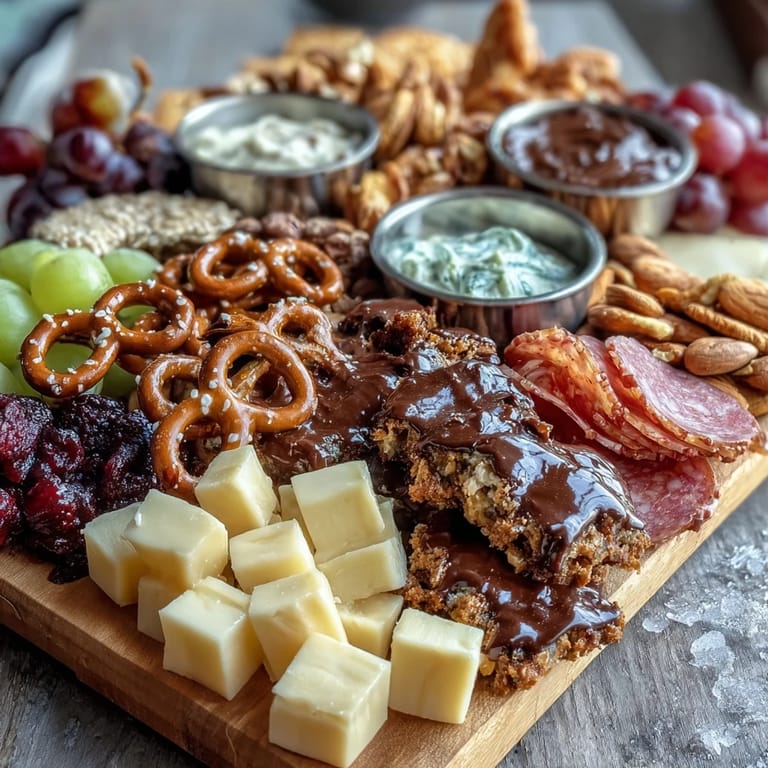
- Start by placing your cheese cubes, cured meats, olives, and nuts in loose clusters around the board, leaving gaps intentionally so it doesn't feel chaotic. Think of them as anchor points that will draw the eye and give people obvious starting places.
- Add vegetables for color and structure:
- Scatter carrots, tomatoes, and cucumbers in between the protein-heavy items, letting the bright colors create visual pathways across the board. These lighter items also give the board breathing room and make it feel less heavy.
- Nestle in crackers and pretzels:
- Place these in small groups rather than dumping them all in one corner—they're the glue that holds flavor combinations together, so distribute them strategically. The mini pretzels especially work well piled near the dips.
- Prepare small bowls for dips:
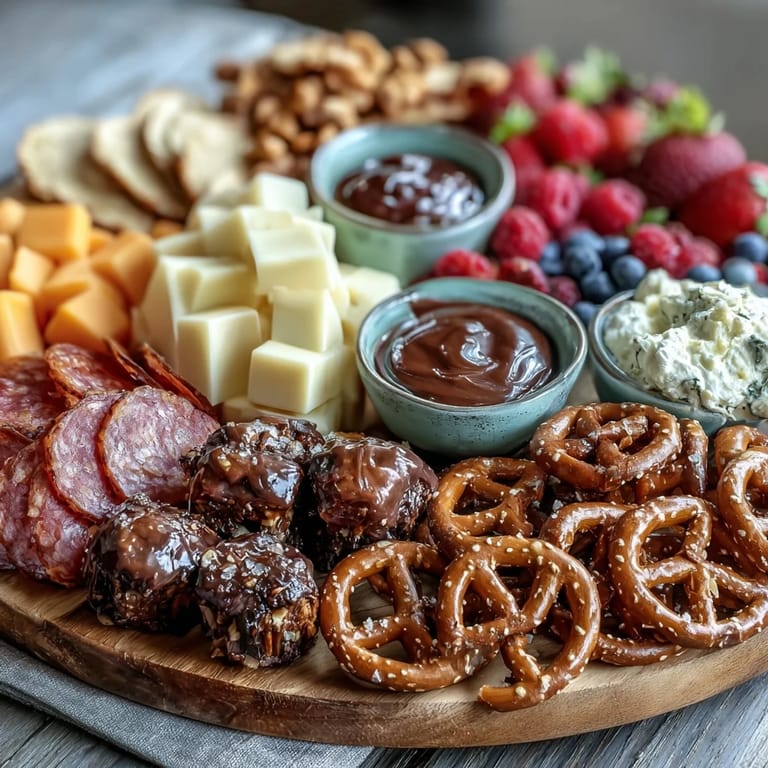
- Fill three small bowls with hummus, ranch dip, and honey or preserves, positioning them evenly around the board so people don't have to reach across everything else to access them. Leave a small spoon or knife in each so people know what they're looking at.
- Layer in the sweet elements:
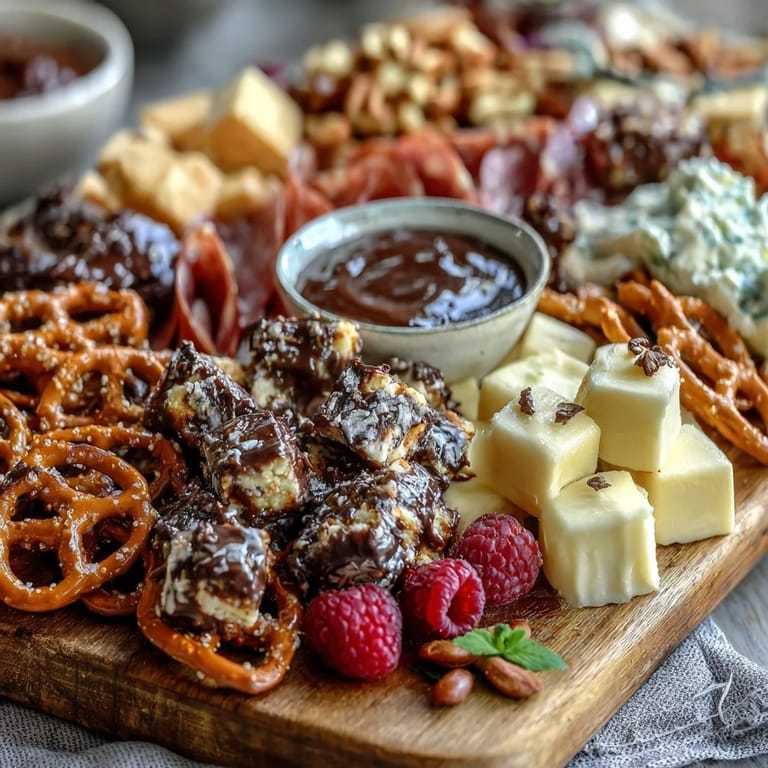
- Add chocolate-covered pretzels, berries, grapes, and cookies in clusters between the savory items, creating visual contrast and surprise when someone spots something sweet next to something salty. This is where the board becomes visually exciting rather than just "a bunch of stuff."
- Fill remaining gaps with dried fruit and candies:
- The apricots, raisins, and gummies go in the spaces left between everything else, creating a cohesive look that feels intentional rather than haphazard. Step back and look at it from across the room—if your eye can travel naturally to different areas, you've nailed it.
- Serve immediately or cover strategically:
- If you're setting it out right before guests arrive, leave it uncovered and it'll look fresh and inviting. If there's time before people show up, cover it loosely with plastic wrap so nothing dries out, and peel it back just as guests arrive for that "wow" moment.
 Pin It
 My mom came into the kitchen while I was finishing up and said, "This looks like something a fancy catering company would charge a hundred dollars for," and I realized that's the secret nobody talks about—abundance and variety feel effortless when you're just buying things that already exist and arranging them with intention. That compliment stuck with me more than any complicated recipe ever could.
The Sweet and Savory Balance
The magic of this board lives in the contrast between salty and sweet, and it took me a few boards to understand that the balance isn't about equal amounts—it's about placement. When chocolate-covered pretzels sit right next to sharp cheddar, people start experimenting with combinations they'd never try on purpose, and suddenly your snack board becomes a conversation starter. I learned this watching my uncle grab a pretzel, a piece of cheese, and a grape all at once, then turn to my aunt and say, "Try that," like he'd discovered something brilliant.
Timing and Prep Strategy
The trick nobody mentions about snack boards is that they're not a last-minute thing, but they're also not an all-day project—thirty minutes of prep work is real, but it's mostly just washing and chopping, not cooking. I usually prep everything the morning of, keeping wet ingredients in containers in the fridge, then do the actual arrangement thirty minutes before guests arrive so everything looks fresh and inviting rather than slightly tired from sitting out. The board stays beautiful throughout the party if you stay on top of replenishing things—not obsessively, but just noticing when a cluster of something is getting low and refreshing it quietly while people are talking.
Making It Work for Your Crowd
Every party crowd is different, and this board adapts to whoever you're feeding—vegetarian friends, kids who won't touch certain things, people with dietary restrictions. The genius of the snack board format is that everyone just ignores what they don't want and gravitates toward what they love, no explanations needed.
- Vegetarian guests won't even notice the board is meat-heavy because they've got three types of cheese, olives, nuts, and dips taking up half the real estate.
- Gluten-free friends need you to buy gluten-free crackers and pretzels, but those exist now and honestly taste fine enough that nobody else notices the swap.
- Keep allergen information quietly available in case someone asks, and when setting out anything with major allergens, it doesn't hurt to have a small label next to it so people with allergies don't have to interrogate every item.
 Pin It
 Snack boards became my go-to for celebrations because they're generous without being complicated, and they let you actually be present with people instead of stuck in the kitchen. Whatever you're celebrating, this board says you care without whispering that you spent all day cooking.
Recipe FAQs
- → What savory items are included in the snack board?
The board features cheddar cheese cubes, salami slices, turkey or ham roll-ups, mixed olives, roasted nuts, baby carrots, cherry tomatoes, cucumber slices, mini pretzels, and assorted crackers.
- → Which sweet bites complement the savory selections?
Sweet bites include chocolate-covered pretzels, assorted berries like strawberries and blueberries, grapes, mini cookies or macarons, dried apricots, gummy candies, and yogurt-covered raisins.
- → Are there dipping options included?
Yes, the board includes dips and spreads such as hummus, ranch dip or tzatziki, and honey or fruit preserves for added flavor contrast.
- → Can this snack board accommodate vegetarian or gluten-free diets?
Vegetarian options are included, and selecting gluten-free crackers and pretzels can make the board gluten-free friendly.
- → How should the snack board be arranged for serving?
Savory items are placed in separate groups on a large serving board, with small bowls of dips around, and sweet items arranged in clusters between savory groups for visual contrast and variety.
- → What tools are needed for assembling and serving?
A large serving board or platter, small bowls for dips and spreads, and small tongs, forks, or toothpicks are recommended for easy assembly and serving.