Pin It
 My hands were shaking the first time I decorated a cake for someone's milestone—a First Communion, actually, for my neighbor's daughter. I'd baked cakes before, but never one that carried such weight, such meaning. There's something about crafting something beautiful for a sacred moment that makes you slow down, focus, and remember why we bake in the first place. This vanilla sponge cake with its silky buttercream and delicate fondant roses became my meditation that weekend, each rose I shaped a small prayer of sorts.
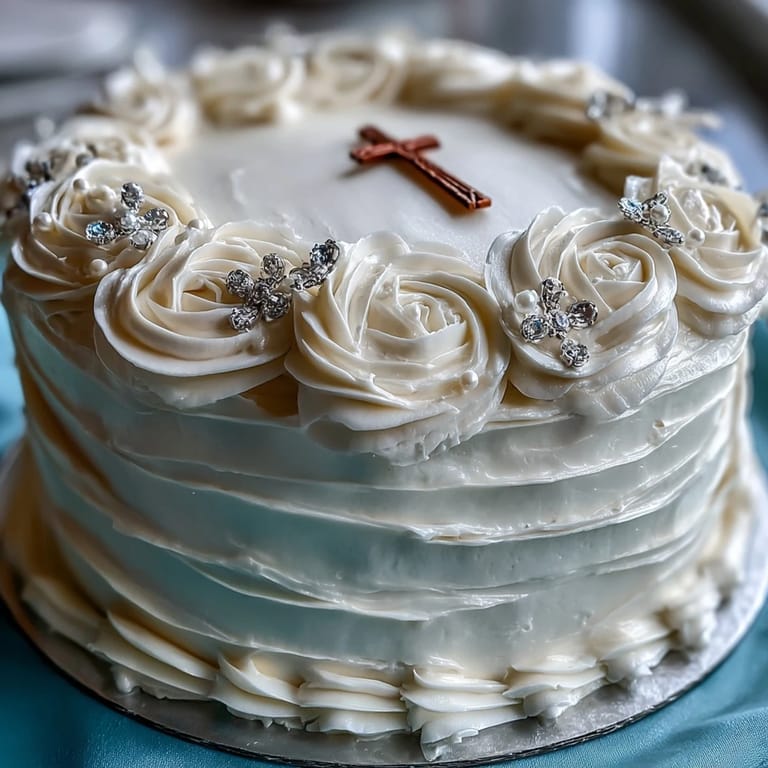
I'll never forget watching that little girl's face when she saw the cross topper gleaming on top of the cake—not at the cake itself, but at what it represented. Her mother squeezed my arm and whispered, 'You made this day even more special.' That's when I realized this recipe wasn't just about technique or presentation; it was about showing up for people during moments that matter.
Ingredients
- All-purpose flour (2 ½ cups): The foundation of your sponge, and sifting it truly does make a difference in crumb structure, though I'll admit I've skipped it when rushed.
- Baking powder (2 ½ tsp): This is your lift—make sure it's fresh because old baking powder won't give you that delicate rise.
- Salt (½ tsp): A tiny but essential amount that brightens the vanilla without making anyone guess what it is.
- Unsalted butter (1 cup for sponge, 1 ½ cups for frosting): Room temperature is non-negotiable here; cold butter won't cream properly and you'll end up with a dense cake.
- Granulated sugar (2 cups): Creates the tender crumb when properly creamed with butter, and this is where patience pays off.
- Eggs (4 large, room temperature): They emulsify into the butter and add structure; cold eggs won't incorporate smoothly.
- Pure vanilla extract (1 tbsp for sponge, 2 tsp for frosting): Don't skip the 'pure'—imitation extract tastes tinny in something this delicate.
- Whole milk (1 cup): Adds moisture without heaviness; room temperature so it doesn't shock the batter.
- Powdered sugar, sifted (5 cups): Lumps in powdered sugar become lumps in your frosting, so this step actually matters.
- Heavy cream or whole milk (3–4 tbsp): Controls the frosting consistency; add slowly so you don't end up with something too thin.
- White fondant (16 oz): The canvas for your roses; knead it gently until it's pliable but not sticky.
- Green gel food coloring (optional): For fondant leaves; gel colors don't add moisture like liquid food coloring does, which keeps fondant workable.
- Edible pearls or silver dragees (optional): These catch light and add a touch of elegance without overwhelming the design.
- Cross-shaped cake topper: The final blessing on top, grounding the whole design in its spiritual purpose.
Tired of Takeout? 🥡
Get 10 meals you can make faster than delivery arrives. Seriously.
One email. No spam. Unsubscribe anytime.
Instructions
- Prepare your oven and pans:
- Preheat to 350°F and grease those pans well—I like to butter them, dust with flour, and tap out the excess. Having everything ready before you start mixing means you won't be scrambling when the batter is ready to go.
- Dry ingredients together:
- Whisk flour, baking powder, and salt in a medium bowl; this distributes the leavening evenly so you get uniform lift throughout the cake. It's a small step that prevents dense pockets.
- Cream butter and sugar:
- Beat them together for a full 3 minutes until the mixture is pale and fluffy—this incorporates air, which is what makes the sponge tender. When you're done, it should look almost like frosting itself.
- Add eggs carefully:
- Add one egg at a time, beating well after each addition so each one fully incorporates; this keeps the batter smooth and prevents separation. If it looks slightly curdled, don't panic—a touch of flour will bring it back together.
- Alternate wet and dry:
- With the mixer on low, add about a third of the flour mixture, then half the milk, then another third of flour, then the remaining milk, then the final flour. This gentle alternation prevents overworking the gluten, which would make your cake tough.
- Fill and smooth:
- Divide batter evenly between pans and smooth the tops gently; I use an offset spatula dipped in water to keep it from dragging. Even layers mean even baking and a level cake to decorate.
- Bake with confidence:
- Bake for 30–35 minutes until a toothpick comes out clean—the kitchen will smell like vanilla heaven. Every oven is different, so start checking at 30 minutes rather than trusting the clock.
- Cool properly:
- Let cakes cool in their pans for 10 minutes (they need time to set), then turn them out onto wire racks to cool completely. Rushing this step leads to crumbled layers, which I learned the hard way.
- Make the frosting:
- Beat softened butter until creamy, gradually add sifted powdered sugar, vanilla, and salt, then add milk or cream a tablespoon at a time until you have spreading consistency. The gradual addition prevents lumps and keeps the frosting silky.
- Level and crumb coat:
- Trim cake layers flat if needed, place one on a cake board, spread with frosting, and top with the second layer. Apply a thin crumb coat—this seals in crumbs and gives your final coat something to cling to.
- Chill the crumb coat:
- Refrigerate for 20 minutes so the frosting sets and crumbs stay put; this sounds fussy but it's the secret to a polished final look.
- Apply the final frosting:
- Spread a smooth, generous layer over the entire cake using an offset spatula or bench scraper dipped in warm water. Work gently and don't overwork it, or you'll pull up the crumb coat underneath.
- Craft fondant roses:
- Roll out white fondant to 1/8-inch thickness, cut small circles or shapes, flatten them gently, and layer them into rose shapes starting with a small center ball. This takes patience and gentle hands, but each rose you make gets easier as your fingers learn the motion.
- Create leaves:
- Tint a small portion of fondant pale green, roll thin, and cut into leaf shapes; use a toothpick to press veins if you want added detail. Even simple leaves add dimension and softness to the design.
- Arrange your decoration:
- Place roses and leaves on the frosted cake in a gentle, asymmetrical pattern—it looks more natural than rigid symmetry. Edible pearls or dragees can fill small spaces and catch light beautifully.
- Crown with the cross:
- Position your cross topper at the center or top of the cake—this is the moment everything becomes sacred and meaningful. Step back and look; you've created something beautiful.
- Final chill before serving:
- Refrigerate the finished cake until it's time to serve; this firms everything up and makes the cake easier to slice cleanly.
 Pin It
 Years later, people still ask me for the recipe to that First Communion cake, and I realize it's become something of a legend in my little kitchen community. What started as nervous hands decorating for someone else's milestone has turned into something I offer willingly for other sacred moments—baptisms, confirmations, quiet celebrations that matter. The cake itself is beautiful, but it's really just a vehicle for showing love, and that's why I make it again and again.
The Science of Tender Crumb
The magic of this vanilla sponge lives in the technique, not just the ingredients. When you cream butter and sugar properly, you're not just mixing them—you're incorporating tiny air bubbles that expand during baking and create that tender, almost velvety crumb. The alternating wet-and-dry method prevents overdeveloping gluten, which would make the cake tough and rubbery. I learned this lesson after making dense cakes with my hand mixer running at full speed, thinking faster was better. It's not; gentleness is the secret.
Fondant Roses: A Meditation
Making fondant roses taught me something unexpected about patience. The first few are clumsy, your fingers too stiff, the petals too thick. By the tenth rose, your hands remember the motion and your brain stops overthinking it. There's something almost meditative about shaping petal after petal, building a flower from scratch with your hands. I now make these the night before, when the house is quiet and my shoulders aren't tense from the day. It's become my favorite part of cake decorating, even more than the frosting.
Decorating with Intention
This cake deserves decoration that feels purposeful, not just pretty. The cross topper anchors the spiritual meaning; the white roses speak to purity and joy; the edible pearls add a subtle shimmer without shouting for attention. Think about what this cake represents for the person you're making it for, and let that guide where you place each element. Asymmetry feels more thoughtful than perfect symmetry, and slightly imperfect roses feel more human and warm than machine-perfect ones.
- Consider the occasion when choosing your color palette—white fondant is classic and timeless, but pale pink or ivory roses work beautifully too.
- If fondant intimidates you, you can pipe rosettes with buttercream instead and skip the fondant entirely; it's still elegant.
- The topper can be edible or not—some families prefer symbolic toppers that don't get baked into the cake, which is perfectly fine.
 Pin It
 This cake is about much more than technique—it's an act of love wrapped in vanilla, buttercream, and white fondant. Make it slowly, with intention, and let it be a gift to someone whose moment deserves something beautiful.
Recipe FAQs
- → What is the best way to achieve tender vanilla sponge layers?
To ensure tender sponge layers, cream the butter and sugar until light and fluffy before adding eggs one at a time. Alternating flour mixture and milk gently helps maintain a soft texture.
- → How do I make smooth buttercream frosting for layering?
Beat softened butter until creamy, then gradually add sifted powdered sugar, vanilla, and salt. Add milk or cream slowly to reach the desired spreading consistency.
- → What techniques help create realistic fondant white roses?
Roll small fondant balls, flatten and shape them into petals, then assemble petals around a small base. Tint small amounts of fondant green for leaves to enhance realism.
- → Can this cake be adapted for dietary restrictions?
Yes, for gluten-free, replace all-purpose flour with a 1:1 gluten-free blend. For a lighter texture, substitute half the butter with vegetable oil.
- → How should the cake be stored after decorating?
Chill the decorated cake until serving to keep the buttercream and fondant firm and fresh. Avoid excessive humidity to maintain fondant texture.
- → What optional decorations can enhance the cake’s appearance?
Edible pearls, silver dragees, and white chocolate shavings add texture and elegant accents to complement the fondant roses and smooth frosting.