 Pin It
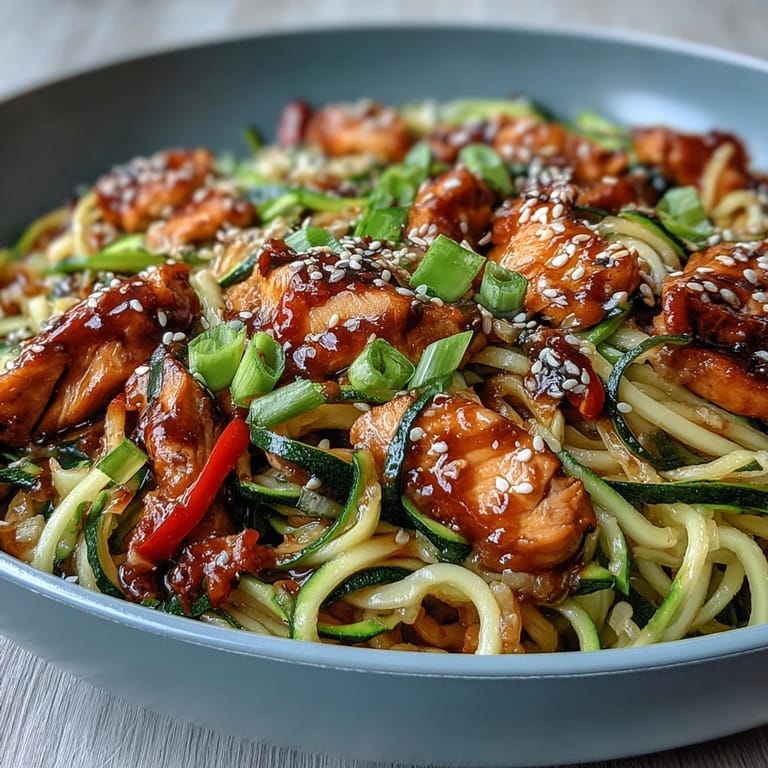
 There's something about the sizzle of chicken hitting a hot wok that makes me feel like I'm cooking something special, even on a Tuesday night when I'm just trying to eat better. I stumbled onto zucchini noodles by accident, really—my spiralizer was a gift I almost returned, gathering dust until a friend mentioned she'd switched to them for lunch bowls. One evening, I decided to stop overthinking healthy eating and just throw together what I had: chicken, vegetables, a sauce I could actually pronounce, and suddenly dinner felt exciting again.
I made this for my sister last month when she was visiting, and she kept asking if I'd added restaurant-quality ingredients because she couldn't believe how clean and bright it tasted. The whole meal took thirty minutes from start to plate, which meant we actually sat down together instead of me fussing in the kitchen while everyone else got bored. She's now made it three times, which feels like the highest compliment someone can give a recipe.
Ingredients
- Boneless, skinless chicken breast (500g): Slicing it thin means it cooks in minutes and absorbs the sauce beautifully—I've learned to partially freeze it for about fifteen minutes if I'm struggling with the knife.
- Zucchini (3 medium): This is where the magic happens for low-carb eating, and the spiralizer makes prep almost meditative once you get the rhythm down.
- Red bell pepper (1 large): The natural sweetness balances the savory sauce, and the color makes the whole dish feel intentional.
- Carrots (2 medium): Julienning them thin ensures they get tender but don't overshadow the other vegetables.
- Red onion (1 small): The sharpness cuts through the richness and adds a little bite that keeps things interesting.
- Garlic and ginger (2 cloves and 1 tablespoon): These two are the backbone of the flavor—fresh ginger makes all the difference, never the powdered kind.
- Soy sauce or tamari (3 tablespoons): Low-sodium keeps you in control of the saltiness, and tamari works seamlessly if you're avoiding gluten.
- Sesame oil (1 tablespoon): A little goes a long way here; it's about the aroma as much as the taste.
- Rice vinegar (1 tablespoon): This keeps everything bright and prevents the sauce from feeling heavy.
- Honey or maple syrup (1 tablespoon): Just enough sweetness to round out the flavors without making it taste like dessert.
- Cornstarch (1 teaspoon optional): Use this if you prefer a glossier sauce that clings to the noodles.
- Chili flakes (1/2 teaspoon optional): I usually add these because the heat makes everything taste more sophisticated.
- Olive oil (1 tablespoon): High heat demands a neutral oil with a high smoke point.
- Green onions (2, sliced): Save these for the very end as garnish so they stay fresh and vibrant.
Tired of Takeout? 🥡
Get 10 meals you can make faster than delivery arrives. Seriously.
One email. No spam. Unsubscribe anytime.
Instructions
- Build your flavor foundation:
- Whisk together the soy sauce, sesame oil, rice vinegar, honey, cornstarch, and chili flakes in a small bowl while you're prepping everything else. This five-minute step means you won't be scrambling when the pan gets hot and things move fast.
- Get the chicken golden:
- Heat your oil in a large skillet or wok over medium-high heat until it shimmers slightly, then add the chicken with a pinch of salt and pepper. Let it sit for a moment before stirring so it develops that golden color, which takes about four to five minutes total and makes your kitchen smell incredible.
- Wake up the aromatics:
- Push the cooked chicken to the side, add the garlic, ginger, and red onion to the same pan, and let them get fragrant for about a minute. You'll notice the smell shifting from just cooked chicken to something that tastes like a proper Asian kitchen.
- Build your vegetable layers:
- Add the carrots and bell pepper next, stirring for two to three minutes until they're still crisp but starting to soften. The colors will deepen slightly, which is exactly what you want.
- Treat the zucchini gently:
- Add the spiralized zucchini and toss for only one to two minutes—this is the step where patience matters because overcooked zucchini noodles turn into mush and lose the whole point of the dish. They should still have a little bite and structure.
- Bring it all together:
- Return the chicken to the pan, pour in your sauce, and toss everything for a minute or two until the sauce coats all the noodles and vegetables. If you used cornstarch, you'll see it start to thicken slightly, creating a glossy finish.
- Taste and adjust:
- Turn off the heat and taste a bite, adding a tiny pinch of salt or a splash of vinegar if something feels off. Trust your instincts here because every soy sauce tastes slightly different.
- Finish with color:
- Serve immediately while everything is still hot, scattering the sliced green onions on top for freshness and a little visual pop.
 Pin It
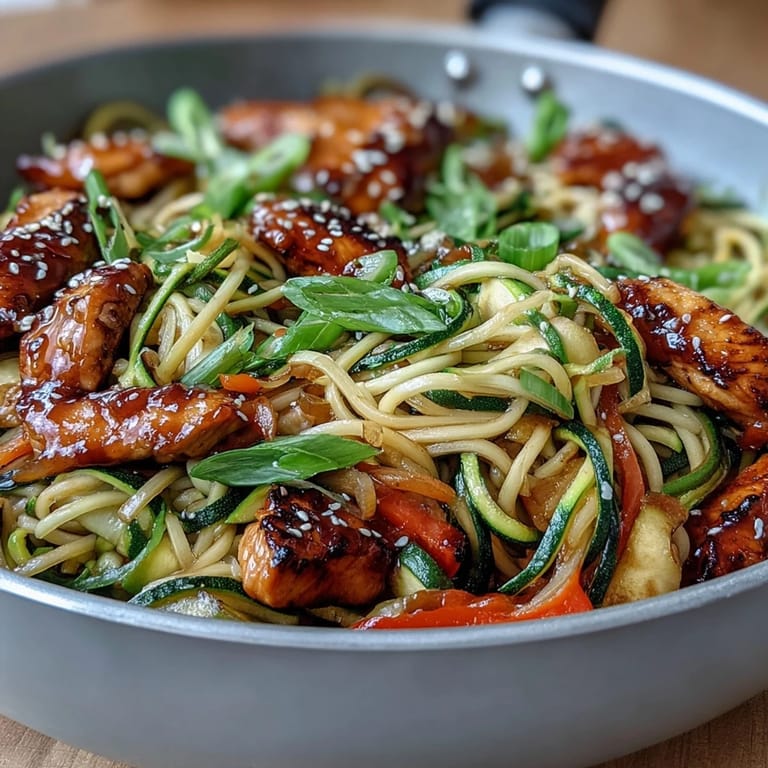
 There was a moment last week when my seven-year-old nephew asked for seconds of this stir-fry, which felt like winning the lottery because he's normally the type to pick around anything green. Watching someone you care about actually enjoy eating vegetables without being told they should is a feeling that makes the whole cooking thing feel worthwhile.
Why This Works for Weeknight Cooking
Everything about this dish is designed around the reality that most of us don't have much time but still want to eat something that tastes intentional. The prep takes maybe ten minutes if you're not particularly fast with a knife, and the actual cooking is only about fifteen minutes of active time at the stove. Once you've made it once, your hands know the rhythm and it becomes automatic—that's when cooking gets fun instead of feeling like a chore.
Customizing Without Losing the Plot
I've made this recipe about two dozen times now with different proteins and vegetables depending on what's in my fridge, and it's held up beautifully every single time. Swapping chicken for shrimp, tofu, or even beef works seamlessly, and you can absolutely use whatever vegetables you like as long as you respect the cooking times—harder vegetables like broccoli need more time than delicate ones like snap peas. The sauce is so forgiving that it makes the whole dish feel less like following rules and more like having a conversation with your food.
The Sauce Philosophy and Other Thoughts
The magic of this recipe lives entirely in the balance of the sauce—salty, sweet, sour, and a little bit of richness from the sesame oil all working together. I learned this by accident when I tried to cut out the honey to save calories and ended up with something that tasted flat and one-dimensional, which taught me that healthy eating doesn't mean removing pleasure from food. You can absolutely make this Whole30 by swapping the honey for coconut aminos and the sesame oil for another neutral oil, or keto by using allulose instead of honey.
- Toasted sesame seeds scattered on top at the very end add a nutty richness that makes people think you're more of a cook than you actually are.
- If you want to meal prep this, keep the zucchini noodles separate from the sauce and other components, then combine just before eating so nothing gets mushy.
- This pairs beautifully with jasmine rice or cauliflower rice if you want something to catch the extra sauce, or honestly just a side of edamame and you're set.
 Pin It
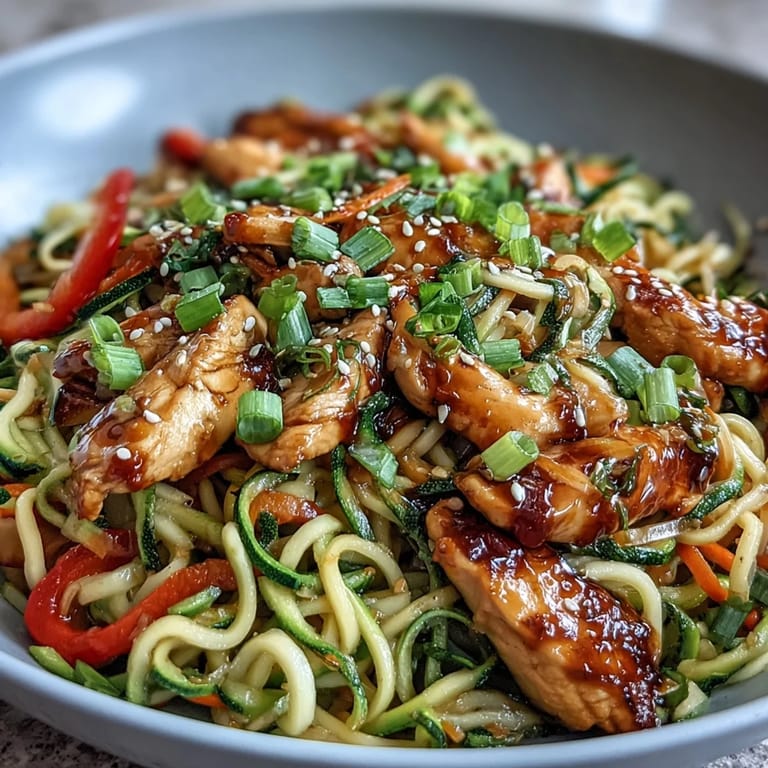
 This recipe became my answer to the question I used to ask myself every evening: what can I make that's healthy, tastes good, and doesn't make me feel like I spent my whole day cooking? Now it's just part of my normal rotation, the kind of meal that feels special enough to serve to someone you care about but easy enough that you'll actually make it on a random Tuesday.
Recipe FAQs
- → How do I keep zucchini noodles from getting soggy?
Stir-fry zucchini noodles briefly, about 1-2 minutes, to maintain their firm texture without releasing too much water.
- → Can I substitute chicken with other proteins?
Yes, tofu or shrimp work well as alternatives for different dietary preferences or flavors.
- → What sauce ingredients create the savory Asian flavor?
The combination of low-sodium soy sauce or tamari, sesame oil, rice vinegar, honey, and fresh ginger builds the rich savory profile.
- → How do I adjust heat levels in the dish?
Adding or omitting chili flakes controls spiciness, allowing you to customize the heat to your taste.
- → What is the best way to prepare vegetables for stir fry?
Slice vegetables thinly and evenly to ensure quick, uniform cooking and preserve their vibrant colors and crunch.