 Pin It
 The first time I made a posset, I was standing in my kitchen on a gray December afternoon, skeptical that cream and lemon juice could actually work together without curdling into a disaster. My aunt had sent the recipe with a note saying it was foolproof, which made me even more nervous. But when I stirred that bright lemon juice into the hot cream and watched it transform into something silky and elegant instead of splitting apart, I understood why she'd been so confident. Now I make these whenever I want to feel like I'm doing something impossibly fancy without the stress.
I made these for my partner's birthday dinner last summer, and I still remember him laughing because the first time he cracked through the brûlée top with his spoon, a tiny piece of caramelized sugar flew across the table. That moment—the joy of something so simple being so delightful—is exactly why I come back to this recipe.
Ingredients
- Double cream (500 ml): The foundation of everything here; it needs to be full-fat and cold so it sets properly when the lemon juice works its magic.
- Caster sugar (140 g plus 6-8 tsp for topping): Finer than granulated, it dissolves more smoothly into the hot cream and caramelizes beautifully under the torch.
- Lemon zest (from 2 lemons): This is where the flavor lives; don't skip it or use bottled zest, the fresh oils make all the difference.
- Freshly squeezed lemon juice (90 ml): The acid that makes everything happen; bottled juice won't have the same punch or brightness.
- Large lemons (6, for shells): Choose ones with thick skins that can hold their shape when hollowed out; avoid any with soft spots or thin walls.
Tired of Takeout? 🥡
Get 10 meals you can make faster than delivery arrives. Seriously.
One email. No spam. Unsubscribe anytime.
Instructions
- Prepare your vessels:
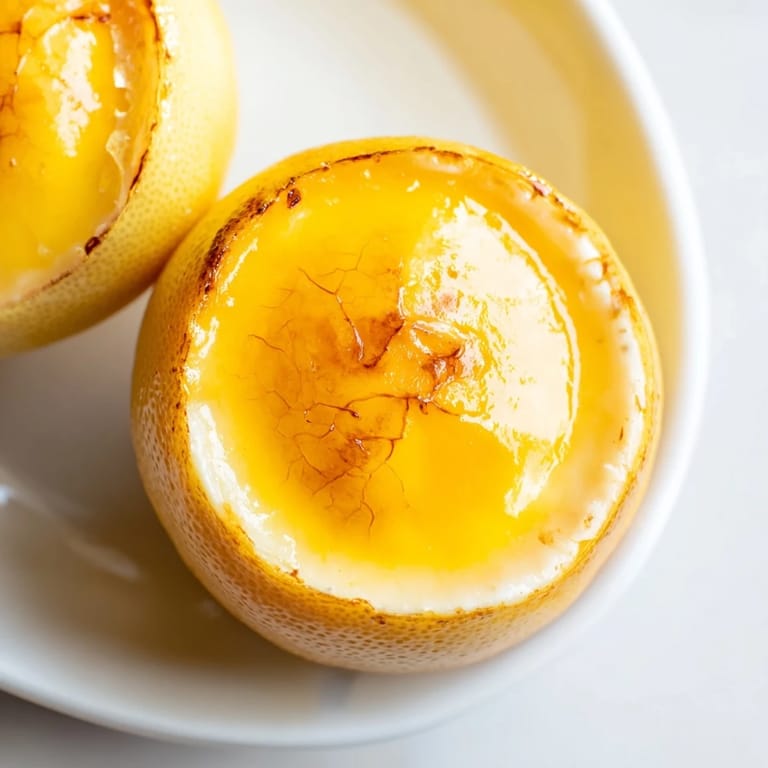
- Halve six lemons lengthwise and gently scoop out all the flesh with a spoon or melon baller, being careful not to puncture the skin. Trim a thin slice from the bottom of each shell so they sit flat without rolling, then chill them while you make the posset.
- Heat the cream:
- Pour the double cream into a medium saucepan, add the sugar and lemon zest, and stir over medium heat until it reaches a gentle boil and the sugar completely dissolves. Let it simmer for exactly three minutes—this matters because it helps the posset set properly—then remove from the heat and let it cool for about ten minutes.
- Add the lemon juice:
- Stir the fresh lemon juice into the warm cream slowly and watch as it magically thickens into something silky and custard-like. Strain the whole thing through a fine mesh sieve to remove the zest bits, which gives you that impossibly smooth texture.
- Fill the shells:
- Carefully pour the still-warm posset into each chilled lemon shell, filling them nearly to the rim. Transfer them to the fridge and leave them untouched for at least three hours, or overnight if you're planning ahead.
- Torch the tops:
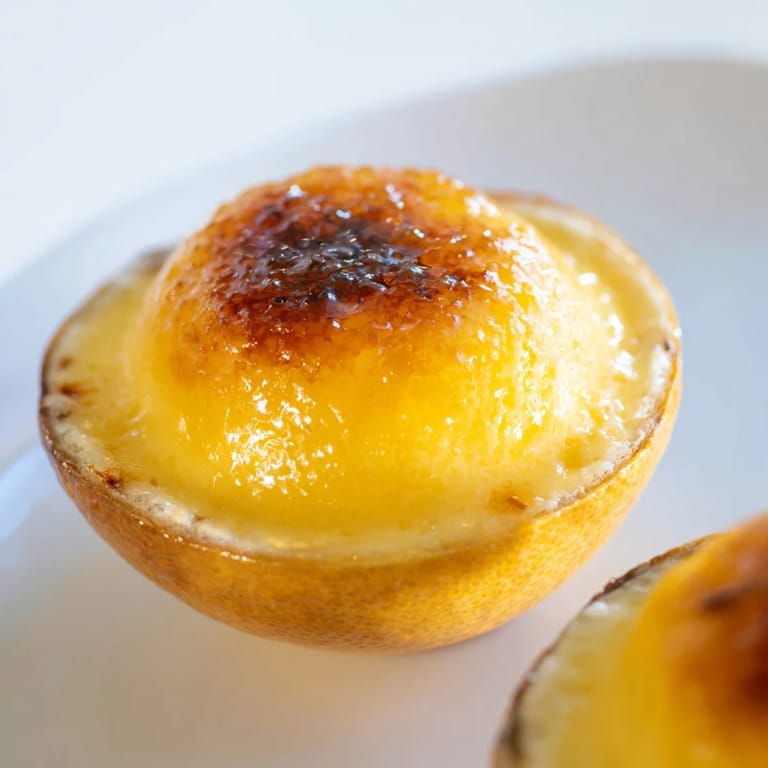
- Just before serving, sprinkle about a teaspoon of caster sugar over each posset, spreading it into an even layer. Using a kitchen blowtorch, caramelize the sugar in smooth, circular motions until it turns amber and crisp, then let it harden for two to three minutes before anyone digs in.
 Pin It
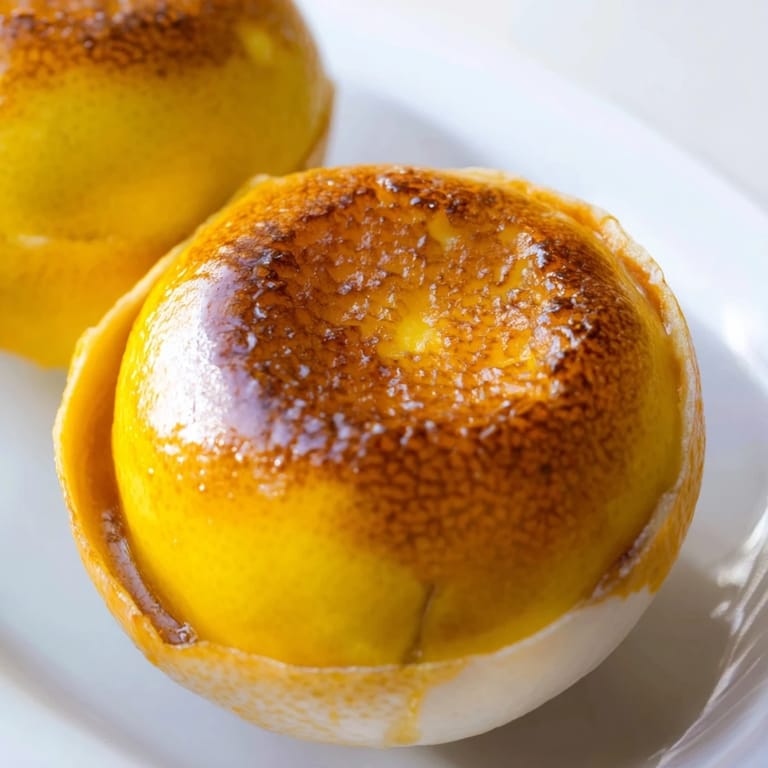
 There's something about serving food in its own natural container that makes people feel like they're being given a gift. These lemon shells do that better than anything else I've made.
Flavor Variations That Elevate the Dish
If you want to add another layer of complexity, infuse the cream with a single sprig of fresh thyme or basil while it's simmering, then fish it out before you add the lemon juice. Honestly, I was skeptical the first time I tried this—it sounded fussy and pretentious—but the herbs whisper in the background and make the lemon sing even brighter. You could also add a pinch of vanilla or a tiny splash of limoncello to the strained mixture if you're feeling bold, though I tend to leave it alone because the lemon is already doing all the heavy lifting.
Make-Ahead and Serving Wisdom
The beauty of possets is that they're genuinely happy sitting in your fridge for a full day before you torch the tops, which means you can do almost all the work in the afternoon and just caramelize them right before people arrive. I usually set them up in the morning, cover them loosely with plastic wrap so they don't absorb fridge smells, and then torch them while everyone's still having drinks in the living room. Serve them with something crisp and buttery—shortbread or almond biscuits are perfect alongside because the contrast between the creamy posset and the crunchy cookie is absolute heaven.
Equipment and Substitutions You Should Consider
You really do need a kitchen blowtorch for the brûlée topping to work properly; it's the only way to get that perfect amber crust without warming up the posset underneath. If you genuinely don't have one, a broiler at maximum heat can work, but you have to watch it obsessively because the sugar goes from caramelized to charcoal in about ten seconds. The rest of the equipment is pretty standard—a citrus juicer makes the lemon juice extraction easier if you're making these for a crowd, and a fine mesh strainer is non-negotiable for removing the zest and creating that silky texture.
- A melon baller or sturdy spoon works equally well for scooping out lemon flesh without puncturing the delicate skin.
- If your blowtorch isn't cooperating, try a very hot cast-iron skillet pressed gently against the sugar, moving it constantly so it caramelizes evenly.
- Make sure your cream is truly full-fat and cold when you start; that's what guarantees the posset actually sets.
 Pin It
 Make this when you want to impress someone without feeling like you've been chained to the stove. It's the kind of dessert that tastes like indulgence but feels like joy.
Recipe FAQs
- → How do I prepare the lemon shells?
Halve large lemons lengthwise, carefully scoop out the flesh while keeping the shells intact, and trim a thin slice from the bottom so they stand upright. Chill before filling.
- → What’s the best method to caramelize the sugar topping?
Sprinkle caster sugar evenly over the set cream, then use a kitchen blowtorch or hot grill to caramelize until crisp and golden. Let it harden for a few minutes before serving.
- → Can the cream mixture be flavored differently?
Yes, adding herbs like thyme or basil during simmering infuses additional aroma. Remove herbs before adding lemon juice for a clean finish.
- → How long should the lemon cream chill?
The cream needs at least 3 hours in the refrigerator to fully set and develop its silky texture.
- → Are the lemon shells edible?
Lemon shells are traditionally used as serving vessels and can be eaten, though they are quite tart and fibrous.