 Pin It
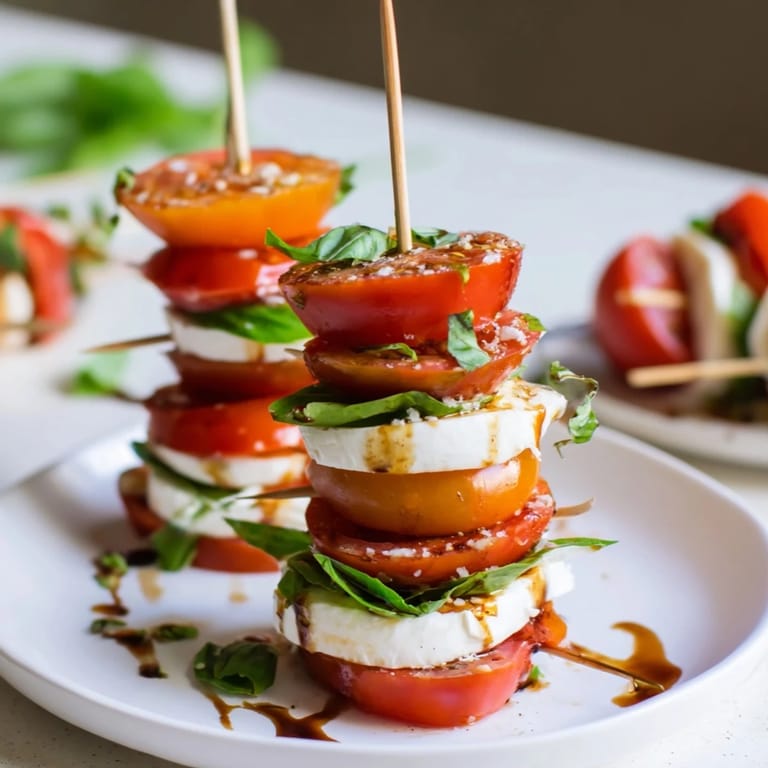
 There's something magical about serving food that requires no cooking, just intention. I discovered this tower of tomato, mozzarella, and basil at a small trattoria tucked into a Tuscan hillside, where the chef assembled them with the kind of casual precision that made it look effortless. What struck me most wasn't the ingredients—they were impossibly simple—but how the vertical stack transformed something ordinary into something that felt like edible architecture. Now when I make it at home, I chase that same feeling: how can three perfect ingredients speak so loudly?
I made this for a friend's impromptu dinner party after she texted asking if I could bring something that didn't need to be heated. Standing at her kitchen counter, I stacked these pillars while she opened wine, and watching her face light up when she realized how elegant and simple they were made me understand why Italian cooking endures—it's not about complexity, it's about respect for ingredients.
Ingredients
- Fresh Ripe Tomatoes (4 medium): The foundation of everything here, so choose tomatoes at peak ripeness with deep color and slight give when pressed. Room temperature tomatoes will taste infinitely better than cold ones pulled straight from the fridge.
- Fresh Mozzarella Cheese (250 g): This should be creamy and delicate, never the rubbery kind from a block. Look for it in the specialty cheese section and use it the same day you buy it for the best texture.
- Fresh Basil Leaves (1 small bunch): Tear them by hand rather than cutting with a knife, which bruises the leaves and darkens the edges. The smell should be bright and peppery.
- Extra-Virgin Olive Oil (2 tbsp): This is your final flourish, so use something you actually like tasting on its own. The quality matters here because there's nowhere to hide.
- Balsamic Glaze (2 tbsp): The thick, syrupy kind drizzles beautifully and adds a sweet-tart finish that makes everything sing.
- Sea Salt and Freshly Ground Black Pepper: Finish generous with both—these pillars are a canvas waiting for seasoning.
Tired of Takeout? 🥡
Get 10 meals you can make faster than delivery arrives. Seriously.
One email. No spam. Unsubscribe anytime.
Instructions
- Slice Everything to Uniform Thickness:
- Cut tomatoes and mozzarella into rounds about the thickness of a pencil, aiming for eight slices each so you have matching pieces. Uneven slices will wobble and shift, so take your time here—it's the only part that truly matters.
- Prepare Your Basil:
- Rinse the leaves gently and pat them completely dry with paper towels, because any moisture will cause the stack to slip. Leave the leaves whole if they're small, or tear larger ones into manageable pieces.
- Build the Stack:
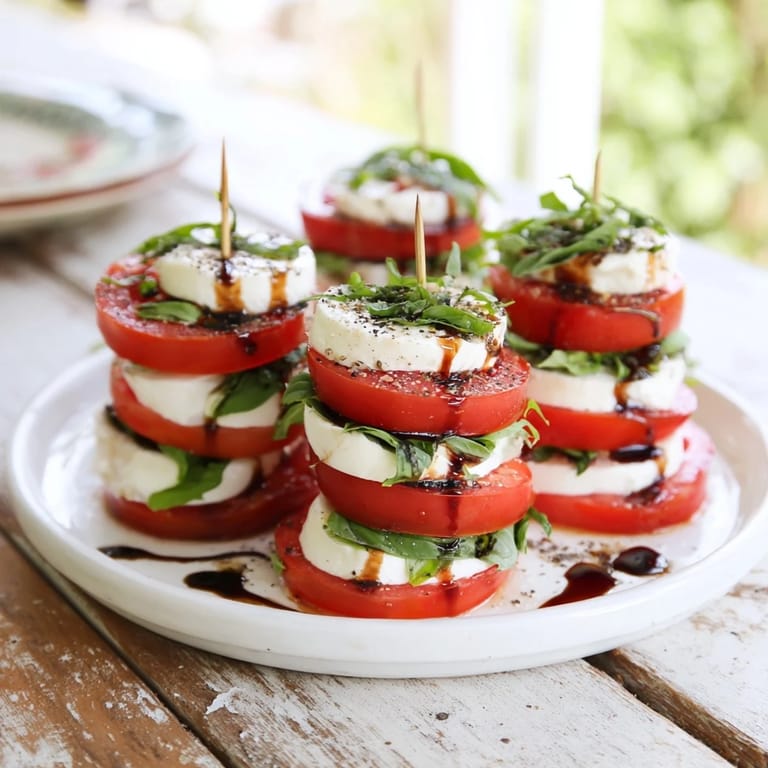
- On your serving platter, place a tomato slice as the foundation, then a mozzarella slice, then a basil leaf pressed gently into place. Repeat three to four times, finishing with a basil leaf on top so the tower feels intentional and complete.
- Anchor with a Skewer:
- Push a long toothpick or bamboo skewer vertically through the center of each stack to hold everything together. This is practical but also becomes part of the visual, so think of it as a handle for eating and a small design element.
- Drizzle and Season:
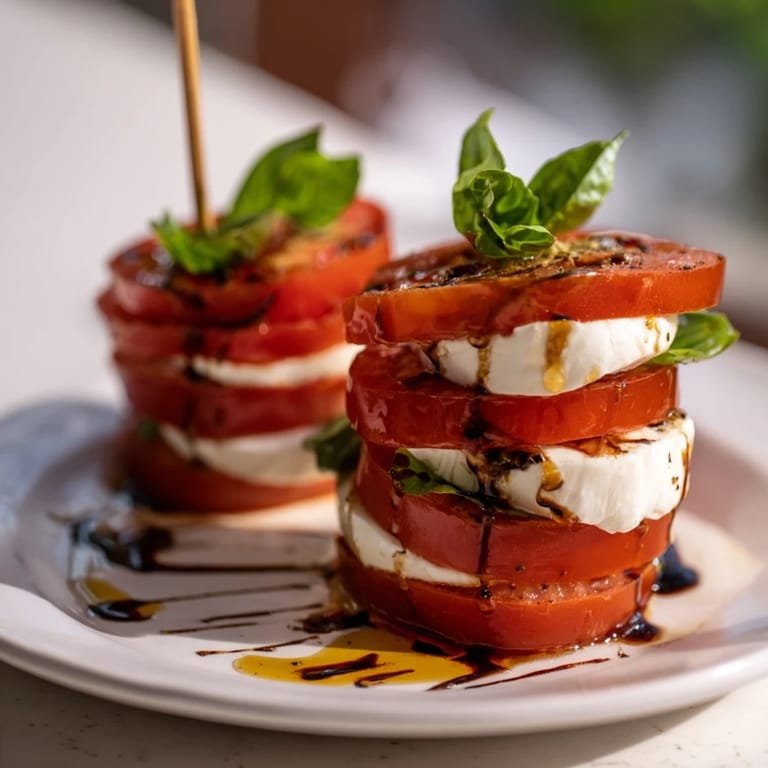
- Distribute olive oil and balsamic glaze across the tops and sides of the pillars with a light hand, letting some pool on the plate. Finish with a pinch of sea salt and several grinds of black pepper for each tower.
- Serve Fresh:
- These are best eaten within an hour of assembly while the mozzarella is still cool and the tomato hasn't released too much juice. If you must wait, hold off on drizzling the glaze until just before serving.
 Pin It
 I remember my mother tasting one of these at a family gathering and saying, almost surprised, 'This is just tomato and cheese, but somehow it tastes like a memory.' That stuck with me. Sometimes the simplest things reveal what we actually care about in food: freshness, restraint, and the confidence to let ingredients speak for themselves.
Choosing Your Tomatoes Matters More Than You Think
The temptation is to reach for the biggest, most photogenic tomato in the bin, but what you really want is a tomato with color that goes all the way through—deep red or sunset orange, never pale pink or white inside. A tomato picked too early will taste like disappointment no matter how pretty it looks. If you can find heirloom varieties, each slice will have different colors and patterns, turning your stack into an accidental work of art.
The Mozzarella Question
Fresh mozzarella is temperamental in a way that's actually comforting once you understand it. It's cold and delicate, which is exactly why it plays so beautifully against warm tomato flavor, but it also means it should be handled gently and used quickly. If you find yourself working with mozzarella that's a few days old, it will be tougher and less creamy, so timing matters. Buy it the day you plan to use it if you can.
Small Touches That Make the Difference
This recipe thrives on finishing touches that feel personal rather than prescribed. Some people like a whisper of dried oregano, others swear by a tiny pinch of flaky sea salt that catches the light. The balsamic glaze is your chance to add sweetness or intensity depending on how generous you are.
- Warm your plates slightly before assembling if you have time, which helps the flavors open up.
- Tear basil leaves by hand instead of cutting them—the bruised edges from a blade will turn dark and bitter.
- Serve these as soon as you finish plating so the mozzarella stays cool and the stack feels fresh rather than sitting around.
 Pin It
 What makes this recipe special isn't technique or secret ingredients; it's the willingness to serve something honest and let it be enough. Once you taste how good three perfect things can taste together, you'll find yourself making this again and again, each time remembering why simplicity, when done right, feels like luxury.
Recipe FAQs
- → What type of tomatoes work best for the stacks?
Use medium ripe tomatoes that are firm yet juicy, like vine-ripened or Roma tomatoes, to ensure the stacks hold their shape well.
- → Can I substitute mozzarella with a different cheese?
Fresh mozzarella is preferred for its creamy texture, but burrata or a mild fresh cheese can be used as alternatives.
- → How do I assemble the tomato and mozzarella pillars?
Alternate slices of tomato, mozzarella, and basil leaves in layers about 3-4 high, securing them vertically with a toothpick or skewer.
- → Is it necessary to use balsamic glaze?
Balsamic glaze adds a sweet, tangy finish that complements the ingredients, but a simple reduction of balsamic vinegar can be used as well.
- → Can I prepare this dish ahead of time?
Assemble shortly before serving to maintain the freshness of basil leaves and prevent tomatoes from releasing too much juice.