 Pin It
 The first time I assembled a veggie board for myself, it wasn't even intentional—I was genuinely too lazy to cook after work and just started grabbing whatever looked good from the fridge. Cheese, some vegetables I'd bought with good intentions, a handful of nuts, and suddenly I had something that felt less like dinner and more like a celebration on a plate. That accidental moment turned into my most requested lunch, the kind of thing people ask for when they come over because it looks both impressive and completely achievable.
I made this for a friend who was going through a rough week, and watching her just graze and smile for an hour taught me something about food that no recipe can explain. It wasn't about being full; it was about having options and permission to just... exist with good things in front of you. That's when I realized this board was about more than lunch.
Ingredients
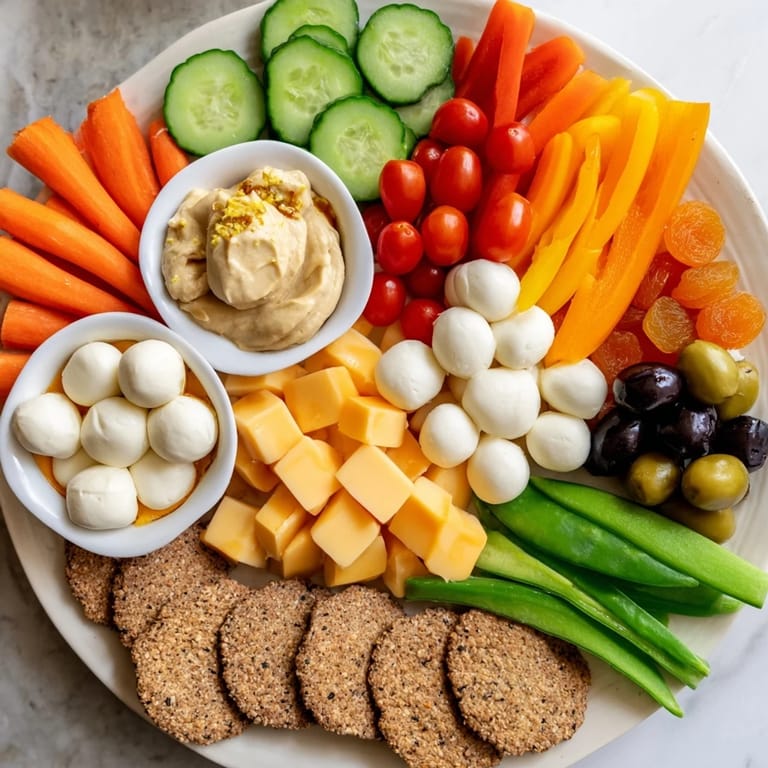
- Baby carrots: These are your sweet anchors—I use them because they don't need cutting and somehow taste better than full-size ones when eaten raw.
- Cucumber slices: Cut them thick enough that they stay crisp and don't get soggy, thin enough to actually fit in your mouth.
- Cherry tomatoes: Leave them whole unless they're enormous—there's something satisfying about how they pop.
- Bell pepper strips (mixed colors): The rainbow matters here, both for your eyes and because different colors taste subtly different.
- Sugar snap peas: These are the vegetables that made me stop hating vegetables—sweet, crunchy, and you can eat the whole thing.
- Hummus: I learned the hard way that homemade tastes wildly different, but store-bought works beautifully and saves you 20 minutes.
- Ranch or Greek yogurt dip: Ranch is the crowd-pleaser, but Greek yogurt dip is the secret move for feeling slightly virtuous.
- Cheddar cheese, cubed: Sharp cheddar hits different than mild—it has personality, and that matters on a board.
- Mozzarella balls: These little bocconcini pieces are my favorite because they're elegant but also fun to eat.
- Gouda or Swiss cheese, sliced: Gouda brings a subtle sweetness, Swiss brings holes for visual interest—pick whatever calls to you.
- Whole grain crackers: Quality matters here; cheap crackers fall apart in your hands, and that's just sad.
- Roasted nuts: Almonds and cashews are my usual picks, but walnuts add an earthiness if you want it.
- Olives: This is your salty moment—don't skip it, and don't use the pitted ones if you can help it.
- Dried fruit: Apricots and cranberries bridge sweet and savory in a way that feels slightly fancy.
Tired of Takeout? 🥡
Get 10 meals you can make faster than delivery arrives. Seriously.
One email. No spam. Unsubscribe anytime.
Instructions
- Start with vegetables you trust:
- Wash and dry everything thoroughly—wet vegetables will make your board sad and soggy within an hour. Slice your cucumbers and peppers right before assembling so they stay crisp and full of personality.
- Create sections with intention:
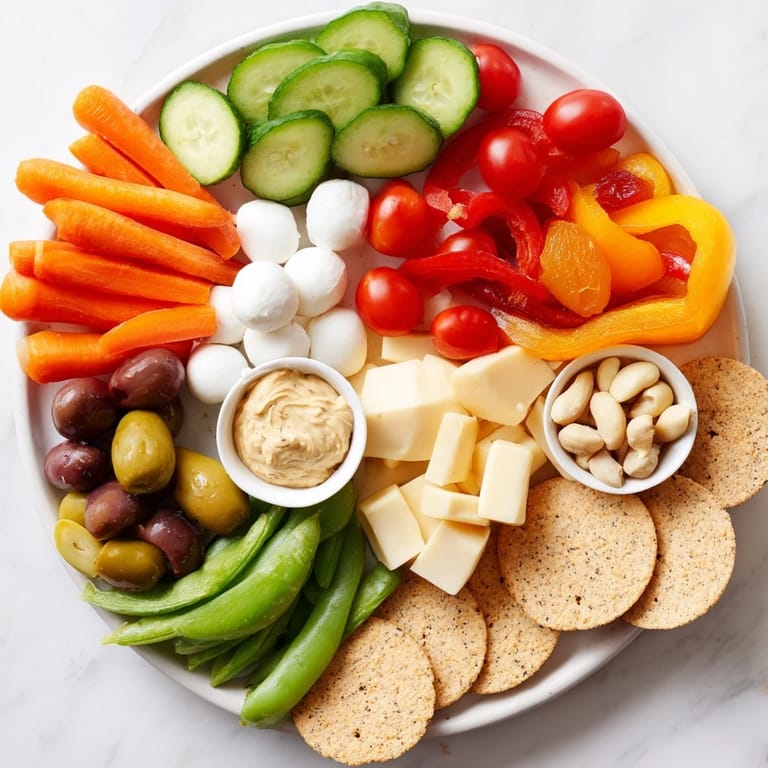
- Arrange vegetables in loose sections across your board, leaving pockets of empty space because those gaps are where the magic happens. Think of it like plating, but friendlier and more forgiving.
- Nestle your dips:
- Pour dips into small bowls and tuck them into natural spots on the board—corners work great, or dead center if you want them to be the star. The bowls themselves become part of the design.
- Add cheese like you're creating pockets of joy:
- Cluster your different cheeses together so people can compare and taste, then scatter a few cubes and balls around for discovery. The mozzarella balls especially look pretty grouped in odd numbers.
- Fill the remaining real estate:
- Crackers, nuts, olives, and dried fruit go into the gaps and along the edges, creating rhythm and making sure every bite has options. This is where the board goes from nice to irresistible.
- Serve with confidence:
- Eat it immediately while everything is crisp, or cover it loosely with plastic wrap and refrigerate until you're ready. Either way, people will think you spent hours on this.
 Pin It
 My mom called it "the adult Lunchables moment" the first time I made this, and I've never heard it described better. It's not fancy, but it's something you can offer to almost anyone and watch them relax because they found exactly what they needed on a board in front of them.
The Secret to Board Arrangement
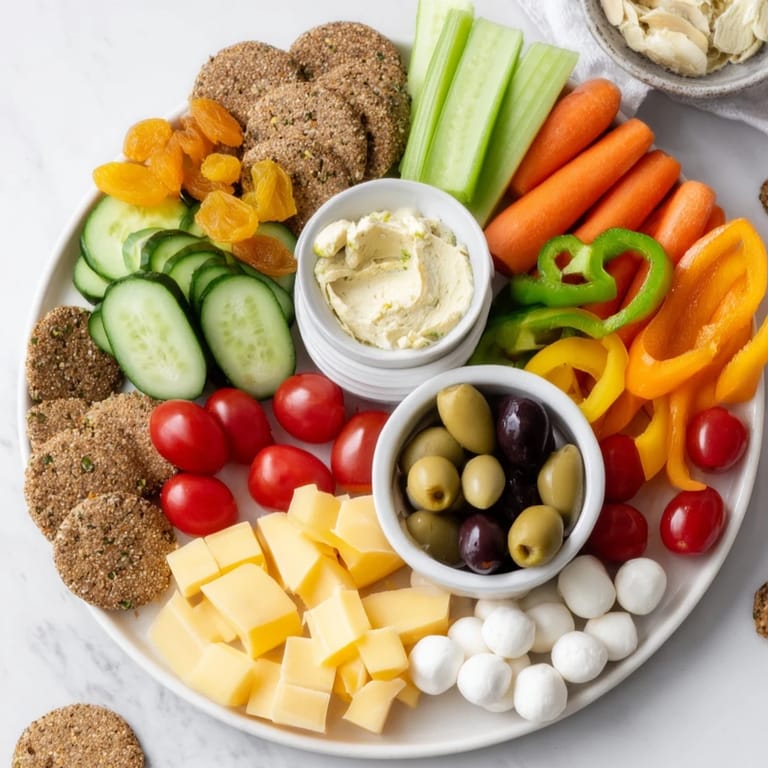
The difference between a scattered board and one that looks intentional is actually simple: think about color balance and rhythm. Don't dump all your orange carrots in one corner and green peppers in another—let them talk to each other across the board. Heights matter too; stack some things, lay others flat, and let cheese stand a bit taller. It's less about rules and more about making your eye want to travel across every section.
What Makes a Board Actually Satisfying
I used to think vegetable boards were just for people trying to be healthy, until I realized they're actually about having choices. Some days you want creamy, so you load up on hummus and soft cheese. Other days you want crunch, so nuts and crackers become your thing. The beauty is that a well-built board lets you be hungry for whatever you're actually hungry for, without anyone having to ask what you want for lunch.
Customization That Actually Works
The moment someone asked if they could add hard-boiled eggs to one of my boards, I realized I'd been thinking too small. This isn't a locked recipe—it's a template for exactly what you want on a given day. Some people add roasted chickpeas for extra protein, others swap in fresh mozzarella, and I've seen someone add a small honeycomb wedge that made everything better. The only rule is that it should make you happy when you look at it.
- Hard-boiled eggs, sliced or halved, add richness and keep people full longer.
- Roasted chickpeas or beans are your secret move for vegetarian protein that actually satisfies.
- A drizzle of honey over the cheese section is the kind of unexpected moment that gets remembered.
 Pin It
 This board has quietly become the thing I make when I want to feel both nourished and genuinely happy about what I'm eating. That's the whole point.
Recipe FAQs
- → What fresh vegetables are included?
The board features baby carrots, cucumber slices, cherry tomatoes, bell pepper strips, and sugar snap peas for a variety of textures and flavors.
- → Which cheeses work best on this board?
Cheddar cubes, mozzarella balls (bocconcini), and sliced gouda or Swiss offer a creamy, mild mix that pairs well with fresh veggies and dips.
- → What dips complement the veggie snacks?
Hummus and ranch dressing or a Greek yogurt dip provide creamy, flavorful options that enhance the fresh vegetable taste.
- → Can this board accommodate dietary preferences?
Yes, using gluten-free crackers and plant-based cheeses or dips can make it vegan or gluten-free while keeping it delicious.
- → How should the board be served and stored?
Arrange all items on a large platter and serve immediately, or cover and refrigerate until ready to enjoy, keeping freshness intact.
- → What crunchy elements add texture?
Whole grain crackers and roasted nuts like almonds, cashews, or walnuts offer satisfying crunch and complement the soft vegetables and cheeses.