 Pin It
 There's a particular morning in early March when I stood at my kitchen window watching the last snow melt into the garden beds, and I realized I was caught between seasons. My pantry still held winter's heavy root vegetables, but the farmer's market had just started selling tender spring greens. That's when I created this soup, a way to use what I had while celebrating what was coming. It became my ritual for those uncertain weeks when the weather can't decide what it wants to be.
I made this for my neighbor one evening when she'd been working double shifts and mentioned not having energy to cook. She came over with her kids, and watching her youngest ask for seconds of a vegetable soup felt like a small victory. That bowl somehow bridged the gap between what everyone needed and what they were actually willing to eat.
Ingredients
- Leek (1 medium, white and light green parts only, sliced): The gentle onion of the vegetable world, it sweetens as it cooks and gives the broth a subtle elegance without overpowering anything.
- Carrots (2 medium, peeled and diced): These are your sweetness backbone, so don't skip them or use overly thick cuts or they'll take forever to soften.
- Parsnips (2 medium, peeled and diced): They taste like carrots' earthier, more sophisticated cousin and add a depth that makes people ask what the secret ingredient is.
- Rutabaga (1 small, peeled and diced): If you can't find it, turnips work, or honestly potatoes if you're in a pinch, though the flavor will be less complex.
- Green cabbage (1 cup, shredded): Add this near the end so it stays tender and keeps its bright color instead of turning into mush.
- Baby spinach (1 cup, roughly chopped): This is your nod to spring, wilting in just minutes and adding nutrients that make you feel better about the whole bowl.
- Celery stalks (2, diced): The unsung hero that gives structure to the flavor profile, especially if you use the leafy tops too.
- Garlic cloves (2, minced): One minute is all it takes, and if you go longer it turns bitter and ruins the whole moment.
- Pearl barley (3/4 cup, rinsed): Rinsing removes that cloudy starch coating, so your broth stays clear and refined instead of looking murky.
- Low-sodium vegetable broth (8 cups): Use the good stuff here because it's your base, and salty broth will make the whole soup inedible.
- Olive oil (1 tablespoon): Just enough to start the vegetables without making it greasy.
- Bay leaf (1): This sits quietly in the background adding sophistication, so remember to fish it out before serving or someone's dinner gets weird.
- Dried thyme (1 teaspoon): The backbone of the seasoning, earthy and warming without being loud.
- Dried marjoram (1/2 teaspoon): This is my secret weapon, slightly floral and reminiscent of oregano's gentle cousin.
- Salt and freshly ground black pepper (to taste): Always taste at the end because seasoning is personal and depends on your broth.
- Fresh parsley (2 tablespoons, chopped): The bright finishing touch that makes it feel like you actually tried.
Tired of Takeout? 🥡
Get 10 meals you can make faster than delivery arrives. Seriously.
One email. No spam. Unsubscribe anytime.
Instructions
- Heat your oil and start the winter vegetables:
- Pour oil into your largest pot and let it shimmer over medium heat, then add leek, carrots, parsnips, rutabaga, and celery. You're looking for them to soften at the edges and become fragrant, about 5 to 7 minutes, stirring occasionally so nothing sticks or burns.
- Wake up the garlic:
- Add your minced garlic and stir constantly for just one minute until it smells incredible and turns golden. This is the moment where you know you've nailed the foundation of the whole soup.
- Build the broth:
- Pour in the rinsed barley first, let it catch the oil for a moment, then add all your broth along with the bay leaf, thyme, and marjoram. Bring everything to a rolling boil, watching the pot come alive with heat and movement.
- Let it simmer and develop:
- Lower the heat, cover the pot loosely, and let it bubble gently for 35 minutes while you do something else nearby, stirring every so often. The barley will plump up and the root vegetables will turn tender, and the flavors will start talking to each other.
- Add the green awakening:
- Stir in your shredded cabbage and chopped spinach, let them dance in the hot broth for about 5 to 7 minutes until they're wilted but still bright. This is where spring officially enters the pot.
- Season with intention:
- Taste the soup carefully, then add salt and pepper bit by bit until it tastes like something you'd crave. Don't forget to fish out the bay leaf before serving.
- Serve and celebrate:
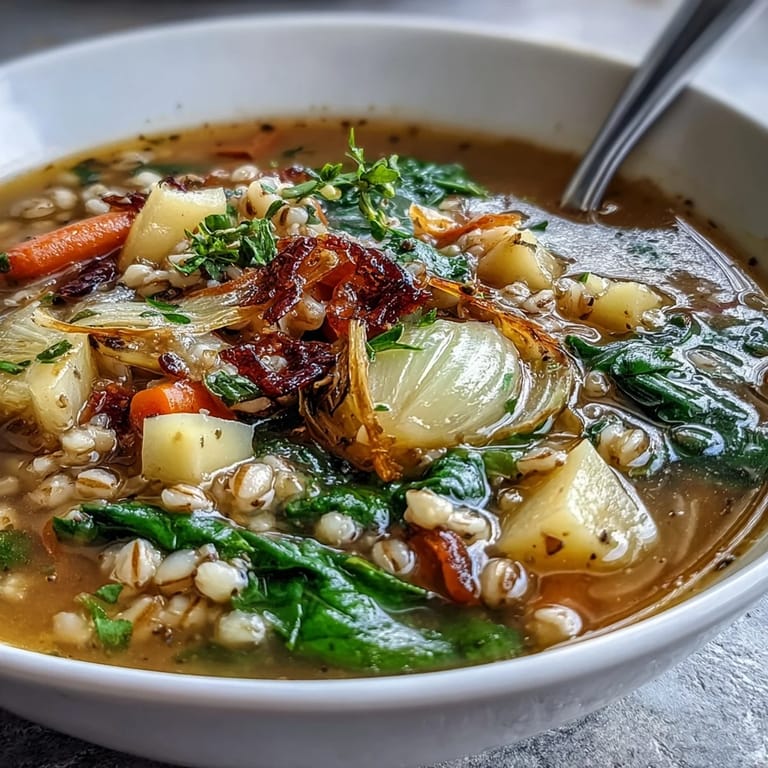
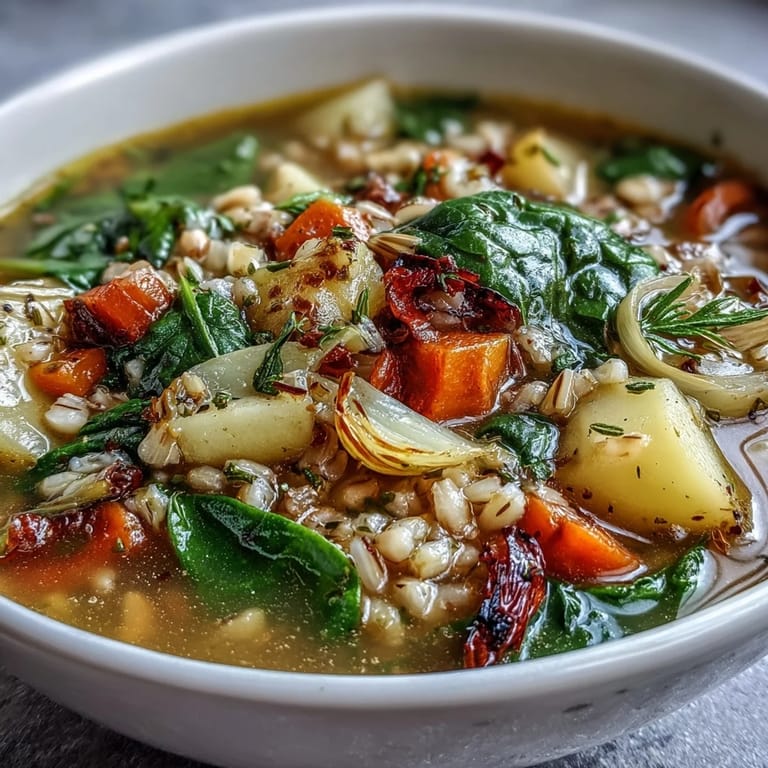
- Ladle into bowls and top with a scatter of fresh parsley, then serve hot with something crusty to soak up the goodness.
 Pin It
 My daughter once told me this soup tasted like "winter saying goodbye," which is exactly what I was going for but couldn't have said better myself. That's when I knew I'd made something that worked on more than just a flavor level.
The Beauty of Seasonal Transitions
This soup exists in that magical space where you're not fully committed to either season. Winter vegetables have depth and substance, while spring greens bring freshness and brightness, and somehow they balance each other perfectly instead of fighting. I've learned that the best meals often come from working with what's available rather than against it, and this soup is proof that limitation breeds creativity.
Customization Without Losing Your Way
The first time I made this, I had a parsnip and swore I hated them, but here they stayed anyway and somehow won me over. The second time, I used sweet potato instead of rutabaga because that's what was in my house, and it was equally good but in a completely different direction. The structure of this soup is strong enough that it survives your variations without becoming unrecognizable.
Make It Your Own From the Start
The real secret to loving a recipe is permission to change it without shame. I've added beans when I wanted more protein, drizzled in lemon juice when it felt flat, even crumbled in some Parmesan cheese when I was feeling less vegetarian. Your kitchen, your rules, and this soup is forgiving enough to handle your experiments.
- If you want it heartier, white beans or chickpeas stirred in near the end will add substance without changing the character.
- A squeeze of fresh lemon or a splash of good vinegar at the very end brightens everything like someone turned up the kitchen lights.
- Crusty whole-grain bread is not optional if you want the full experience of soaking up every last drop.
 Pin It
 This soup taught me that good cooking isn't about following rules perfectly, it's about understanding what you're making and why. A warm bowl of this on a cool evening is the kind of thing that reminds you why you cook in the first place.
Recipe FAQs
- → What vegetables enhance this soup’s flavor?
Leek, carrots, parsnips, rutabaga, cabbage, and spinach combine to provide a rich, layered vegetable profile.
- → How is barley used in the dish?
Pearl barley is rinsed and simmered with vegetables, absorbing broth and adding a tender, chewy texture.
- → Which herbs season the broth?
Dried thyme, marjoram, and a bay leaf infuse the broth with aromatic, earthy notes.
- → Can this soup accommodate dietary restrictions?
Yes, it’s vegetarian and dairy-free, though it contains gluten through the barley.
- → What variations suit this vegetable blend?
Swap rutabaga for potatoes or sweet potatoes, or add cooked white beans for extra protein.
- → How should the soup be served?
Serve hot, garnished with fresh parsley, and pair with crusty whole-grain bread for a complete meal.