 Pin It
 There's something about winter solstice that makes you want to gather people around something beautiful. One December evening, I found myself staring at my pantry wondering how to honor the season without spending hours cooking, and it hit me: a board that literally splits the year in half. Dark and light, rich and bright, all on one platter. It became the centerpiece of that dinner, and everyone kept saying it felt symbolic—like we were eating the turning of the season itself.
I made this for the first time when my brother mentioned he was tired of the same roasted vegetables at every gathering. He showed up expecting another predictable spread, and when he saw the board—split down the middle like a deliberate statement—something shifted. He spent ten minutes just arranging and rearranging things, which told me everything. Cheese boards aren't just food; they're permission to play.
Ingredients
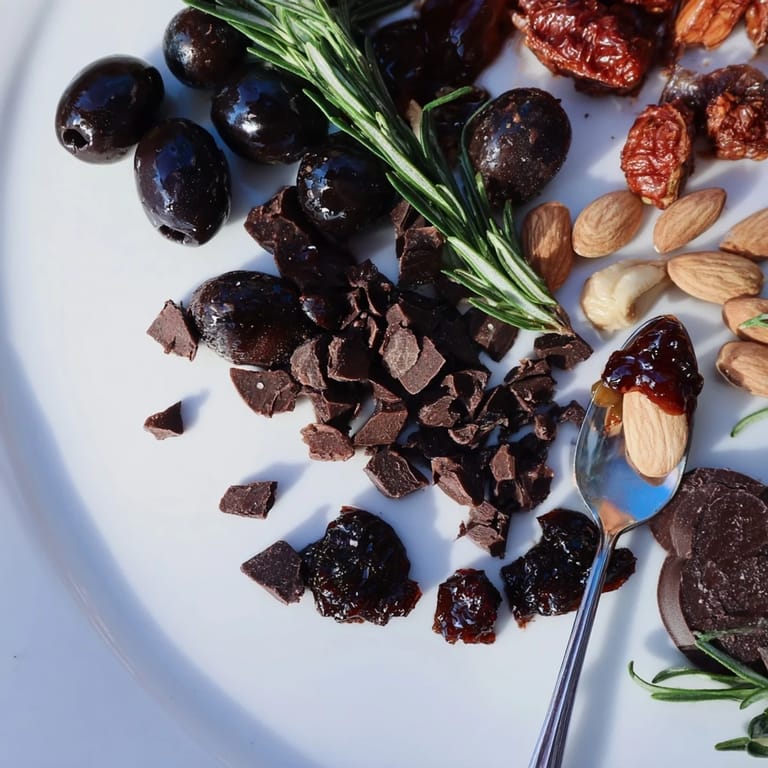
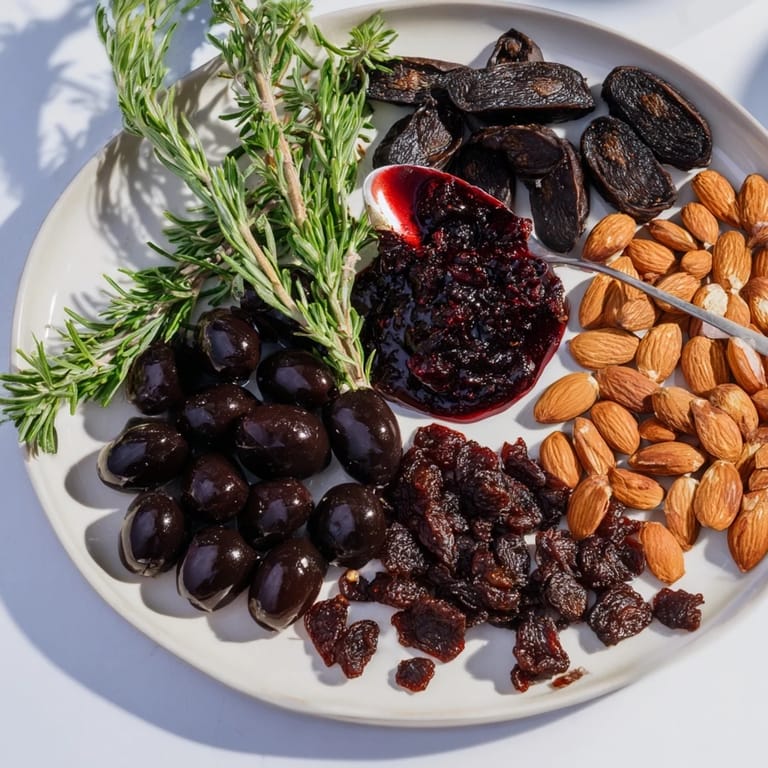
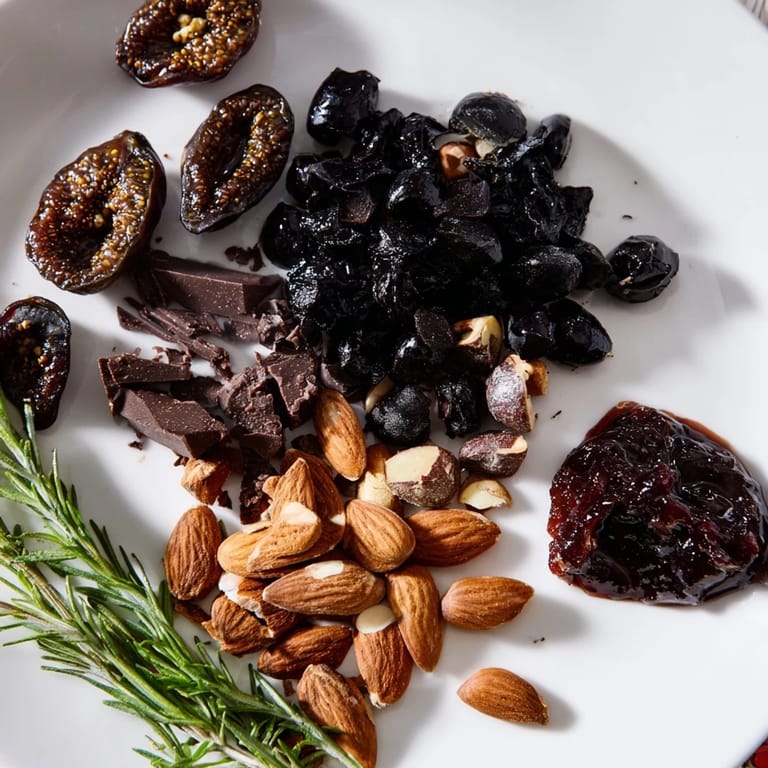
- Kalamata olives (100 g, pitted): These are your anchor for the dark side; the briny punch is nonnegotiable, and pitting them yourself feels more intentional than buying pre-pitted.
- Oil-cured black olives (100 g): These are wrinkled and intense, a shade darker than Kalamatas; they add depth and a slightly sweeter undertone.
- Dried mission figs (120 g, halved): Buy good ones—the color should be almost black, and they should feel soft enough to tear by hand.
- Fig jam (2 tbsp): This is your secret bridge between sweet and savory; find one that's mostly fruit with minimal added sugar.
- Dark chocolate (40 g, broken into pieces): Choose something at least 70% cacao; the bitterness plays against the sweetness of everything else.
- Roasted almonds (60 g): Already roasted means less work and more flavor; toast them yourself if you have time, but don't stress.
- Fresh rosemary (1 sprig): This is your visual divider and your aromatics; the woody scent signals autumn and winter at once.
- Ripe Brie cheese (200 g): Buy it a day or two before and let it sit in your kitchen; it softens and becomes almost liquid in the middle.
- Ripe pears (2, thinly sliced): Slice these close to serving time so they don't brown; a tiny brush of lemon juice helps if you're making it ahead.
- Honeycomb or honey (60 g or 2 tbsp): Honeycomb is stunning if you can find it; honey is easier but less textural and dramatic.
- Toasted walnuts (40 g): Toast them yourself for thirty seconds in a dry pan if they taste stale; it wakes them up completely.
- Seedless green grapes (60 g): These are your brightness, your burst of fresh juice against all that richness.
- Fresh thyme (1 small bunch): The finer herb cousin of rosemary; it scatters across the light side like you meant it.
- Baguette (1 small, sliced): Slice it no more than an hour before serving or it goes stale; a slightly day-old baguette actually works better here.
- Assorted crackers (100 g): Mix textures: some thin and crispy, some seeded, some herbed; this is where personality happens.
Tired of Takeout? 🥡
Get 10 meals you can make faster than delivery arrives. Seriously.
One email. No spam. Unsubscribe anytime.
Instructions
- Mark your line:
- Find the visual center of your board—if it's rectangular, this is easy; if it's round, imagine a diameter line. Lay down a single sprig of rosemary or a row of crackers as your dividing point. You're literally splitting light from dark, so make it intentional.
- Arrange the dark side:
- Start with the olives in two small piles—one for each variety so people can taste the difference. Scatter the fig halves around them, leaving little pockets. Place your dark chocolate pieces so they're visible and tempting. Add the roasted almonds in a casual cluster. Finish with the fig jam in a small bowl or smear, and tuck that rosemary sprig alongside as garnish.
- Arrange the light side:
- Place the Brie where people will see it immediately—it's your star. Fan the pear slices in a loose arc. Dot the board with green grapes as if you're placing light itself. Add walnuts in a scattered handful. If you're using honeycomb, it goes front and center; if honey, drizzle it over the Brie just before serving. Scatter thyme leaves and whole sprigs around the edges.
- Position your vehicles:
- Line the center with baguette slices or set them on a separate small plate—they're the bridge between dark and light. Crackers can frame the whole thing or sit in a small pile.
- Serve at room temperature:
- Let the board sit for five minutes so everything settles into its arrangement. The Brie will be at its softest, the chocolate won't be too hard, and everything tastes like itself.
 Pin It
 A friend who barely eats cheese came back three times for the Brie with honeycomb. She said it was the first time cheese felt like dessert, not obligation. That's when I realized this board isn't about impressing people with fancy ingredients; it's about making people feel like they're part of something considered and thoughtful.
The Symbolism Behind the Split
Winter solstice is literally the moment when darkness is longest and light begins its return. Creating a board that visually represents this moment makes the meal feel like more than just eating—it becomes a small ritual. The darkness isn't sad or ominous; it's rich and warm, full of figs and chocolate and olives that taste like sun-baked Mediterranean afternoons. The light side glows with freshness and promise. Together, they're balanced, which is what solstice actually means.
Building Ahead Without Stress
You can prep this board up to two hours before guests arrive. Arrange everything except the pears and honey. Cover it loosely with plastic wrap and let it sit in a cool place. When people are almost ready to eat, add the pears and do your honey drizzle. This way, everything tastes fresh and the Brie hasn't started sweating into tiny puddles. I've also found that assembling the board right in front of people is oddly engaging—they watch you place things, they ask questions, and suddenly the whole thing feels collaborative instead of performance.
Wine and Pairing Thoughts
A dry sparkling wine is my go-to because it cuts through the richness of the Brie and chocolate while brightening the pears and grapes. A light-bodied red like Pinot Noir works if you prefer something earthier. I've also served this with a crisp white and nobody complained, so honestly, pour what makes you happy. The board is flexible enough to play well with almost anything you choose.
- Skip expensive wine—save your money for good Brie instead.
- If you're serving this to non-drinkers, sparkling cider or a really good tea works beautifully.
- People often ask for the recipe, but they're really asking about the feeling it creates, so just smile and tell them the secret is intention.
 Pin It
 This board is less a recipe and more a permission slip to make something that tastes thoughtful without tasting like work. Serve it when you want to slow things down and let people actually taste their food instead of rushing through another meal.
Recipe FAQs
- → What ingredients create the contrasting sides of the board?
The board features olives, dried figs, fig jam, dark chocolate, and roasted almonds on the dark side, balanced with Brie cheese, pear slices, honey, toasted walnuts, and green grapes on the light side.
- → How is the board divided to highlight balance?
A line of fresh rosemary or a row of crackers is used to separate the dark savory elements from the bright, fresh flavors, emphasizing a clear visual and flavor contrast.
- → Can any ingredient substitutes be used for dietary preferences?
Yes, prosciutto can be added for non-vegetarians, Brie can be swapped for Roquefort or Camembert, and pears or dried apricots can replace other fruits for variation.
- → What accompaniments work well with this board?
Sliced baguette and assorted crackers complement the cheese and fruit, providing texture and a base for assembling bites.
- → Are there suggested beverage pairings?
A dry sparkling wine or a light-bodied red pairs beautifully, enhancing the rich and fresh contrasts present on the board.