 Pin It
 My first real encounter with Tom Kha Gai happened on a gray Bangkok afternoon when a local vendor handed me a steaming bowl with the kind of confidence that only comes from making the same soup a thousand times. One spoon in, and I understood why this simple combination of coconut milk, chicken, and aromatics had been feeding people across Thailand for generations. The soup tasted like comfort wrapped in silk, each ingredient playing its part without demanding the spotlight. Years later, when I finally made it in my own kitchen, I realized that the magic wasn't in technique but in respecting each element's purpose—the lemongrass whispering, the galangal grounding, the lime cutting through like a friendly hand.
I made this for a friend during a rainy evening when she needed something warming but couldn't handle heavy cream or butter. Watching her expression shift from the first cautious sip to that moment of pure recognition—when she realized the creaminess came entirely from coconut—felt like sharing a small secret. She texted me the next week asking for the recipe, and now it's become the soup she makes whenever someone needs care in a bowl.
Ingredients
- Chicken broth: Use a quality broth you'd be happy to drink on its own, as it's the foundation that everything else builds upon.
- Lemongrass: Smash it well to release those volatile oils that make this soup unmistakably Thai—the fragrance is half the experience.
- Fresh galangal: This is worth hunting down at an Asian market because ginger, while decent in a pinch, doesn't have the same floral complexity.
- Makrut lime leaves: Tear them by hand rather than chopping; the small tears release more of their essential oils into the broth.
- Thai bird's eye chilies: Lightly crush rather than finely mince so they release heat gradually rather than exploding all at once.
- Boneless, skinless chicken thighs: They stay tender and flavorful even with longer cooking, unlike breast meat which can turn stringy.
- Full-fat coconut milk: The kind in a can, not the carton—you want that rich, luxurious body that makes the soup feel like a hug.
- Fresh mushrooms: Straw mushrooms are traditional and delicate, but cremini mushrooms add an earthy note that works beautifully.
- Fish sauce: This is the ingredient that deepens everything, adding umami without tasting fishy if you use it with restraint.
- Palm sugar: It brings a subtle complexity that brown sugar can approximate but not quite replicate.
- Lime juice: Fresh squeezed makes all the difference; bottled juice tastes tinny by comparison.
Tired of Takeout? 🥡
Get 10 meals you can make faster than delivery arrives. Seriously.
One email. No spam. Unsubscribe anytime.
Instructions
- Build your aromatic base:
- Bring the broth to a gentle simmer—you're listening for soft, lazy bubbles rather than an aggressive rolling boil. Add the smashed lemongrass, galangal slices, torn lime leaves, and lightly crushed chilies, then let them infuse for 5 to 7 minutes until the broth smells like a Thai market morning.
- Cook the chicken and shallot:
- Add your thinly sliced chicken and shallot to the fragrant broth, stirring occasionally. The chicken will turn opaque and cook through in about 3 to 4 minutes—don't wait for it to be overdone.
- Introduce the coconut milk:
- Pour in the full-fat coconut milk and stir gently to combine, then bring everything back to a soft simmer. Add the mushrooms now, letting them soak up the broth for a minute or two.
- Season with intention:
- Add the fish sauce first, then the palm sugar, tasting as you go. Finally, squeeze in the lime juice and taste again—you're balancing salty, sweet, and sour in equal measure, adjusting until it tastes like comfort to you.
- Finish and serve:
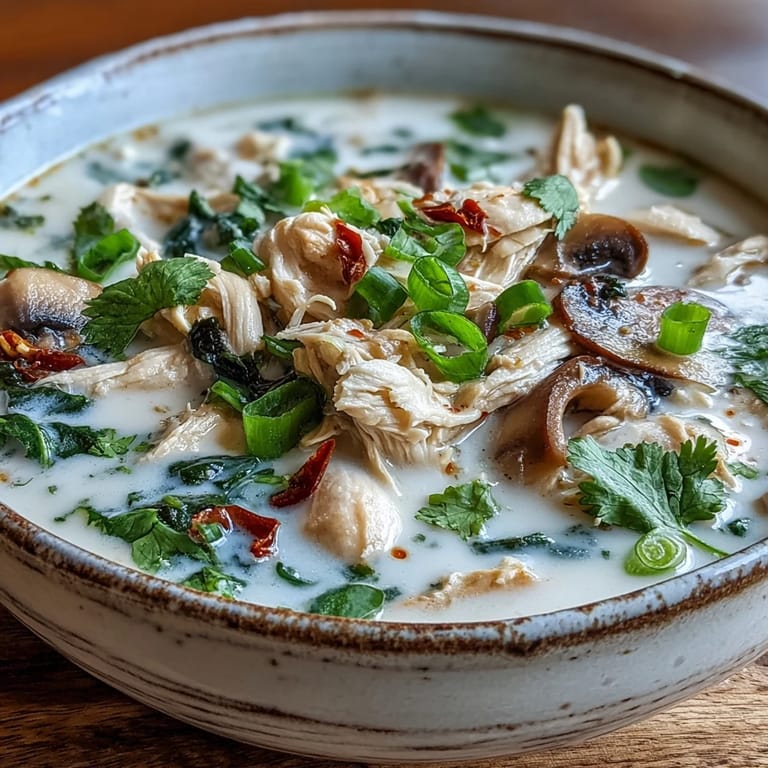
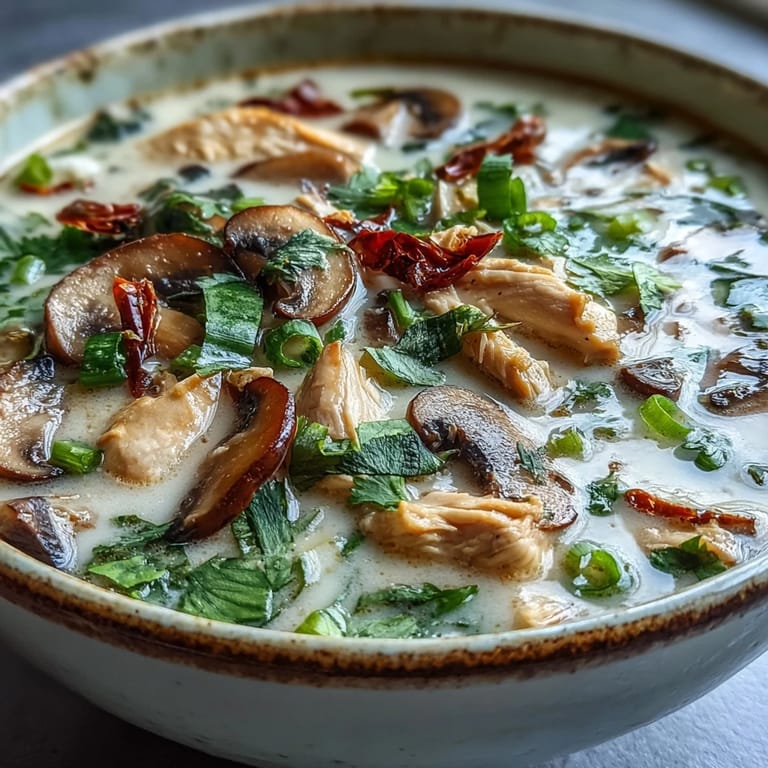
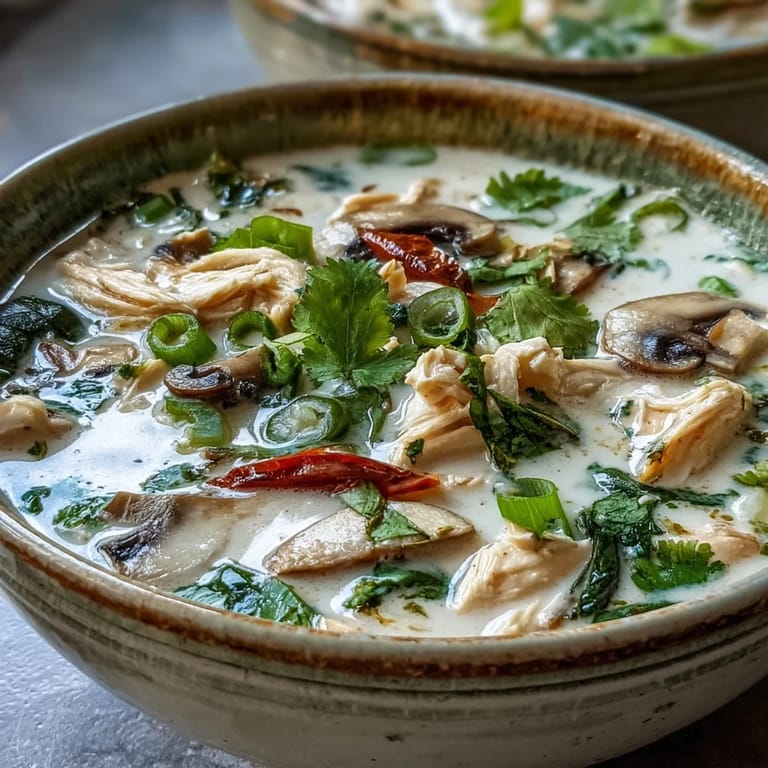
- Remove from heat and strain out the solid aromatics if you prefer a cleaner presentation, or leave them in for texture and flavor. Ladle into bowls and crown each one with cilantro, green onions, and a lime wedge on the side.
 Pin It
 This soup taught me something I carry into other cooking now: that restraint and balance matter more than complexity or showiness. It's become the dish I make when I want to feel like I'm cooking with intention rather than just following steps. Every time someone asks for the recipe, I know it's because the soup made them feel something beyond hunger.
On Finding Your Ingredients
The first time I couldn't find fresh galangal, I nearly gave up and bought ginger instead, but the checkout person at my local Asian market stopped me and gestured toward the freezer case where whole rhizomes were hiding. Frozen galangal works beautifully in a soup since you're extracting flavor into broth anyway, and it stays on my shelf as backup now. Don't let ingredient hunting become a barrier—call ahead to markets, ask the staff, and trust that substitutions made with intention usually turn out fine.
The Difference Between Sipping and Tasting
Tom Kha Gai invites you to slow down in a way that quick meals rarely do. There's a difference between eating this soup and experiencing it—the spoon should move deliberately, the bowl cradled in both hands, each sip allowed to linger on your tongue long enough to recognize the layers. I've noticed that people's conversations naturally quiet and deepen when they're eating this, like the soup creates permission to be present.
Variations and Traditions
While the classic version remains my touchstone, I've learned that this soup respects curiosity. Some cooks add a handful of tender baby eggplant, others blur the line between soup and curry by reducing the broth, and vegetarian versions built on tofu are equally valid celebrations of the same flavor architecture. The beauty is that the core balance—fragrant, creamy, tangy, warm—holds true across interpretations.
- For vegetarian versions, swap the chicken for pressed tofu cubes and use soy sauce in place of fish sauce without losing the savory depth.
- Serve with jasmine rice on the side so people can eat the soup as a main course, not just as a starter.
- Make extra aromatic broth and freeze it in portions so you can have this comfort ready whenever you need it most.
 Pin It
 This soup has become the dish I make when I want to remember why I cook at all. It asks for presence and rewards it with flavor that feels like it came from somewhere deep and true.
Recipe FAQs
- → What makes Tom Kha Gai different from other Thai soups?
Tom Kha Gai stands apart for its rich coconut milk base, which creates a creamy texture unlike the clear broth of Tom Yum. The unique combination of galangal, lemongrass, and makrut lime leaves creates an unmistakably aromatic profile that's both tangy and soothing.
- → Can I substitute galangal with ginger?
While fresh ginger can work in a pinch, galangal has a distinct piney, citrusy flavor that's essential to authentic taste. If substituting, use slightly less ginger as its flavor is more potent and lacks galangal's complex aromatic notes.
- → How spicy is this soup?
The heat level is easily adjustable. Three Thai bird's eye chilies provide medium heat that builds gently. Reduce to one chili for mild warmth or increase to five for those who enjoy intense spice. Always remove seeds for less heat.
- → Can I make this vegetarian?
Absolutely. Replace chicken broth with vegetable broth, substitute firm tofu for chicken thighs, and use soy sauce or tamari instead of fish sauce. The aromatic base remains unchanged, preserving the authentic flavors.
- → Why shouldn't the soup boil vigorously?
High heat can cause coconut milk to separate, creating an oily texture and affecting the soup's smooth consistency. Gentle simmering preserves the creamy emulsion while allowing the aromatics to properly infuse the broth.
- → What's the best way to serve this?
Ladle hot into bowls and immediately garnish with fresh cilantro and sliced green onions. Serve with extra lime wedges on the side for those who prefer more acidity. Steamed jasmine rice makes an ideal accompaniment.