 Pin It
 The kitchen smelled like winter citrus and butter when I pulled this cake from the oven on a gray February afternoon. I had bought blood oranges on impulse at the farmers market, drawn to their deep crimson flesh, and didn't want to waste a single segment. The yogurt was leftover from breakfast, the kind of happy accident that leads to the best baking experiments. What started as a way to use up ingredients became the cake I now bake whenever I need something both comforting and bright.
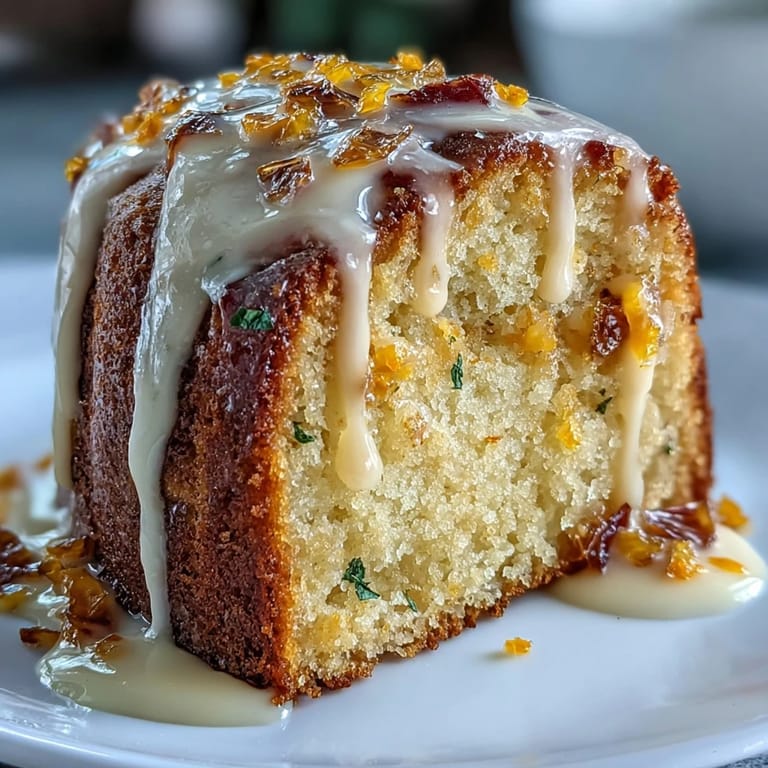
I brought this cake to a friend's birthday dinner once, still warm and uniced, wrapped in a towel. We drizzled the glaze on in her kitchen while everyone watched, and the way it pooled into the cracks made it look like something from a bakery window. She kept the recipe card I scribbled on the back of an envelope. Now she texts me every winter when blood oranges come back into season.
Ingredients
- All-purpose flour: The structure of the cake, measured correctly by spooning it into the cup and leveling off so it doesn't get dense.
- Baking powder: Make sure it's fresh or the cake won't rise with that perfect dome you want.
- Salt: Just a pinch to balance the sweetness and bring out the citrus brightness.
- Plain Greek yogurt: Full-fat works best for moisture and richness, but low-fat will do in a pinch.
- Granulated sugar: Whisked with the yogurt until it dissolves slightly, giving you a smoother batter.
- Eggs, room temperature: Cold eggs can seize the batter, so let them sit out for twenty minutes before you start.
- Blood orange zest: The oils in the zest carry more flavor than the juice alone, so don't skip this step.
- Freshly squeezed blood orange juice: Bottled juice won't give you that floral, berry-like note that makes this cake special.
- Vanilla extract: A quiet background note that ties the citrus and yogurt together.
- Coconut oil, melted and cooled: Adds moisture without the heaviness of butter, and it won't solidify when mixed with cold ingredients.
- Powdered sugar: Sift it or the icing will have lumps no amount of whisking can fix.
Tired of Takeout? 🥡
Get 10 meals you can make faster than delivery arrives. Seriously.
One email. No spam. Unsubscribe anytime.
Instructions
- Prep Your Pan:
- Preheat the oven to 350°F and generously butter and flour your loaf pan, getting into every corner. I like to line the bottom with parchment for extra insurance.
- Combine the Dry Ingredients:
- Whisk the flour, baking powder, and salt together in a medium bowl and set it aside. This ensures even distribution so you don't get pockets of baking powder.
- Mix Yogurt and Sugar:
- In a large bowl, whisk the Greek yogurt and sugar until smooth and slightly glossy. It should look like thick cream.
- Add Eggs and Citrus:
- Whisk in the eggs one at a time, letting each one blend in fully before adding the next. Stir in the blood orange zest, juice, and vanilla until the batter smells bright and sweet.
- Fold in the Flour:
- Gently fold the dry ingredients into the wet mixture with a spatula, stirring just until no streaks of flour remain. Overmixing will make the cake tough.
- Incorporate the Oil:
- Pour in the melted, cooled coconut oil and fold it in gently until the batter is glossy and uniform. The oil should disappear completely into the mixture.
- Pour and Smooth:
- Scrape the batter into your prepared loaf pan and use a spatula to smooth the top. Tap the pan on the counter twice to release any air bubbles.
- Bake Until Golden:
- Bake for 50 minutes, or until the top is golden and a toothpick inserted in the center comes out clean or with just a few moist crumbs. The kitchen will smell like a citrus grove.
- Cool Completely:
- Let the cake cool in the pan for 10 minutes, then turn it out onto a wire rack. Let it cool all the way before icing or the glaze will soak in and disappear.
- Make the Icing:
- Whisk together the powdered sugar, blood orange juice, and zest until smooth and pourable. It should be thick but fluid, like heavy cream.
- Drizzle and Set:
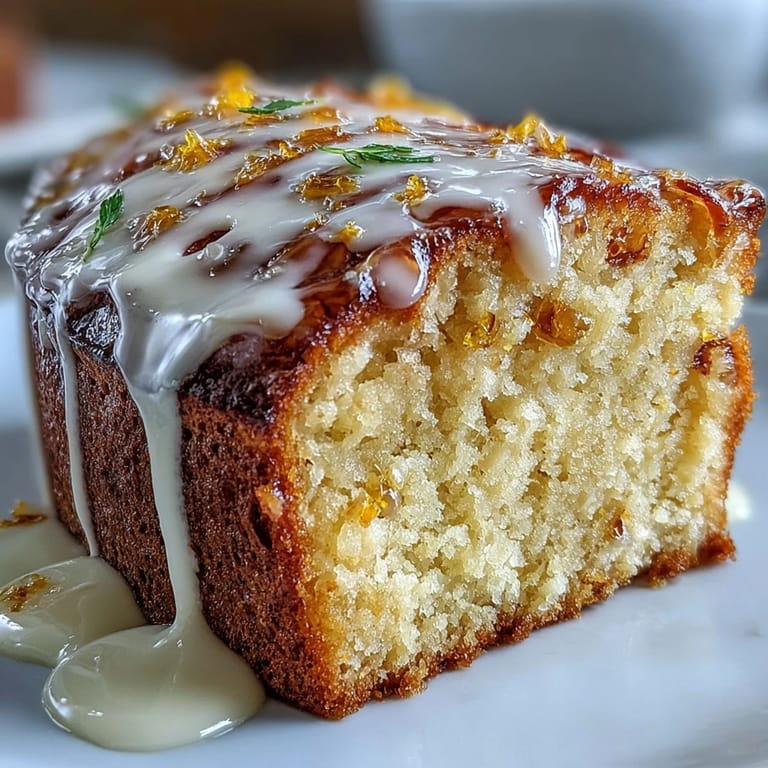
- Drizzle the icing over the cooled cake, letting it run down the sides naturally. Let it set for at least 20 minutes before slicing so the icing firms up just enough.
 Pin It
 I've made this cake on ordinary Tuesdays and for special occasions, and it fits both perfectly. There's something about the way the icing catches the light, all glossy and pink, that makes even a quiet afternoon feel a little celebratory. It's the kind of dessert that doesn't need an excuse, just a good cup of coffee and maybe someone to share it with.
Choosing and Zesting Blood Oranges
Look for blood oranges that feel heavy for their size and have smooth, firm skin without soft spots. The deeper the color of the flesh, the more intense the flavor will be, though even pale varieties work beautifully. When zesting, use a microplane and take only the colored outer layer, avoiding the bitter white pith underneath. I zest right over the bowl so none of those fragrant oils go to waste.
Storing and Serving
This cake stays moist for two days at room temperature if you cover it loosely with a kitchen towel or store it in an airtight container. After that, refrigerate it to keep it fresh for up to five days, though the icing may soften slightly. I like to serve it at room temperature with a handful of fresh raspberries on the side, or a spoonful of lightly sweetened whipped cream. It's also wonderful toasted the next morning with butter and a strong cup of tea.
Variations and Substitutions
If you can't find blood oranges, regular navel oranges or even Meyer lemons work beautifully with the same measurements. You can swap the coconut oil for melted unsalted butter if you prefer a more traditional flavor, though the coconut oil does add a subtle richness. For a dairy-free version, use coconut yogurt and check that your sugar is vegan-friendly.
- Add a tablespoon of poppy seeds to the batter for a little texture and visual interest.
- Fold in a handful of chopped pistachios or almonds for crunch.
- Brush the warm cake with a simple syrup made from blood orange juice and sugar for extra moisture.
 Pin It
 This cake has a way of making ordinary moments feel special, and I hope it does the same for you. Bake it when you need a little brightness, and don't be surprised if it becomes a regular in your kitchen.
Recipe FAQs
- → Can I use regular oranges instead of blood oranges?
Yes, regular oranges work well as a substitute. The flavor will be slightly less complex and the color won't be as vibrant, but the cake will still be delicious and moist.
- → How do I know when the cake is fully baked?
Insert a toothpick into the center of the cake. If it comes out clean or with just a few moist crumbs, the cake is done. The top should also be golden and spring back when lightly pressed.
- → Can I make this cake ahead of time?
Absolutely. Bake the cake up to two days in advance and store it covered at room temperature. Add the icing a few hours before serving for the best presentation and texture.
- → What can I substitute for Greek yogurt?
Sour cream or regular plain yogurt can replace Greek yogurt in equal amounts. The texture may be slightly different, but the cake will remain moist and flavorful.
- → How should I store leftover cake?
Cover the cake tightly and store at room temperature for up to 2 days. For longer storage, refrigerate for up to 5 days. Bring to room temperature before serving for the best flavor.
- → Can I freeze this cake?
Yes, wrap the unfrosted cake tightly in plastic wrap and aluminum foil, then freeze for up to 3 months. Thaw overnight in the refrigerator and add the icing before serving.