 Pin It
 The first time I made bulgogi, I was standing in my tiny kitchen on a Friday night, the smell of caramelizing beef and sesame oil suddenly filling every corner, and I realized I'd been pronouncing it wrong the whole time. My friend had brought over a jar of gochujang a week earlier with just a knowing smile, and that night felt like the perfect moment to finally use it. There's something about the way the marinade hits the hot wok—a sizzle that sounds like celebration—that made me understand why this dish shows up at every Korean table for a reason. It's simple enough for a weeknight, but tasty enough that people ask for seconds before finishing their first bowl.
I made this for my roommate's birthday dinner last spring, and she ate three bowls while telling stories from college—something she'd been too stressed to do in months. We sat at the kitchen counter with the overhead light off, just the glow from the stove, and suddenly this simple bowl of rice and beef became the thing that made the night feel special. That's when I knew this recipe wasn't just about feeding people; it was about giving them permission to slow down.
Ingredients
- Beef sirloin or ribeye, thinly sliced: A sharp knife or your butcher's slicer makes this effortless, and cold beef slices cleaner—pop it in the freezer for 30 minutes first if you're doing it by hand.
- Soy sauce: This is the backbone of the flavor; don't skip it or substitute with something lighter.
- Brown sugar: It dissolves into the marinade and caramelizes on the beef, creating those slightly charred, glossy edges that make the dish.
- Sesame oil: Just a tablespoon adds a toasted nuttiness that reminds you this isn't just any stir-fry.
- Rice vinegar: A subtle tang that keeps the sweetness from becoming cloying.
- Garlic and ginger: Minced fine, they disappear into the marinade but their warmth shows up in every bite.
- Grated pear or apple: The secret ingredient that most people can't quite identify—it adds sweetness and a natural enzyme that helps tenderize the beef.
- Gochujang: Optional, but it adds a fruity heat and depth that elevates the whole dish if you like spice.
- Scallions and sesame seeds: These finish the bowl with brightness and a subtle crunch that keeps things interesting.
- Rice and vegetables: Use jasmine or short-grain rice for the right texture, and keep the vegetables crisp by not overdressing them.
Tired of Takeout? 🥡
Get 10 meals you can make faster than delivery arrives. Seriously.
One email. No spam. Unsubscribe anytime.
Instructions
- Build your marinade:
- In a large bowl, whisk together soy sauce, brown sugar, sesame oil, and rice vinegar until the sugar dissolves. Stir in minced garlic, grated ginger, grated pear, gochujang if you're using it, half the scallions, sesame seeds, and black pepper. The mixture should smell complex and inviting, with layers you can almost taste before the beef even hits it.
- Coat the beef:
- Add your thinly sliced beef to the marinade and toss until every piece is glistening and coated. Cover and let it sit for at least 15 minutes—longer if you have time, up to an hour, so the flavors seep in and the pear's enzymes work their magic on the meat.
- Sear until golden:
- Heat your skillet or wok over high heat until it's almost smoking, then add the beef in batches so each piece gets room to brown instead of steaming. You want 2 to 3 minutes total—just enough for the edges to caramelize and turn glossy, but the inside stays tender and barely pink.
- Assemble your bowls:
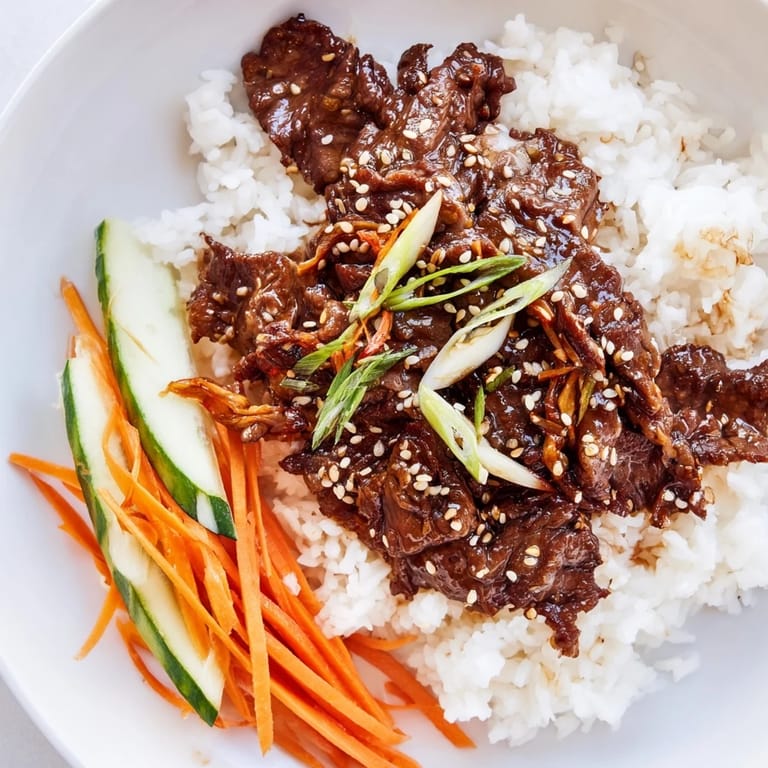
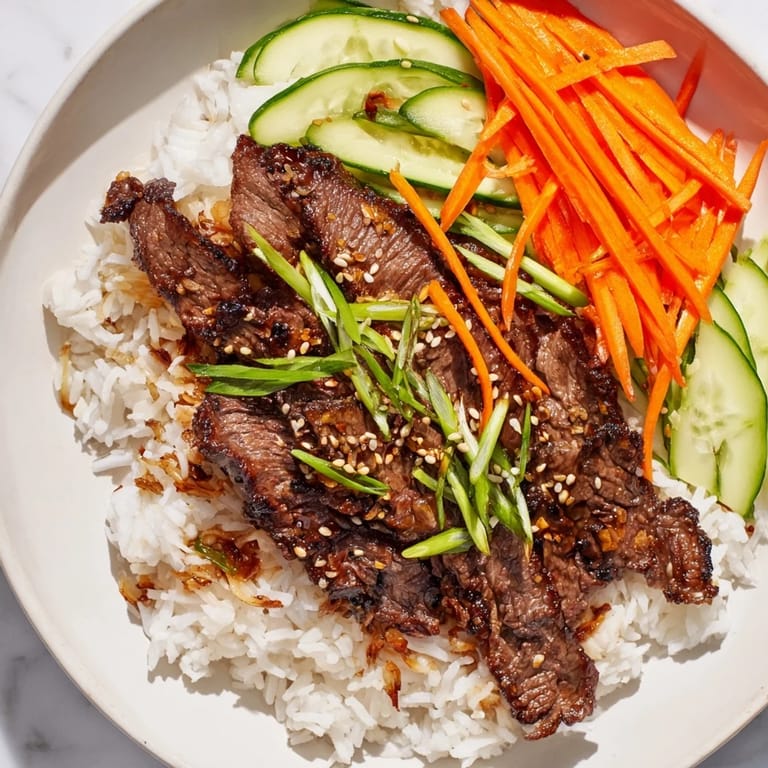
- Divide cooked rice among four bowls and arrange the warm beef on top, then scatter the fresh vegetables around it like you're decorating a plate. The warm rice will soften the carrots and cucumbers just slightly while keeping them bright.
- Finish and serve:
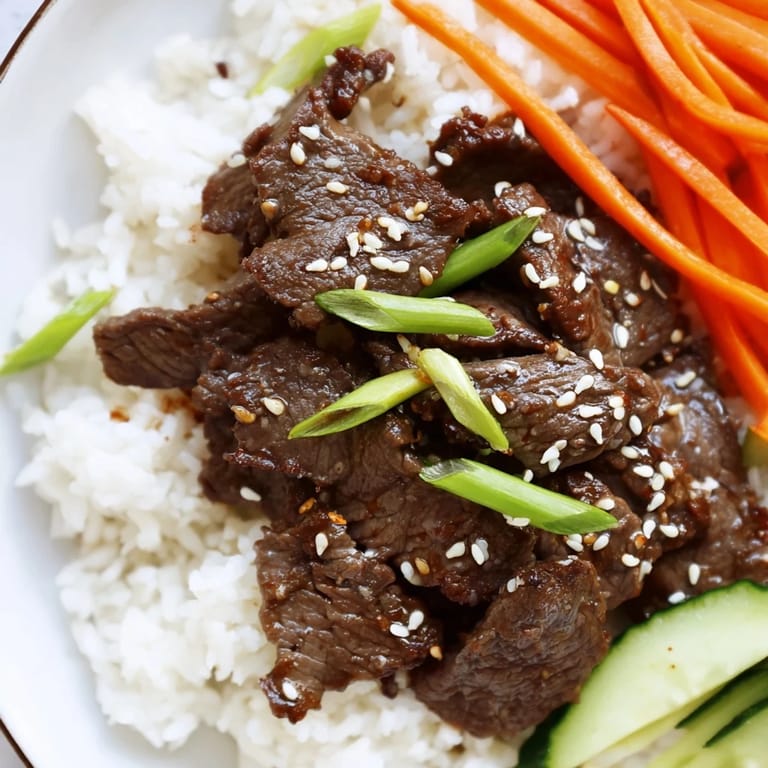
- Top each bowl with extra scallions and a sprinkle of sesame seeds, then eat it right away while the beef is still warm and the vegetables are still crisp.
 Pin It
 There was a moment last month when my nephew, who usually eats plain rice and chicken, asked for another bowl of bulgogi and then asked what made it taste like that. His mom got a little quiet, and I realized this was the first time in a year he'd asked for seconds of something.
The Secret Behind the Sweetness
The pear or apple in the marinade isn't just there for sweetness—it's a tenderizer and flavor amplifier that most people don't expect in a savory dish. Korean cooking understands that a little fruit can make meat more interesting without tipping into dessert territory, and once you taste the difference, you'll start adding it to other marinades too. The texture of the beef should be tender enough that you can cut it with your spoon, and that's partly the marinade's work.
Making It Your Own
This bowl is a base for whatever vegetables are in your fridge or whatever heat level you prefer. Some nights I add a fried egg on top for richness, and other times I use cauliflower rice if I'm eating lighter, and the dish adapts without complaint. The core—the marinade, the beef, the rice—stays the same, but everything else is a conversation between you and what you have on hand.
Beyond the Bowl
Leftover beef keeps in the fridge for three days and is honestly better the next day when the flavors have had time to settle. You can use it cold in a rice bowl salad, warm it up for quick lunches, or even slide it into lettuce wraps if you want to change the texture.
- If the marinade seems too sweet for you, reduce the brown sugar by half and taste before adding the beef.
- Blanching the bean sprouts for just 30 seconds stops them from tasting raw and brings out their subtle sweetness.
- Toast your sesame seeds in a dry pan for 2 minutes before using them—it makes a real difference in the final bowl.
 Pin It
 This bowl has become my answer to the question, what's for dinner—because it's fast, it feeds a crowd, and it tastes like you cared enough to cook something real. It's the kind of dish that brings people to the table and keeps them there longer than they planned.
Recipe FAQs
- → What cut of beef works best for this dish?
Thinly sliced ribeye or sirloin are ideal due to their tenderness and quick cooking time, which helps achieve a caramelized texture without overcooking.
- → How long should the beef marinate?
Marinate the beef for at least 15 minutes to infuse flavors, but up to one hour will deepen the taste.
- → Can I make this dish gluten-free?
Yes, use gluten-free soy sauce (tamari) and ensure the chili paste is gluten-free to accommodate dietary needs.
- → What rice varieties are recommended?
Jasmine or short-grain white rice works best, providing a fluffy base that complements the marinated beef and vegetables.
- → How can I adjust the spice level?
Modify the amount of Korean chili paste (gochujang) to make the dish milder or spicier according to your preference.
- → Are there any good substitutions for rice?
Cauliflower rice is a great low-carb alternative that pairs well with the flavorful beef and vegetables.