 Pin It
 There's something about the smell of butter and flour toasting in a pan that takes me straight back to my grandmother's kitchen, where mac and cheese wasn't just a weeknight dinner—it was the dish she made when she wanted to say 'I love you' without words. The first time I tried making it myself, I was convinced the béchamel would be impossibly complicated, but it's really just patience and a whisk. Now, whenever I stir that creamy sauce and watch it transform from liquid to luscious, I feel like I'm carrying forward something that matters. This recipe is the one I keep coming back to because it proves that comfort food doesn't need to be fussy to be truly special.
I made this for a dinner party once when everything else felt like it was falling apart, and watching my friends go quiet—that particular silence that means they're too busy eating to talk—reminded me that sometimes the simplest dishes carry the most weight. One guest asked for the recipe, and another asked for thirds, and suddenly the evening shifted from stressful to really, truly good.
Ingredients
- Elbow macaroni (350 g): The shape matters because it cups and holds the sauce perfectly; don't skip the al dente cook time or it'll turn mushy when baked.
- Unsalted butter (3 tbsp): Your canvas for the roux, and using unsalted lets you control the salt level so the cheese isn't overwhelmed.
- All-purpose flour (3 tbsp): This is what thickens everything, and the key is cooking it just long enough to lose the raw taste but not so long it browns and tastes bitter.
- Whole milk, warmed (2 cups): Warming it first prevents lumps and makes the sauce come together faster, which I learned by making the opposite mistake more than once.
- Heavy cream (1 cup): This is the ingredient that transforms good mac and cheese into the kind people dream about; it adds richness and smoothness that milk alone can't deliver.
- Sharp cheddar cheese, grated (200 g): The backbone flavor that gives this dish character; aged cheddar is worth seeking out because it has a complexity that mild cheese simply lacks.
- Gruyère or Swiss cheese, grated (75 g): This adds a subtle nuttiness that makes people wonder what you did differently, which is exactly the point.
- Parmesan cheese, finely grated (50 g): The sharp note that prevents the whole thing from being one-dimensional; it's your seasoning in cheese form.
- Dijon mustard (1 tsp): Sounds small, but this tiny amount amplifies the cheese flavor without making anything taste like mustard.
- Garlic powder, onion powder, salt, pepper, cayenne (to taste): These seasonings wake everything up and make the cheese sing instead of just sit there.
- Panko breadcrumbs and melted butter for topping: The golden crust that makes baked mac and cheese feel like a celebration, especially when it's still warm and crispy.
Tired of Takeout? 🥡
Get 10 meals you can make faster than delivery arrives. Seriously.
One email. No spam. Unsubscribe anytime.
Instructions
- Prepare and cook your pasta:
- Bring a large pot of salted water to a rolling boil and add your macaroni, cooking it about one to two minutes less than the package says—this is called al dente, and it means the pasta stays firm enough to hold its shape when it bakes. Drain it well and set it aside, and don't rinse it because that starchy coating actually helps the sauce cling.
- Build your roux foundation:
- Melt the butter in a large saucepan over medium heat, then whisk in the flour and let it cook for a minute or two, stirring constantly, until it's light golden and smells toasty. You're looking for that moment when the raw flour flavor disappears but before it starts to brown and turn bitter.
- Create the béchamel base:
- Pour the warm milk and cream into your roux slowly while whisking constantly to prevent lumps from forming. Keep whisking and let it simmer gently for about four to five minutes until it thickens enough to coat the back of a spoon.
- Season and add the cheese:
- Reduce the heat to low, stir in the mustard and all the dry seasonings, then add your cheeses in batches, stirring until each addition melts completely into a smooth, glossy sauce. This patience pays off because if you dump it all in at once, you risk having patches of unmelted cheese.
- Combine pasta and sauce:
- Fold the cooked macaroni into the cheese sauce gently until every piece is evenly coated and glossy. This is where you can stop if you're doing stovetop mac and cheese, or continue if you're baking.
- Bake for the golden crust:
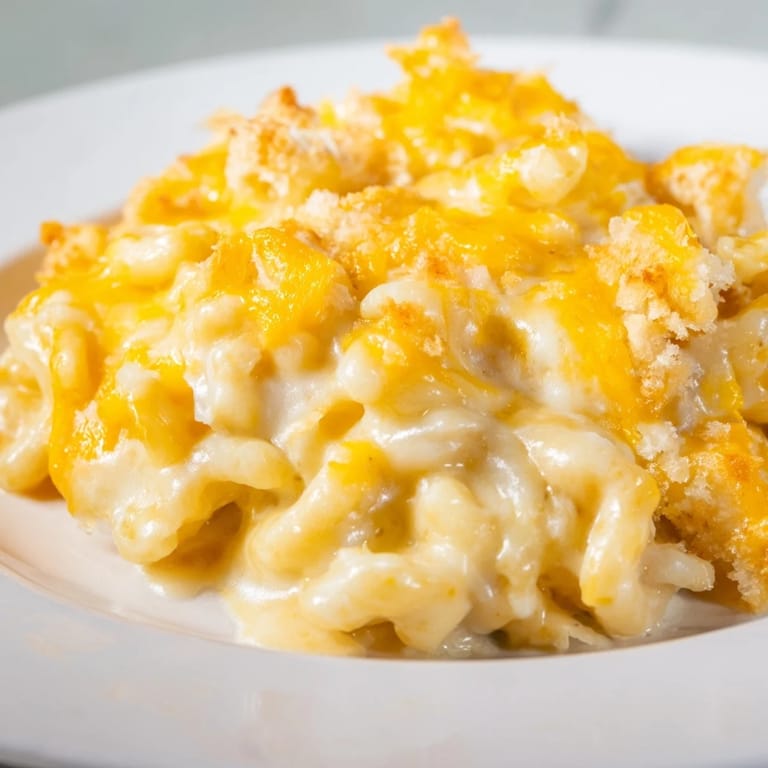
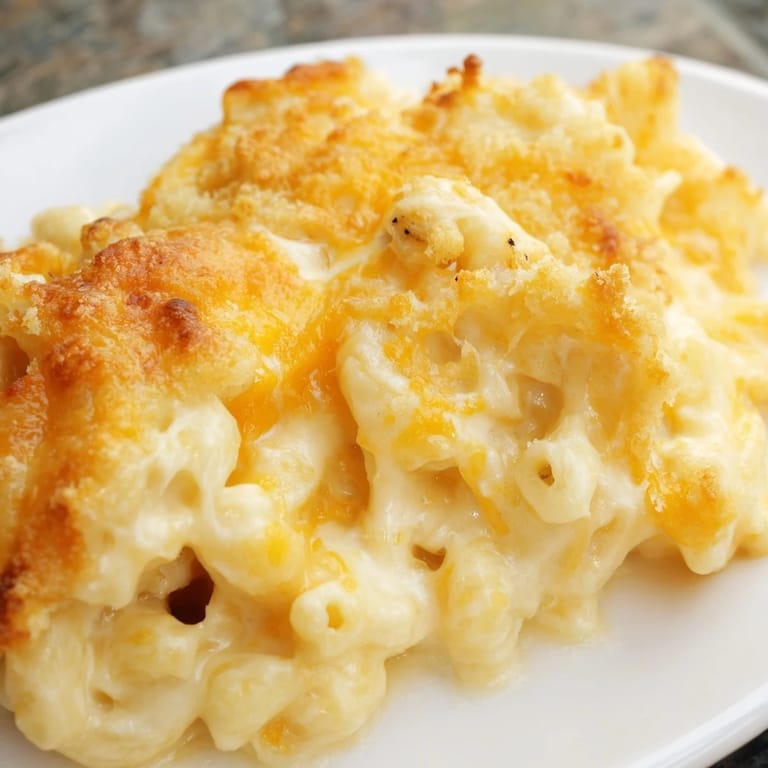
- Pour everything into your greased baking dish, mix the panko breadcrumbs with melted butter and Parmesan, sprinkle it over the top, and bake at 400°F for twenty to twenty-five minutes until the top is deep golden and the edges are bubbling. Let it rest for five minutes—this helps it set so you don't end up with a bowl of sauce.
 Pin It
 There's a moment near the end of making this—right after you fold in the pasta and see the sauce coat every single piece—when you realize you're holding something that's about to make people genuinely happy. That feeling is why I keep making it, again and again.
Stovetop Versus Oven
The stovetop version is pure indulgence served straight from the pan while it's still hot and creamy, perfect for those nights when you want comfort immediately and don't have time to wait for the oven. The baked version is showier, with that golden-brown top that cracks a little when you dig into it, and it holds better if you're feeding a crowd or want leftovers that reheat beautifully.
Cheese Selection Matters
I've learned that the blend of three different cheeses is what makes this recipe special—the sharp cheddar gives personality, the Gruyère adds sophistication, and the Parmesan keeps everything balanced. Using just one cheese will work, but you'll notice the flavor is flatter, more one-note, like reading a story with only one character. If sharp cheddar is hard to find, look for something labeled 'extra-aged' or 'mature,' because that's where the flavor complexity lives.
Variations and Add-Ins
This recipe is a canvas, and I've added all sorts of things depending on what was in my fridge or what the meal needed. The basic sauce takes to mix-ins beautifully, and the technique stays exactly the same whether you're adding crispy bacon, sautéed mushrooms, or blanched broccoli. Just fold them in with the pasta so they're evenly distributed, and remember that wet ingredients like mushrooms might release water as they bake, so if you go that route, cook them first to remove excess moisture.
- Cooked bacon stirred in adds a salty, smoky element that makes everyone ask what's different.
- Sautéed mushrooms bring an earthy depth that balances the richness of the cheese beauli fully.
- Blanched broccoli is my move when I want to convince someone they're eating something wholesome.
 Pin It
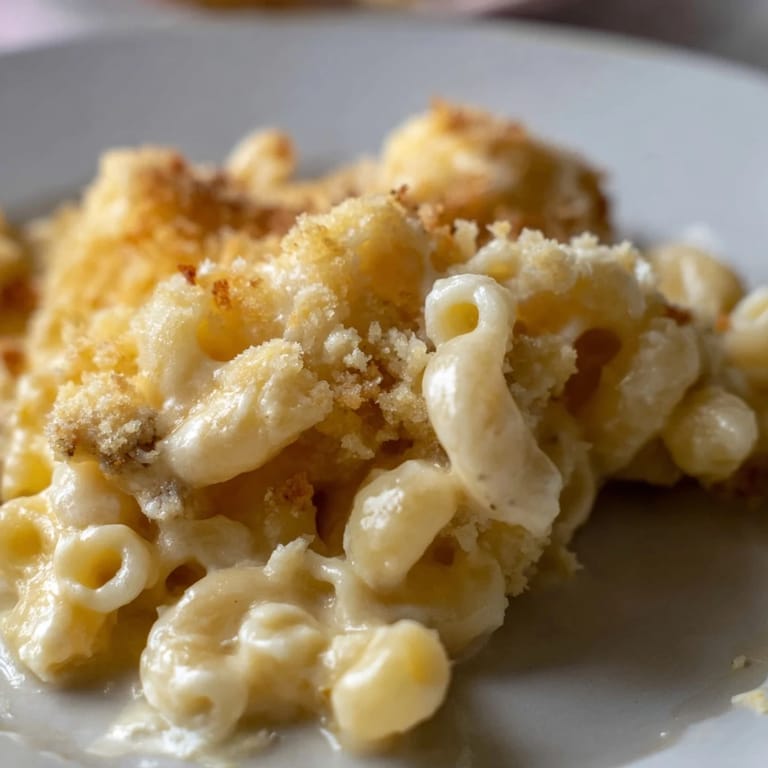
 This mac and cheese is the kind of dish that doesn't need anything fancy to shine—just good ingredients, a little patience, and the knowledge that you're making something that tastes like home. Serve it warm with a simple green salad and let the comfort do the talking.
Recipe FAQs
- → How do I achieve a smooth béchamel sauce?
Whisk butter and flour gently until lightly golden, then gradually add warm milk and cream while stirring constantly to avoid lumps. Simmer until thickened.
- → What cheeses create the best flavor blend?
Sharp cheddar provides boldness, Gruyère adds nuttiness, and Parmesan delivers a savory finish for a balanced, rich sauce.
- → Can this dish be prepared without baking?
Yes, serving it creamy right from the stovetop maintains a velvety texture and quick preparation time.
- → What’s the secret to a crisp topping when baked?
Combine panko breadcrumbs with melted butter and Parmesan, then sprinkle over the macaroni before baking until golden.
- → How can the flavor be customized?
Add cooked bacon, sautéed mushrooms, or blanched broccoli for variety and enhanced taste profiles.