 Pin It
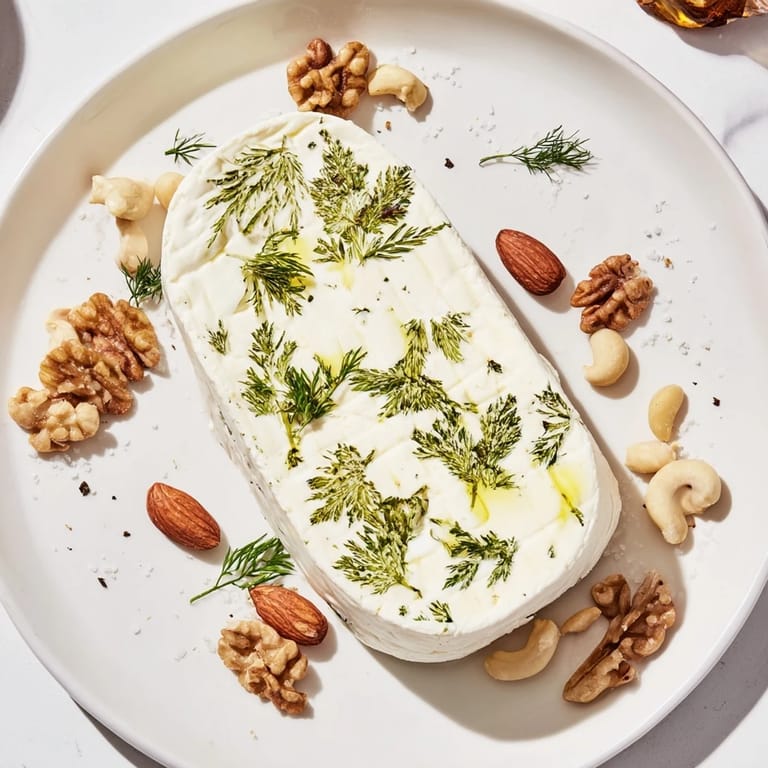
 I discovered this strange edible landscape while flipping through an old architecture magazine at a café, sketching ideas on napkins. The photographer had captured a cheese board styled like an archaeological dig, and something about the delicate herb fossils pressed into soft cheese felt like an invitation to play. That evening, I gathered what I had in my kitchen—a wedge of goat cheese, some parsley, a handful of walnuts—and made my first version. It wasn't precious or perfect, but it felt like I'd uncovered something quietly magical just by pressing a leaf into cream.
My friend Marcus brought his daughter over one afternoon, and she spent ten minutes just studying the cheese before eating any of it, pointing out which fossil looked like a leaf and which like a feather. That's when I realized this wasn't just appetizer theater—it was genuine wonder on a plate, the kind that makes people slow down and actually taste what they're eating. Her grandfather asked for the recipe immediately, and now it's how they start their Sunday dinners.
Ingredients
- Soft cheese (250 g): Goat cheese brings tang, cream cheese gives smoothness, ricotta offers delicate sweetness—choose based on your mood and what pairs with your wine.
- Fresh herbs (1 small bunch): Parsley, dill, cilantro, and chervil all leave different impressions; mix them for variety in your fossil garden.
- Olive oil (1 tbsp): A whisper of oil catches the light and adds subtle richness, though it's entirely optional.
- Assorted nuts (100 g): Walnuts, pecans, almonds, and hazelnuts scattered whole create an authentic archaeological scatter.
- Sea salt (1/2 tsp): A final whisper of salt awakens all the flavors and adds visual texture.
Tired of Takeout? 🥡
Get 10 meals you can make faster than delivery arrives. Seriously.
One email. No spam. Unsubscribe anytime.
Instructions
- Set the stage:
- Line a small tray or plate with parchment paper so your cheese fossil won't stick and can be moved without fracturing. Think of it as creating a proper dig site.
- Shape your terrain:
- Spread the soft cheese roughly 2 cm thick into an organic oval or round, using a spatula to smooth the top but leave it feeling natural, not engineered. Uneven surfaces catch light beautifully.
- Press the fossils:
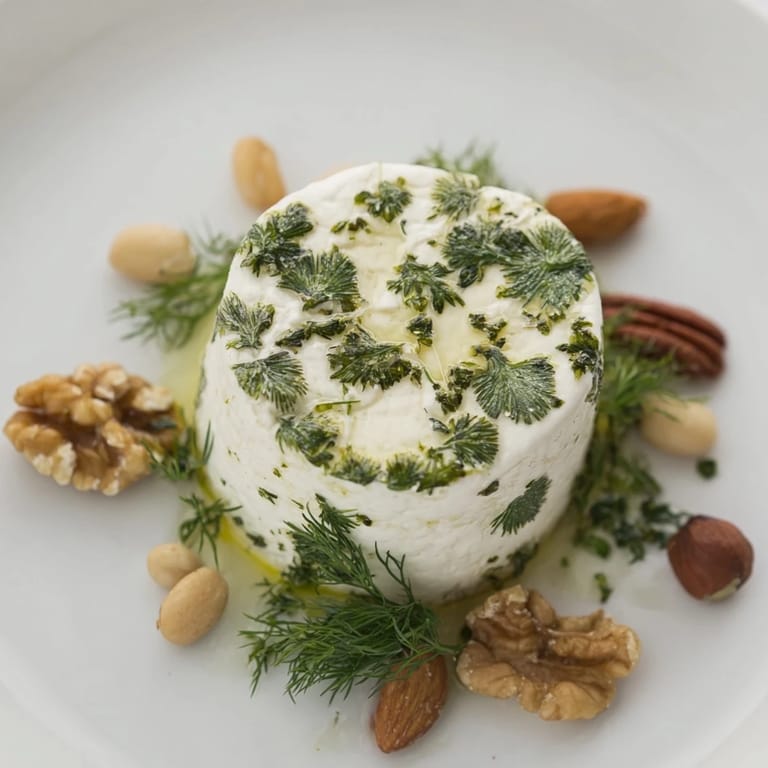
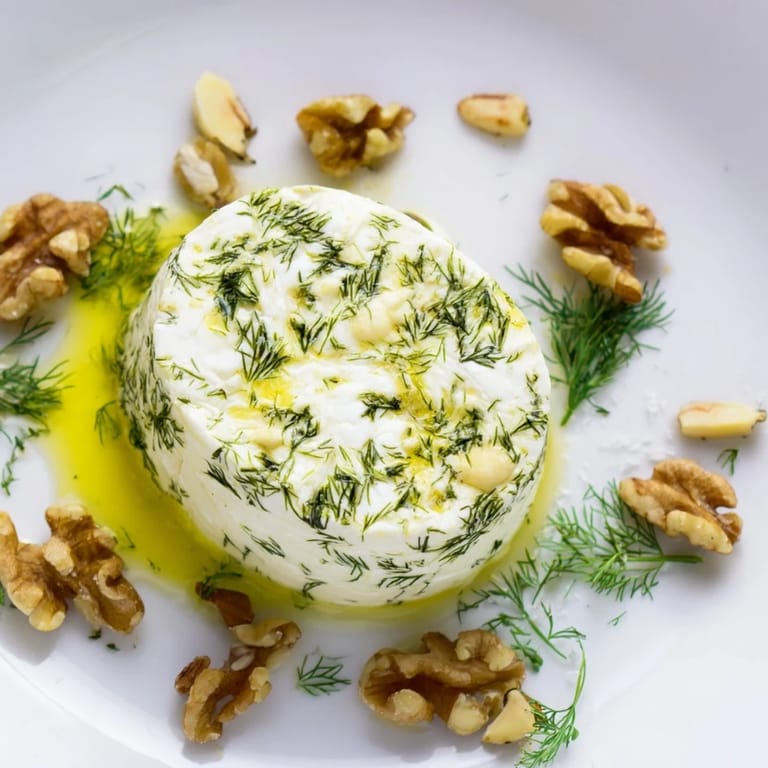
- Gently lay fresh herb sprigs, leaves, or fronds directly onto the cheese surface and press down with a light hand. Lift them away slowly and carefully—the impressions should be detailed but soft, like an echo.
- Add shimmer (if you like):
- Brush the entire surface lightly with olive oil so it glows under lamplight. This step is quiet but transforms the whole thing.
- Scatter the ancient world:
- Arrange your nuts around the cheese in an organic cluster, adding some broken shell fragments for authenticity. You're not arranging flowers—you're revealing what was buried.
- Finish:
- Sprinkle with sea salt and step back to admire your work. Serve immediately or cover loosely and refrigerate until guests arrive.
 Pin It
 The moment a quiet dinner guest laughed—actually laughed—at the sight of my fossil plate was when I understood why I keep making this. It's food that surprises people into joy, that makes them feel like they've stumbled into something rare. That's worth setting a tray for.
Playing with the Palette
You can swap cheese types entirely depending on the season or what you're serving alongside: sharp aged chèvre for winter dinners, fresh ricotta for spring, or even labneh if you want earthier texture. Herb combinations shift the mood too—cilantro and chervil feel bright and Mediterranean, while dill brings something quieter and more contemplative. The recipe is really just a starting point for your own kitchen experiments.
Serving and Pairing
This lives happily with almost everything: crusty bread, neutral crackers, sliced apples, or nothing at all if you're serving it with wine and cheese friends who'll eat it with their hands. The salt at the end is crucial because it makes every element taste more like itself. I've also served it alongside a small bowl of honey drizzled with red pepper flakes, or with a sharp fruit preserve—the sweetness against the salt and herbs creates real tension in the best way.
Making It Your Own
Once you've made this once, you'll start seeing it differently. Some people press edible flowers—violas, pansies, nasturtiums—into the cheese for deeper color. Others add a thin layer of dukkah or za'atar around the edges, or nestle their cheese in a shallow bowl of good olive oil. The frame matters as much as the art.
- Try layering two different soft cheeses—one lighter, one darker—to create visual depth before pressing herbs.
- If you want the fossils to last longer than an hour, skip the olive oil and serve your cheese slightly cooler.
- Taste your nuts first; if they're already salted, skip the final salt sprinkle or use just a pinch.
 Pin It
 This appetizer is proof that beauty and taste don't require hours in the kitchen—sometimes they just need permission to be a little playful. Make it, let people discover what's hiding in the cheese, and watch their faces change.
Recipe FAQs
- → What cheeses work best for the herb imprints?
Soft cheeses like goat cheese, cream cheese, or ricotta hold herb imprints well due to their smooth, spreadable texture.
- → Can I use different nuts besides walnuts and pecans?
Yes, almonds, hazelnuts, or any cracked nuts add texture and visual interest, enhancing the snack's flavor.
- → How do I create clear herb imprints on the cheese?
Press fresh herb sprigs gently into the cheese surface, then carefully lift to reveal detailed fossil-like impressions.
- → Is it possible to prepare this in advance?
Yes, prepare the cheese and nuts ahead, cover tightly, and refrigerate until serving to maintain freshness.
- → What additions can enhance the flavor contrast?
Serving with honey or fruit preserves complements the creamy cheese and crunchy nuts with a hint of sweetness.