 Pin It
 The kitchen smelled like burnt garlic the first time I tried glazing salmon. I had the heat too high, the butter sizzled too fast, and the whole thing turned into a sticky mess before the fish even hit the oven. But my neighbor, who stopped by that evening, tasted a corner anyway and said it was still the best thing I'd cooked all month. That embarrassing disaster taught me more about balance and timing than any perfect dish ever could.
I made this for a small dinner party once, and my friend who claimed she didn't like salmon asked for the recipe before dessert was even served. She said the glaze made it taste nothing like the dry, fishy fillets she remembered from childhood. Watching her go back for seconds felt better than any compliment I'd received in weeks. Sometimes a simple dish can quietly rewrite someone's entire opinion about an ingredient.
Ingredients
- Salmon fillets: Look for fillets with firm, bright flesh and choose skin-on if you want a crispier base, though skinless works beautifully too.
- Salt and black pepper: Just a light seasoning here lets the glaze shine without competing, so don't overdo it before the honey goes on.
- Honey: This is the sweet backbone of the glaze, and using a mild variety like clover keeps it from overpowering the garlic.
- Unsalted butter: Melted butter adds richness and helps the glaze cling to the fish, plus it mellows the sharpness of the garlic as it roasts.
- Garlic: Fresh minced garlic is key here, jar stuff just doesn't have that punchy, aromatic bite you need for this glaze.
- Soy sauce: A splash of soy brings a savory depth that balances the sweetness, and gluten-free versions work perfectly without changing the flavor.
- Lemon juice: Fresh lemon cuts through the richness and brightens everything up, so squeeze it yourself rather than using bottled.
- Dijon mustard: Optional, but this little addition gives the glaze a subtle tang and helps it emulsify into a silky coating.
- Fresh parsley: A sprinkle at the end adds color and a hint of freshness that makes the whole plate feel more alive.
- Lemon wedges: Serving these on the side lets everyone add an extra squeeze if they want that bright, citrusy punch.
Tired of Takeout? 🥡
Get 10 meals you can make faster than delivery arrives. Seriously.
One email. No spam. Unsubscribe anytime.
Instructions
- Preheat and Prepare:
- Set your oven to 200°C (400°F) and line a baking tray with parchment paper so nothing sticks. This also makes cleanup almost effortless, which is always a win on a busy weeknight.
- Season the Salmon:
- Pat the fillets completely dry with paper towels, then lay them on the tray and season both sides lightly with salt and pepper. Drying them first helps the glaze adhere better and prevents steaming in the oven.
- Mix the Glaze:
- In a small bowl, whisk together the honey, melted butter, minced garlic, soy sauce, lemon juice, and Dijon mustard until everything is smooth and glossy. Taste it if you like, it should be sweet, salty, and just a little tangy all at once.
- Brush the Fillets:
- Use a pastry brush to coat the top and sides of each salmon fillet generously with the glaze, saving just a little for later if you want to add more halfway through. The more you brush on, the stickier and more caramelized the final result will be.
- Roast the Salmon:
- Slide the tray into the oven and roast for 12 to 15 minutes, depending on the thickness of your fillets, until the salmon flakes easily with a fork. Keep an eye on it after 10 minutes, salmon can go from perfect to overdone fast.
- Optional Broil:
- If you want extra caramelization and a slightly charred edge, switch the oven to broil for the last 1 to 2 minutes. Watch it closely during this step, the glaze can burn in seconds under high heat.
- Finish and Serve:
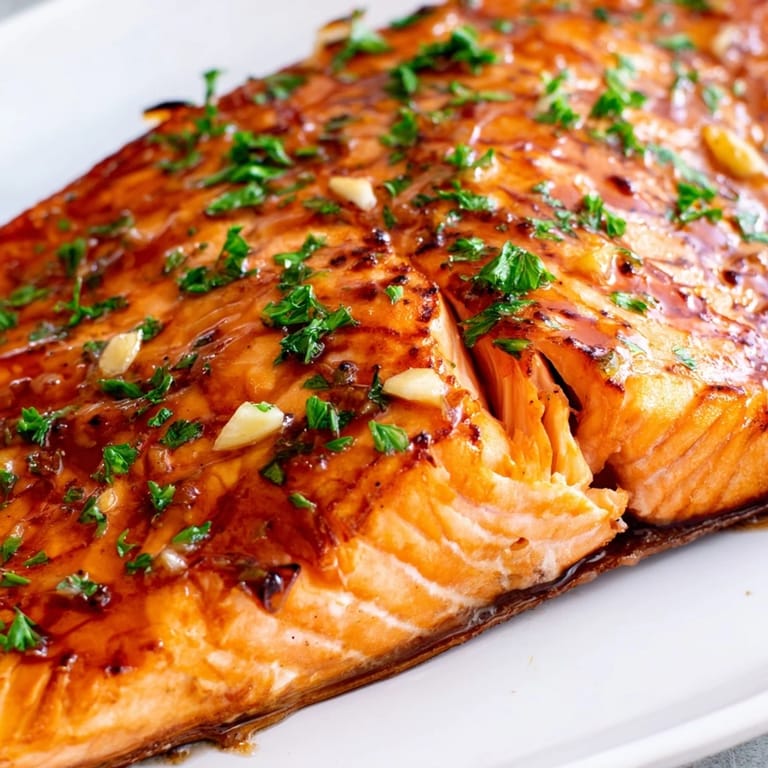
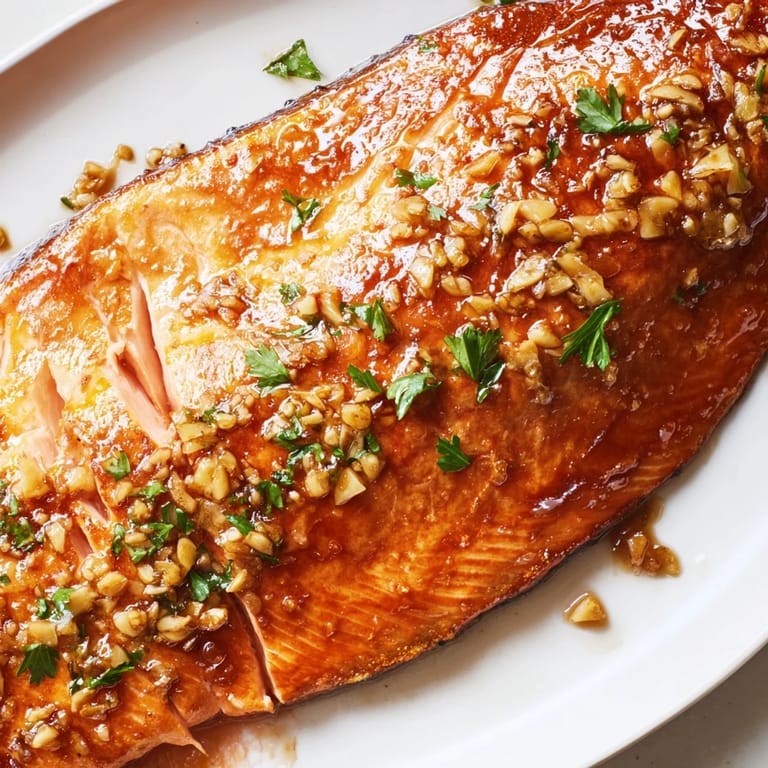
- Pull the tray out, spoon any sticky pan juices over the fillets, and sprinkle with chopped parsley. Serve immediately with lemon wedges on the side for an extra burst of brightness.
 Pin It
 One evening I served this with plain steamed rice and roasted broccoli, and my partner said it tasted like the kind of meal we used to spend too much money on at our favorite bistro. We ate in comfortable silence, scraping every bit of glaze off our plates with the edge of a fork. It was one of those nights when a simple dinner felt like a quiet celebration of nothing and everything at once.
What to Serve It With
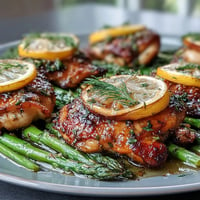
This salmon pairs beautifully with fluffy jasmine rice or buttery mashed potatoes, both of which soak up the sticky glaze like a dream. Roasted asparagus, green beans, or a crisp salad with a lemony vinaigrette balance the richness without competing for attention. I've also served it over quinoa when I wanted something a little lighter, and it worked perfectly.
How to Store and Reheat
Leftover salmon keeps well in an airtight container in the fridge for up to two days, though it's honestly best enjoyed fresh from the oven. When reheating, use a low oven or a covered skillet over gentle heat to avoid drying it out. I've also flaked cold leftovers into a salad or grain bowl, and the glaze still tastes incredible even at room temperature.
Simple Swaps and Variations
If you don't have honey, maple syrup works just as well and adds a slightly deeper, woodsy sweetness to the glaze. For a spicy kick, stir in a pinch of crushed red pepper flakes or a drizzle of sriracha before brushing it onto the fish. You can also swap the salmon for trout or arctic char, both take to the glaze beautifully and cook in roughly the same time.
- Try adding a teaspoon of grated fresh ginger to the glaze for a warm, aromatic twist.
- Substitute coconut aminos for soy sauce if you want a slightly sweeter, soy-free option.
- Garnish with toasted sesame seeds instead of parsley for a nutty, Asian-inspired finish.
 Pin It
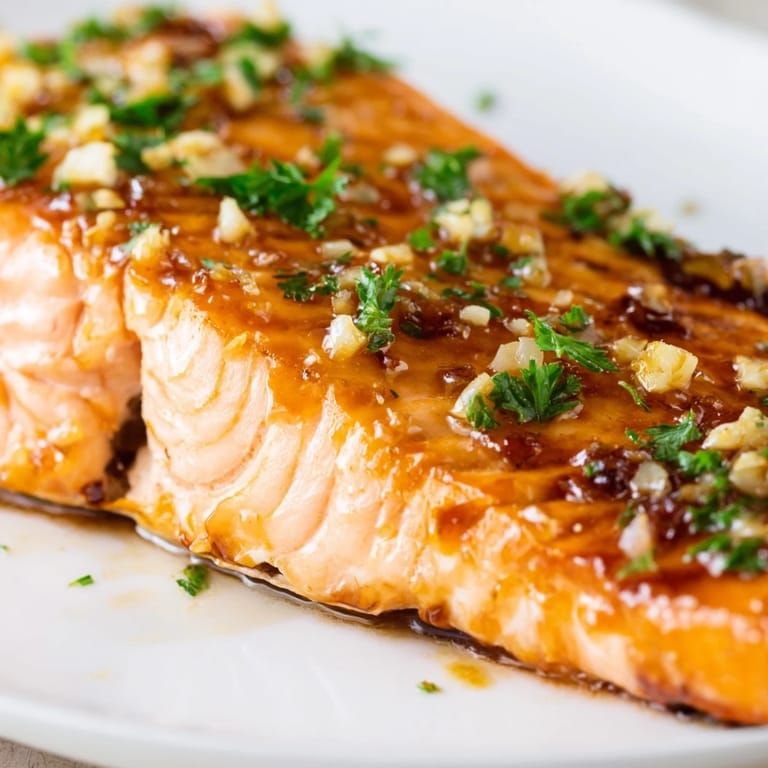
 This recipe has become my go-to whenever I need something quick, impressive, and comforting all at once. I hope it fills your kitchen with the same warm, garlicky smell that always makes me feel like everything is going to be just fine.
Recipe FAQs
- → How do I know when the salmon is cooked through?
The salmon is done when it flakes easily with a fork and reaches an internal temperature of 63°C (145°F). The flesh should be opaque and moist, not translucent.
- → Can I prepare the glaze ahead of time?
Yes, you can whisk together the honey, butter, garlic, soy sauce, lemon juice, and mustard up to 2 hours in advance. Store in an airtight container at room temperature and stir well before brushing onto the salmon.
- → What can I substitute for honey?
Maple syrup works wonderfully as a 1:1 replacement for honey. Agave nectar or brown sugar dissolved in a little water are also viable alternatives that maintain the sweet and savory balance.
- → Is this suitable for a gluten-free diet?
Yes, the base preparation is naturally gluten-free. Simply use gluten-free soy sauce or tamari instead of regular soy sauce, and verify that all your ingredients are certified gluten-free.
- → How do I prevent the glaze from burning during broiling?
Watch the salmon closely during the final 1-2 minutes under the broiler. Position the tray on a middle or lower rack to allow even caramelization without charring. Remove immediately once the glaze turns golden and bubbly.
- → What sides pair best with this dish?
Steamed rice, roasted vegetables like asparagus or broccoli, and fresh green salads complement the sweet and savory flavors beautifully. Serve with lemon wedges for additional brightness and acidity.