 Pin It
 The sizzle of flank steak hitting a hot wok always snaps me into focus. I started making this dish on weeknights when I needed something fast but still exciting, something that didn't taste like I'd phoned it in. The garlic and ginger hit the pan, and suddenly the whole kitchen smells like promise. It's become my go-to when I want comfort without the wait, and every time those noodles get tossed in that glossy sauce, I remember why I keep coming back to it.
I made this for a friend who was convinced she didn't like rice noodles, and she scraped her bowl clean without saying a word until the end. Then she just looked up and asked for the recipe. That's when I knew this one was a keeper, not just for me but for anyone who needs a weeknight win that doesn't feel like a compromise.
Ingredients
- Rice noodles: They turn silky and slippery when cooked right, soaking up the sauce better than wheat noodles ever could, just don't overcook them or they'll clump into a gummy mess.
- Flank steak: Slicing it thin against the grain is the only way to keep it tender, and a partially frozen steak is way easier to slice cleanly.
- Broccoli florets: They add a satisfying crunch and soak up the garlic oil, plus they cook fast enough to stay bright green if you don't crowd the pan.
- Bell pepper: I prefer red or yellow because they're sweeter and prettier, and they soften just enough without turning mushy in the high heat.
- Carrot: Julienned carrots cook faster and look more elegant than thick chunks, and they add a subtle sweetness that balances the soy.
- Green onions: A fresh, sharp bite right at the end wakes up the whole dish and makes it look like you tried harder than you did.
- Garlic and ginger: These two are the heartbeat of the dish, and grating the ginger instead of chopping it spreads the flavor more evenly without any fibrous bits.
- Soy sauce: The backbone of the sauce, salty and umami-rich, and using low-sodium gives you more control over the final taste.
- Brown sugar: It melts into the soy and creates that glossy, slightly caramelized coating that makes everything taste like it came from a restaurant.
- Sesame oil: Just a tablespoon adds a nutty, toasted depth that ties all the flavors together without overpowering anything.
- Vegetable oil: High smoke point and neutral flavor, perfect for getting that wok-seared char on the beef without any burnt taste.
- Sesame seeds: They look fancy and add a tiny crunch, and toasting them for a minute in a dry pan makes them taste even better.
Tired of Takeout? 🥡
Get 10 meals you can make faster than delivery arrives. Seriously.
One email. No spam. Unsubscribe anytime.
Instructions
- Prep the noodles:
- Cook the rice noodles according to the package directions, then drain them and rinse under cold water to stop the cooking. This keeps them from turning to mush when you toss them in the skillet later.
- Sear the beef:
- Heat the vegetable oil in a large skillet or wok over medium-high heat until it shimmers, then add the sliced flank steak in a single layer. Let it sear undisturbed for about two minutes so it gets a nice brown crust, then flip and cook another minute before removing it to a plate.
- Bloom the aromatics:
- In the same skillet, toss in the minced garlic and grated ginger, stirring constantly for about thirty seconds. You'll know it's ready when the smell hits you and you feel like you're in a restaurant kitchen.
- Stir-fry the vegetables:
- Add the broccoli, bell pepper, and julienned carrot to the skillet and stir-fry for about five minutes, tossing frequently. They should be tender but still have a little snap, and the edges might char slightly which adds even more flavor.
- Mix the sauce:
- While the vegetables are cooking, whisk together the soy sauce, brown sugar, and sesame oil in a small bowl until the sugar completely dissolves. Taste it and adjust if you want it sweeter or saltier.
- Bring it all together:
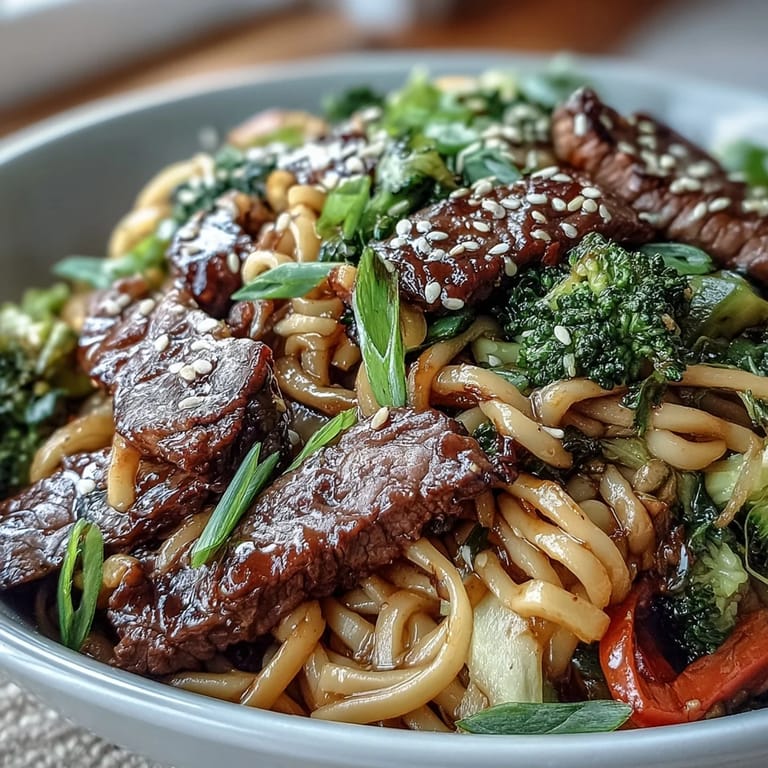
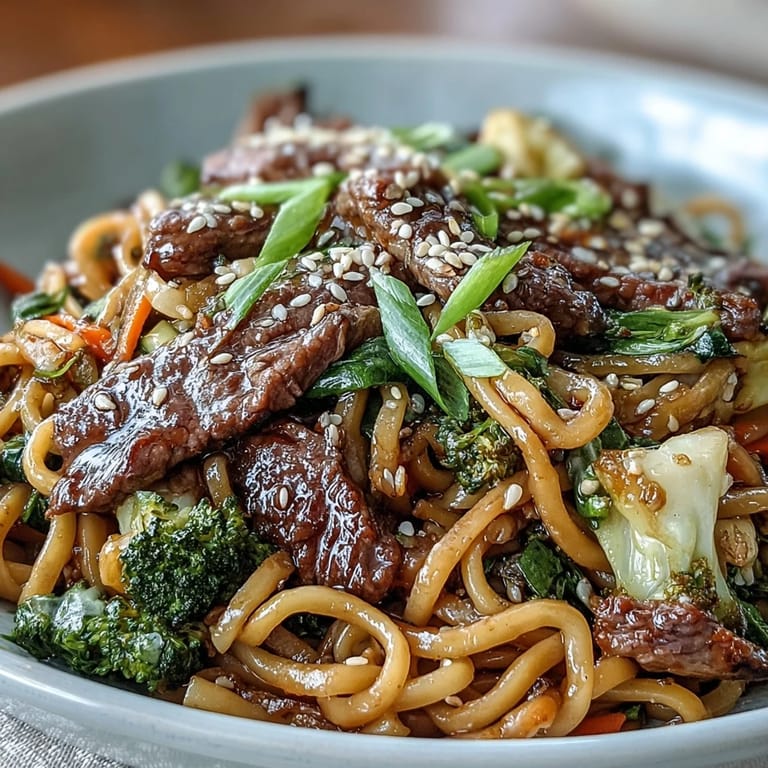
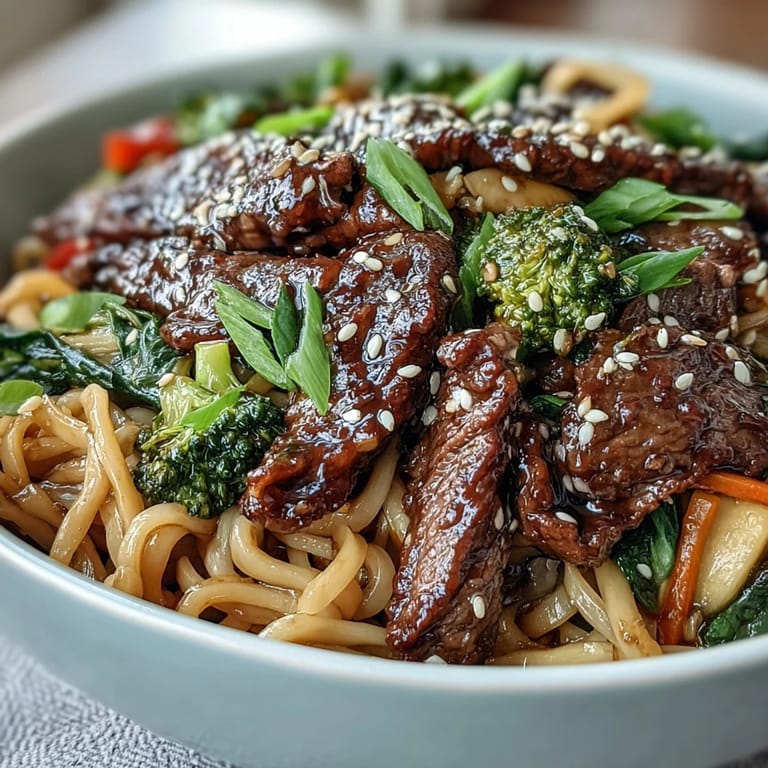
- Return the beef to the skillet along with any juices that collected on the plate, then pour the sauce over everything and stir to coat. Add the cooked rice noodles and gently toss everything together for about two minutes until the noodles are heated through and glossy.
- Garnish and serve:
- Sprinkle the chopped green onions and sesame seeds over the top right before serving. Serve it straight from the skillet if you want to keep it hot and save yourself another dish to wash.
 Pin It
 There was a rainy Tuesday when I made this and my partner walked in just as I was tossing the noodles. He grabbed a fork and ate standing at the stove, and we didn't say much, just stood there sharing bites straight from the skillet. Sometimes a dish becomes memorable not because of a celebration, but because it fits perfectly into an ordinary moment and makes it feel a little less ordinary.
How to Store and Reheat
Leftovers keep well in an airtight container in the fridge for up to three days, though the noodles do soak up more sauce as they sit. When you reheat it, add a splash of water or a drizzle of sesame oil to loosen everything up, and use a skillet over medium heat instead of the microwave if you want to bring back some of that original texture. The microwave works in a pinch, but the noodles can get a little rubbery, so stir halfway through and don't overheat it.
Ways to Make It Your Own
This recipe is forgiving and loves improvisation. Swap the flank steak for thinly sliced chicken thighs, shrimp, or even crispy tofu if you want to change the protein. Add snap peas, zucchini, or mushrooms depending on what's in season or what needs to get used up. If you like heat, stir a spoonful of gochujang or a squirt of sriracha into the sauce, and if you want more richness, crack an egg into the skillet at the end and scramble it through the noodles.
Quick Tips for Success
A hot skillet is your best friend here, so let it preheat for a full minute before adding anything. Prep all your ingredients before you start cooking because once the heat is on, things move fast and you won't have time to chop. If you're doubling the recipe, cook the beef in two batches so it sears instead of steams, and use the biggest skillet or wok you own to give everything room to breathe.
- Freeze the flank steak for fifteen minutes before slicing to make it easier to cut thin, even slices.
- Toast the sesame seeds in a dry pan for a minute to bring out their nutty flavor before sprinkling them on top.
- Taste the sauce before adding it to the skillet and adjust the sweetness or saltiness to your preference.
 Pin It
 This dish has earned its spot in my regular rotation because it delivers big flavor without demanding much from me. I hope it becomes one of those recipes you reach for when you want something satisfying, fast, and just a little bit special.
Recipe FAQs
- → Can I use a different cut of beef?
Yes, sirloin or ribeye work well. Slice thinly against the grain for tenderness.
- → What noodles can I substitute for rice noodles?
Try udon, lo mein, or soba noodles. Adjust cooking time according to package directions.
- → How do I make this spicier?
Add sriracha, gochujang, or red pepper flakes to the sauce for heat.
- → Can I prepare this ahead of time?
Cook components separately and combine when ready to serve for best texture. Stores refrigerated up to 3 days.
- → Is this gluten-free?
Use gluten-free soy sauce or tamari and confirm rice noodles contain no wheat.
- → What vegetables work best for stir-frying?
Choose firm vegetables like snap peas, zucchini, or bok choy that maintain crispness when cooked quickly over high heat.