 Pin It
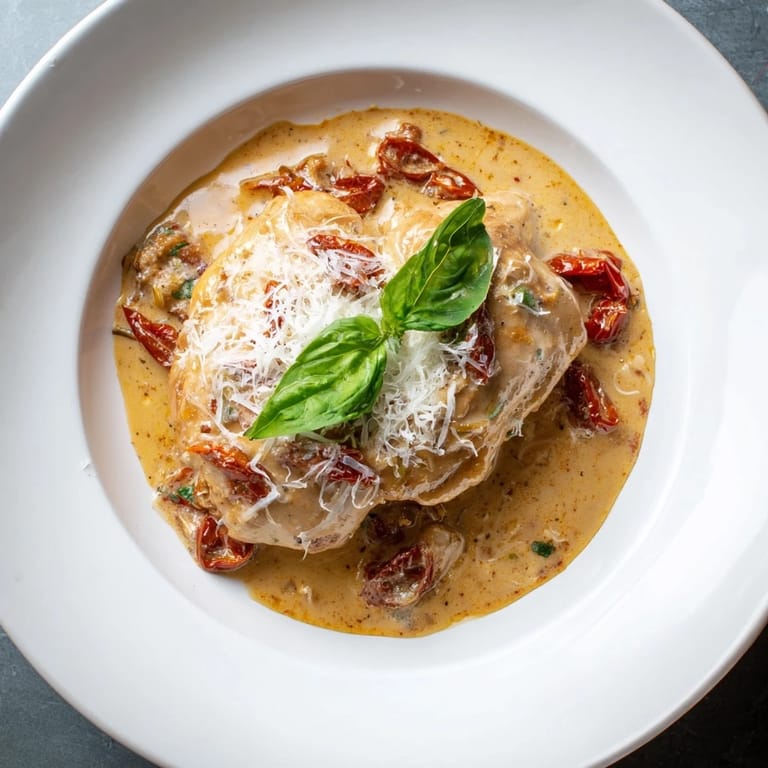
 The first time I made this dish, I was trying to impress someone who claimed they'd tasted everything. I had maybe thirty minutes and a vague memory of a creamy tomato sauce from an Italian restaurant in the city. Standing at the stove with four chicken breasts and a jar of sun-dried tomatoes, I realized I was either going to create something memorable or completely botch it. What emerged was this silky, rich sauce that clung to the chicken like it belonged there all along, and the final flourish of Parmesan dusted on top looked so elegant I almost didn't want to eat it.
Years later, I cooked this for my sister on a random Tuesday when she was stressed about work. She took one bite and got quiet in that way that means food has done its job, and by the time she finished her plate, she was telling me stories and laughing again. That's when I understood this dish isn't really about impressing anyone—it's about what happens when something tastes this good and doesn't require a culinary degree to make.
Ingredients
- Boneless, skinless chicken breasts: Four breasts about the size of your palm work perfectly; they cook evenly and stay tender when you don't rush the searing step.
- Kosher salt and freshly ground black pepper: These aren't optional—they build the foundation before the sauce even touches the pan.
- Olive oil: Use regular olive oil here, not extra virgin, so it can handle the high heat without smoking up your kitchen.
- Garlic, dried oregano, and red pepper flakes: The garlic gets minced fine so it dissolves into the sauce; the oregano and pepper flakes arrive together and bloom in just one minute, releasing everything they have.
- Sun-dried tomatoes in oil: These are concentrated tomato flavor in a small package, and the oil they're packed in is liquid gold for your sauce.
- Chicken stock: Use the best quality you can find, or your sauce will taste thin and forgettable.
- Heavy cream: This is what transforms the whole thing from acidic to velvet, so don't skip it or replace it with something lighter.
- Parmesan cheese: You need it twice—once grated into the sauce for umami depth, and again microplaned on top for that dramatic snow effect.
- Unsalted butter: The final tablespoon swirled in at the end adds richness and makes the sauce glossy.
- Fresh basil: Optional but generous—it adds brightness and reminds you this is Italian food at heart.
Tired of Takeout? 🥡
Get 10 meals you can make faster than delivery arrives. Seriously.
One email. No spam. Unsubscribe anytime.
Instructions
- Set up and season your chicken:
- Pat each breast dry with paper towels so they'll brown properly instead of steam. Season both sides with salt and pepper, and let them sit for a minute while you gather the rest of your ingredients.
- Sear until golden:
- Heat olive oil in a large skillet over medium-high heat until it shimmers. Place the chicken breasts in carefully and don't move them—let them develop a golden brown crust for about four to five minutes per side, then transfer to a plate.
- Build the flavor base:
- Lower the heat to medium and add your minced garlic along with oregano and red pepper flakes if using them. You'll smell it immediately—that's the signal to move on after just one minute before it burns.
- Introduce the sun-dried tomatoes:
- Stir in your sliced sun-dried tomatoes and cook for another minute so they soften slightly and release their concentrated flavor into the pan.
- Deglaze and simmer:
- Pour in the chicken stock while scraping the bottom of the pan with a wooden spoon to lift all those caramelized bits. Let this bubble gently for two to three minutes while the flavors mingle.
- Make it creamy:
- Stir in the heavy cream and the first measure of grated Parmesan cheese, bringing the mixture to a gentle simmer. The cheese melts into the sauce and everything becomes silky.
- Reunite chicken and sauce:
- Nestle the seared chicken breasts back into the sauce, spacing them so each one touches the liquid. Simmer uncovered for five to eight minutes, tilting the pan occasionally and spooning sauce over the top until the chicken is completely cooked through and the sauce has thickened to coat the back of a spoon.
- Finish with richness:
- Swirl in the tablespoon of butter, which will make the sauce glossy and add a final layer of richness.
- Plate with drama:
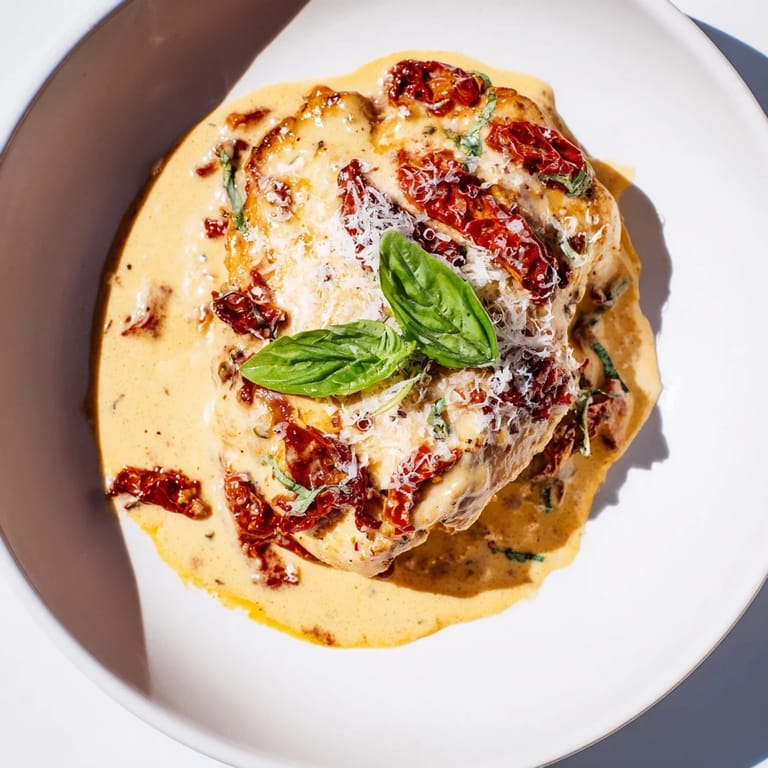
- Transfer each chicken breast to a plate, spoon the sauce generously over it, and then microplane that extra Parmesan cheese right over the top in a beautiful, snowy cloud. Add a basil leaf or two if you have fresh basil on hand.
 Pin It
 There's something about the moment when you plate this dish and watch someone's face change when they see it. The creamy sauce catches the light, the Parmesan snow sits on top like a luxury, and suddenly they understand you made this for them with intention.
Why the Sauce Works
The genius of this sauce is that it's built in layers. The garlic and oregano bloom first and set the Italian tone, the sun-dried tomatoes add concentrated depth and a subtle sweetness, and then the cream arrives to smooth everything into silk. By the time you add the Parmesan cheese directly into the sauce, you've created a foundation rich enough that it clings to the chicken instead of pooling at the bottom of the pan. I learned this by accident the first time I made it, and now I understand it's not a flaw of the dish—it's the entire point.
What to Serve It With
This sauce is too good to waste, so you need something to soak it up. Creamy mashed potatoes are the obvious choice and honestly never wrong, but fresh pasta—especially something like fettuccine or pappardelle—lets the sauce coat every strand. If you want something lighter, crusty bread works beautifully for soaking and pushing the sauce around your plate. I've also served it over polenta and watched people get quiet in that same way my sister did, which tells you something about how satisfying this combination is.
The Parmesan Snow Technique
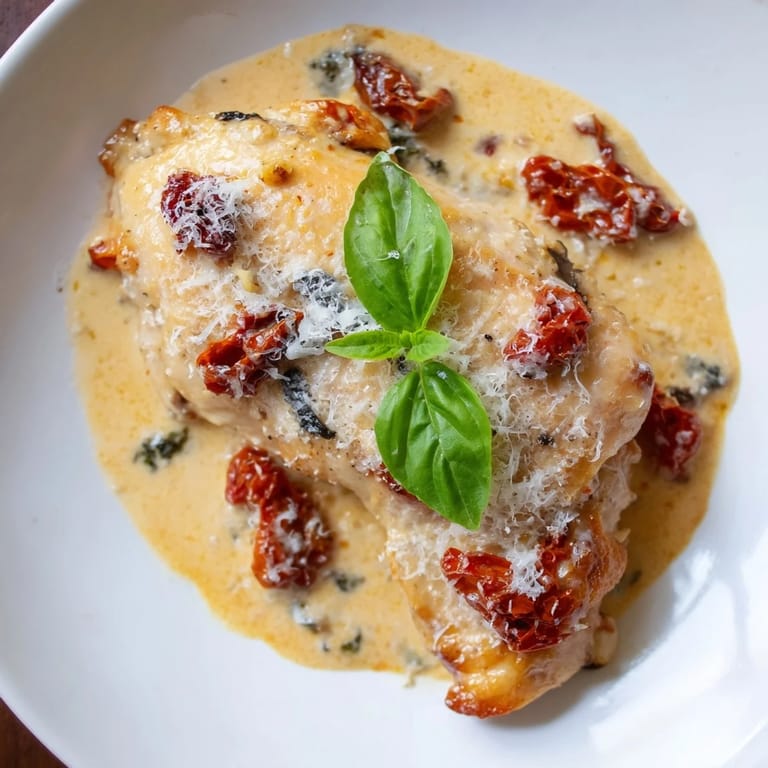
The Parmesan snow is not just decoration—it's the final flavor and texture note that makes this dish feel complete. A microplane creates those impossibly fine, light shreds that look almost cloud-like when they hit the warm sauce and chicken. A regular grater works too, but the shreds will be thicker and less elegant. The trick I discovered after a few attempts is to microplane the cheese right over the plate rather than grating it into a pile first; that way it stays fluffy and doesn't clump together from the warmth of the food underneath.
- Use cheese that's as cold as possible right before you grate it.
- Don't grate ahead of time or the snow will collapse into regular grated cheese.
- A generous handful looks better than a timid sprinkle.
 Pin It
 This is the kind of dish that lives in the space between comfort and celebration, and it asks for nothing except your attention for forty minutes and faith that the simple steps will create something beautiful. That's all it takes.
Recipe FAQs
- → What cut of chicken is best for this dish?
Boneless, skinless chicken breasts work well, providing tender, juicy meat that cooks evenly in the sauce.
- → Can I use chicken thighs instead?
Yes, chicken thighs add extra juiciness and flavor while maintaining the dish's creamy profile.
- → How do I achieve the Parmesan snow effect?
Use a microplane or the finest side of a grater to dust freshly grated Parmesan finely over the finished dish for a fluffy, snow-like appearance.
- → Is it possible to make this gluten-free?
Ensure the chicken stock is gluten-free and all other ingredients are free of gluten-containing additives to keep the dish suitable.
- → What sides pair well with this chicken and sauce?
Pasta, mashed potatoes, or crusty bread are excellent for soaking up the creamy, flavorful sauce.
- → Can I add wine to the sauce?
Yes, a splash of dry white wine added with the chicken stock enhances depth and complexity in the sauce.