 Pin It
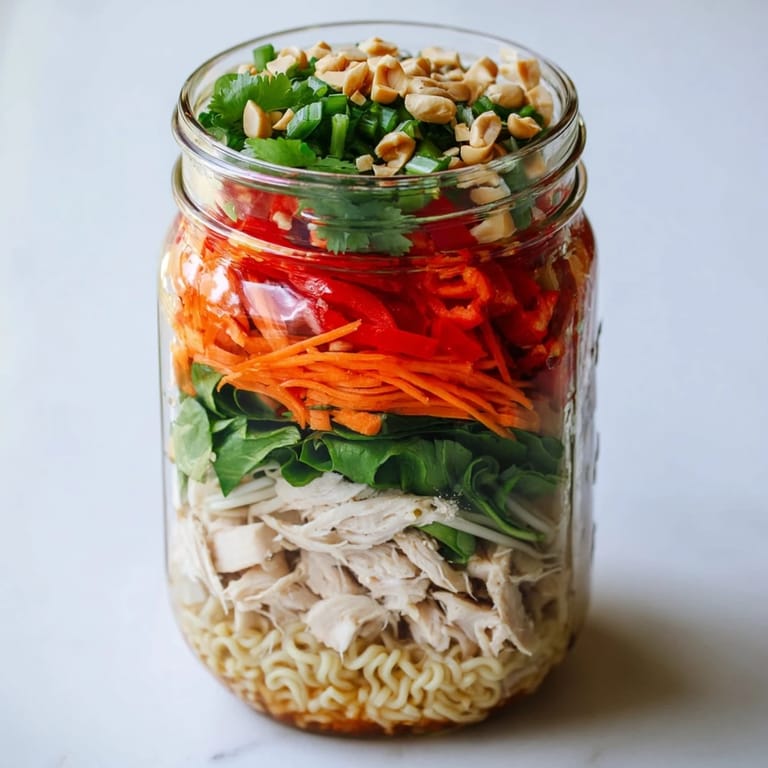
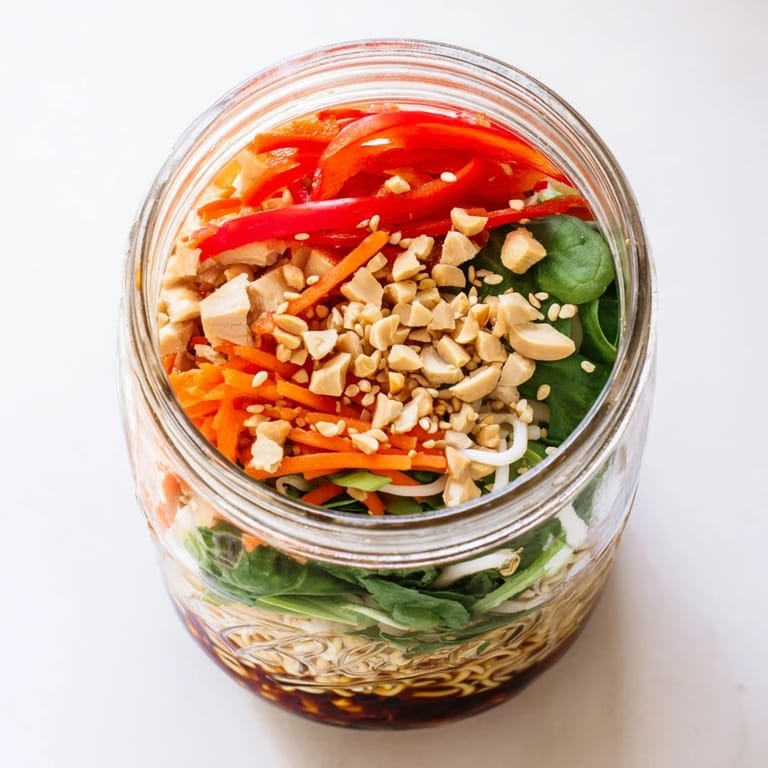
 I discovered mason jar noodles during a particularly hectic month when I was bouncing between meetings and deadlines. Standing in my kitchen one Sunday afternoon, surrounded by produce that wouldn't survive the week, I had a moment of clarity while staring at empty mason jars on my drying rack. The layered colors of vegetables, protein, and noodles looked like edible art when assembled, and the satisfied feeling of having prepared lunches for days ahead was almost as good as the first delicious bite.
Last summer, I packed four of these jars for a lakeside picnic with friends who were skeptical about cold noodles in a jar. The sound of lids popping open was quickly followed by surprised murmurs of approval as everyone poured hot water into their containers. One friend, who claimed to dislike Asian flavors, sheepishly asked for the recipe before wed even packed up our blanket.
Ingredients
- Dried ramen or rice noodles: I prefer rice noodles as they maintain their texture better when sitting in the refrigerator for a few days.
- Protein options: Rotisserie chicken has become my go-to shortcut, but I found that marinating tofu in a bit of the sauce mixture overnight creates incredible flavor for vegetarian versions.
- Layered vegetables: The beauty is in the rainbow, with each vegetable adding not just color but texture too, from the crunch of bell peppers to the tender wilt of spinach when hot water hits.
- Sauce ingredients: This umami-rich base is what transforms these jars from simple meal prep to craveable lunches, with the balance of soy, vinegar, and sweetness developing over time.
- Toppings: These final additions bring crucial freshness and texture contrast, with cilantro and lime cutting through the richness of the sauce.
Tired of Takeout? 🥡
Get 10 meals you can make faster than delivery arrives. Seriously.
One email. No spam. Unsubscribe anytime.
Instructions
- Prepare your noodle base:
- Cook your noodles just shy of the package directions since theyll continue to soften slightly in the jar. I like to toss them with a tiny splash of sesame oil to prevent sticking while they cool.
- Mix the flavor foundation:
- Whisk together your sauce ingredients until the honey or maple syrup is fully incorporated. You should catch wafts of ginger and garlic that promise good things to come.
- Build your flavor towers:
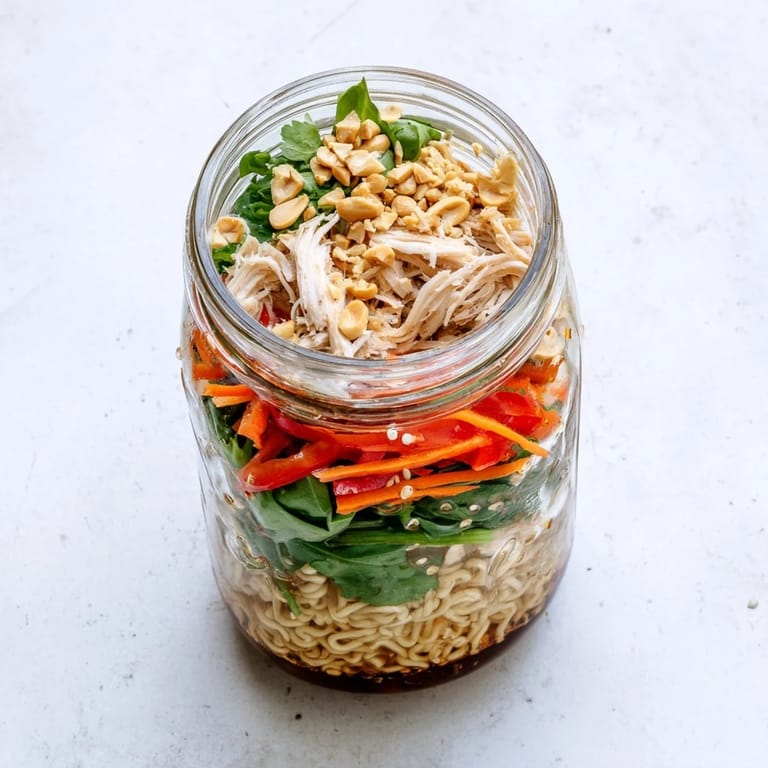
- Start with sauce at the bottom of each jar, which keeps everything moist and flavorful. The protein goes next because it benefits from marinating directly in the sauce.
- Layer strategically:
- Continue with vegetables in order of hardiness, placing carrots and peppers before more delicate greens. Think of it as building a little ecosystem where nothing gets soggy prematurely.
- Finish with noodles:
- Top each jar with your cooled noodles, which act as a protective lid over the more delicate ingredients. Press them down gently to make room for sealing the jar.
- Activate and enjoy:
- When hunger strikes, remove the lid and add hot water just until the ingredients are barely covered. The transformation as steam rises through the layers is almost magical, releasing aromas that make waiting those few minutes deliciously difficult.
 Pin It
 My neighbor knocked on my door during a power outage last winter, wondering if I had any food that didnt need heating. I handed over two mason jar meals and a thermos of hot water, explaining the simple process. The next day, she appeared with empty jars and a request to teach her teenage daughter how to make them for school lunches, saying it was the bright spot in an otherwise dark and cold evening.
Meal Prep Variations
Some weeks I create a build-your-own jar station on Sunday evenings, letting family members choose their combinations. This small customization makes a tremendous difference in ensuring everyone actually eats their prepared meals instead of leaving them languishing in the refrigerator. My daughter tends toward more vegetables and less sauce, while my partner doubles the protein and adds extra Sriracha.
Storage and Longevity
The unexpected benefit Ive discovered is how these jars actually improve over the first 48 hours as flavors meld together. By day three, the sauce has worked its way through the protein, creating deeper flavor profiles than day one. However, Ive found that pushing beyond four days means the vegetables begin losing their distinct textures, particularly the bell peppers and bean sprouts.
Troubleshooting Your Noodle Jars
When I first started making these, I experienced a few soggy disasters until I figured out the proper technique. The most common pitfall is using noodles that are too soft to begin with, which turn mushy by serving time. Another mistake is adding too much hot water when activating the jar, which dilutes the carefully crafted flavor balance.
- If your noodles are clumping together after refrigeration, try rinsing them under cold water and tossing with a bit more sesame oil before adding to jars.
- For firmer vegetables like carrots and bell peppers, cutting them slightly thinner helps them soften appropriately when hot water is added.
- When making multiple jars, mix the sauce directly in a measuring cup with a pour spout to ensure even distribution between containers.
 Pin It
 These mason jar meals have become more than convenience in my kitchen, they represent the small act of caring for my future self. Each time I open the refrigerator to grab one on a busy day, I feel a moment of gratitude for the past me who took twenty minutes to create something nourishing and delicious.
Recipe FAQs
- → How long do mason jar meals stay fresh?
These meals keep refrigerated for up to four days when sealed properly. The sauce at the bottom keeps vegetables and protein fresh while preventing sogginess until you're ready to serve.
- → Can I customize the protein options?
Absolutely. Use cooked chicken breast, tofu, shrimp, or edamame for plant-based versions. Any protein works well—just ensure it's cooked and diced into bite-sized pieces before layering.
- → What's the best way to serve from the jar?
Remove the lid and add approximately half a cup of hot water directly to the jar. Let sit for 2-3 minutes to warm the noodles and vegetables, then mix well. You can eat straight from the jar or transfer to a bowl.
- → Are there low-carb alternatives for the noodles?
Yes, substitute regular noodles with spiralized zucchini or shirataki noodles for a lower-carb option. Both work excellently with the Asian sauce and maintain the meal's convenience factor.
- → How do I adjust the spice level?
Control heat by increasing the Sriracha or chili sauce in the sauce mixture, or omit it entirely for milder versions. Start with the optional amount and adjust based on your heat preference.
- → What makes the layering order important?
Layering sauce first keeps vegetables submerged and prevents soggy noodles. Placing protein and vegetables in the middle maintains their texture and flavor, while noodles on top prevent premature softening until serving.