 Pin It
 I discovered this dish quite by accident one evening when I had leftover lemon posset cream and a craving for something savory. The idea struck me while staring at chicken breasts in the fridge—what if I borrowed that brûléed sugar technique from dessert and created a sweet-savory crust? The result was unexpectedly brilliant, a dinner that felt elegant without being fussy, and now it's become my go-to move when I want to impress without spending hours in the kitchen.
I made this for my neighbor after she'd helped me through a rough week, and watching her face light up when she tasted that first bite of chicken with the crispy sugar crust made me realize food really does carry meaning beyond nutrition. She asked for the recipe immediately, and I knew it had to become a permanent fixture in my cooking rotation.
Ingredients
- Boneless, skinless chicken breasts: Two large ones give you enough surface area for a proper brûléed crust and cook evenly when pounded to about three-quarter inch thickness.
- Granulated sugar: The magic ingredient that creates that crackling, caramelized layer—use fine sugar for the most elegant results.
- Lemon zest and juice: Fresh is non-negotiable here; bottled juice tastes tinny and misses the brightness that makes this dish sing.
- Sea salt and freshly ground black pepper: Season generously on the chicken before searing, as this is your only chance to build flavor into the meat itself.
- Olive oil: A good quality one for searing the chicken helps create a golden crust that holds the brûléed sugar.
- Dried linguine or spaghetti: The thin strands catch the creamy sauce beautifully; thicker pastas tend to overwhelm the delicate flavors.
- Unsalted butter and olive oil: The combination creates a luxurious base for your sauce with more complexity than either would alone.
- Garlic: Minced fresh garlic blooms in the butter, filling your kitchen with that unmistakable aroma that tells you something good is happening.
- Heavy cream: Full fat is essential; lower fat versions break when heated and won't coat the pasta with the same silky texture.
- Parmigiano-Reggiano cheese: Freshly grated melts into the sauce like liquid gold and adds umami depth that pre-grated versions simply cannot match.
- Fresh parsley: Chopped just before serving, it adds a final brightness and visual contrast against the creamy sauce.
Tired of Takeout? 🥡
Get 10 meals you can make faster than delivery arrives. Seriously.
One email. No spam. Unsubscribe anytime.
Instructions
- Prepare your chicken:
- Pat the breasts dry with paper towels—this is crucial for getting a golden sear. Season both sides with salt, pepper, and lemon zest, letting the seasonings cling to the surface.
- Sear to golden:
- Heat olive oil in a skillet over medium-high heat until it shimmers slightly. Lay the chicken in carefully and resist the urge to move it; let it develop a beautiful golden crust for about 4-5 minutes before flipping.
- Create the brûlée crust:
- Once the chicken is nearly cooked through, sprinkle a tablespoon of sugar evenly over the top of each breast. If you have a kitchen torch, use it in slow, sweeping motions to caramelize the sugar until it's amber-colored and crackling.
- Boil your pasta:
- While the chicken rests, bring a large pot of well-salted water to a rolling boil. Salt the water generously—it should taste like the sea—as this is your main seasoning for the pasta.
- Cook pasta to al dente:
- Follow package timing, then taste a strand; it should have a slight firmness when you bite it. Reserve half a cup of pasta water before draining, as this starch is liquid gold for finishing your sauce.
- Build your sauce:
- Melt butter and olive oil together over medium heat, then add minced garlic. You'll know it's ready when the smell becomes irresistible, about one minute—don't let it brown or it will turn bitter.
- Add brightness and creaminess:
- Stir in lemon zest and juice, then pour in the heavy cream. Let it come to a gentle simmer, swirling occasionally, and you'll notice the sauce becoming smooth and velvety.
- Finish with cheese:
- Remove from heat and stir in grated Parmigiano-Reggiano until fully melted and the sauce looks glossy. Taste and season with salt and pepper, remembering that the cheese is already salty.
- Combine pasta and sauce:
- Add the drained pasta to the skillet and toss gently, adding splashes of reserved pasta water until the sauce coats every strand with a silky sheen. It should move fluidly in the pan, not cling in clumps.
- Plate and garnish:
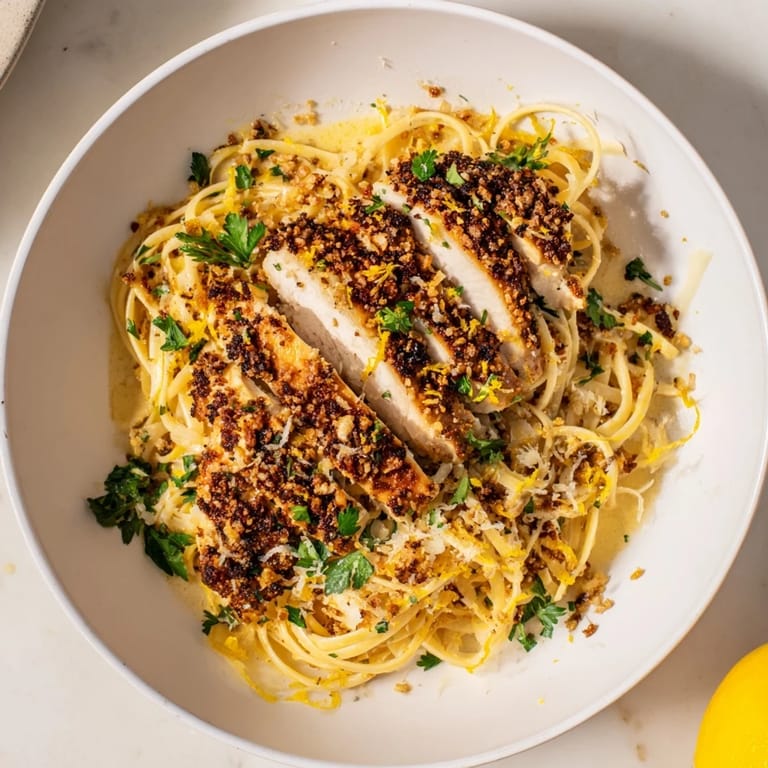
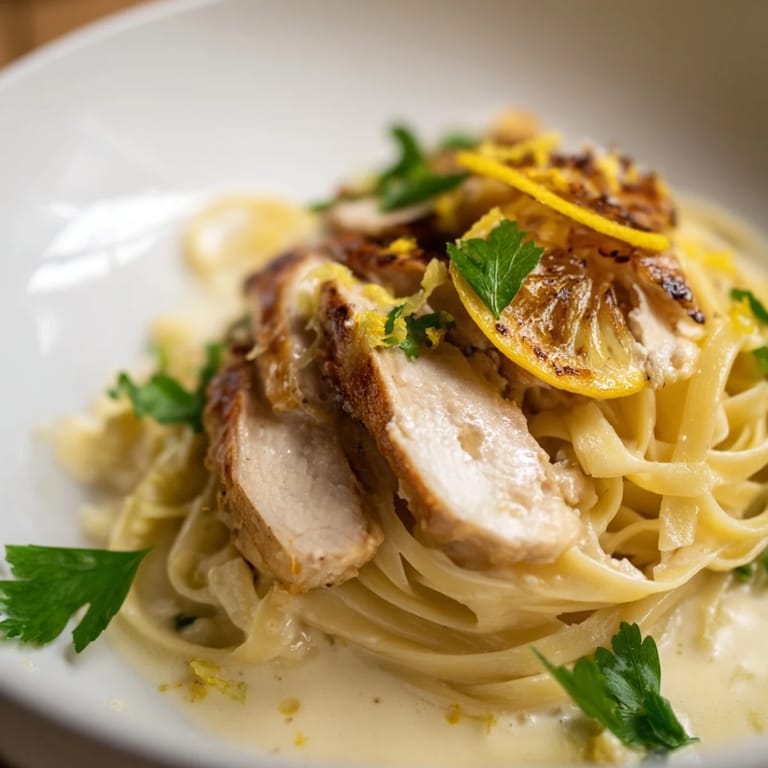
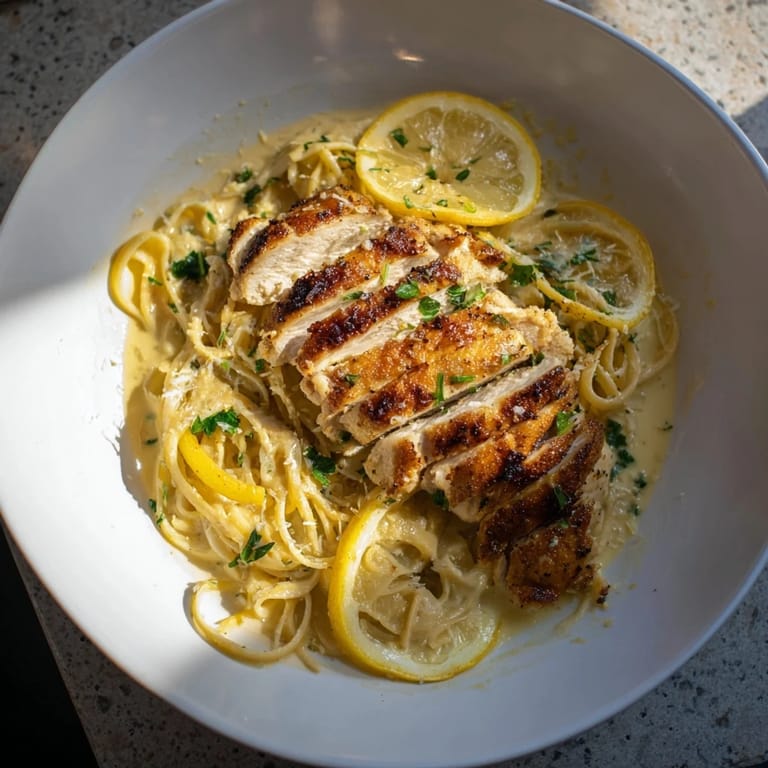
- Divide the creamy pasta among plates, top with sliced lemon brûlée chicken, and finish with a sprinkle of extra lemon zest, additional cheese, and fresh parsley leaves for color and freshness.
 Pin It
 There's something magical about the moment when someone closes their eyes while eating something you've made, and that happened when my partner tasted the contrast of the crispy sugar giving way to tender, juicy chicken beneath a pool of creamy lemon sauce. It reminded me why I love cooking—it's not about technique or ingredients, it's about creating a moment someone will remember.
The Dessert-Dinner Crossover Magic
The brûlée technique borrowed from pastry brings an unexpected sophistication to a weeknight dinner, transforming an ordinary chicken breast into something that feels special. It's one of those cooking tricks that seems impressive but relies entirely on patience and a steady hand with the torch rather than advanced skill. Once you've done it once, you'll find yourself reaching for the torch in all sorts of unexpected moments in the kitchen.
Building Layers of Lemon Flavor
This dish uses lemon at three different points—zest on the chicken for subtle fragrance, juice in the sauce for brightness, and fresh zest as garnish for visual and flavor pop—creating a multi-dimensional citrus experience that never feels one-note or overpowering. The zest carries oils that juice cannot, the juice brings acidity and sweetness, and the garnish zest hits your palate fresh and alive. Learning to think about ingredients in these layers transforms how you approach seasoning everything you cook.
Timing and Temperature Precision
Getting the chicken to that perfect state of nearly-cooked-through is the crucial moment that determines whether your final result will be juicy or dry, and it's worth checking doneness with a meat thermometer if you're new to this—aim for 160°F internal temperature. The cream sauce simmers gently rather than boils hard, which prevents it from breaking and separating into an oily, greasy mess that can't be recovered. Once you internalize the feeling and sound of a gentle simmer versus a rolling boil, you'll cook cream sauces with confidence forever.
- Pound the chicken breasts to an even three-quarter inch thickness so they cook uniformly and stay juicy.
- Let the seared chicken rest for a minute or two before applying sugar and torching, as carryover cooking ensures it's cooked through without drying out.
- Taste your sauce before plating and don't be shy with adjustments—a pinch more salt, a squeeze of fresh lemon juice, or a splash of pasta water can transform it from good to unforgettable.
 Pin It
 This dish has become my answer to the question, "What should we make for dinner?" when I want to feel inspired rather than stressed. It reminds me that the most memorable meals often come from playful combinations and borrowed ideas, not from following tradition.
Recipe FAQs
- → How do I achieve the perfect caramelized crust on the chicken?
After seasoning and searing the chicken breasts, sprinkle sugar evenly on top and use a kitchen torch or broiler to brûlée the sugar until golden and crisp without burning.
- → What type of pasta works best for this dish?
Linguine or spaghetti are ideal as they hold the creamy lemon sauce well and complement the texture of the thinly sliced chicken.
- → Can I substitute heavy cream in the sauce?
Yes, crème fraîche can be used for a slightly tangier and lighter sauce with a similar creamy consistency.
- → How can I add extra crunch to this dish?
Toasted pine nuts or breadcrumbs sprinkled on top add a pleasant crunchy contrast to the creamy and tender elements.
- → What wine pairing complements this meal?
Crisp white wines like Sauvignon Blanc or Pinot Grigio enhance the lemon’s brightness and balance the richness of the cream and cheese.
- → How do I prevent the pasta from becoming sticky while preparing the sauce?
Reserve some pasta cooking water before draining; add it gradually to the sauce to maintain a silky texture that coats the noodles evenly.