 Pin It
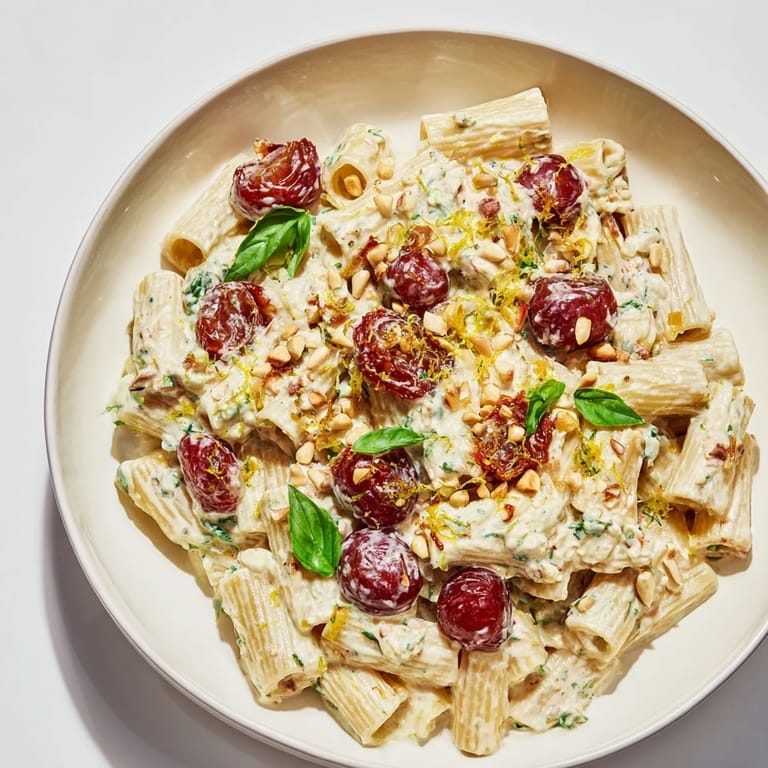
 I discovered this dish by accident one autumn when I had a bowl of grapes sitting on the counter and wondered what would happen if I roasted them until they burst. The sweetness intensified, almost wine-like, and I suddenly imagined them tossed with something creamy. That evening, ricotta became my answer, and the first forkful—that combination of soft pasta, jammy grapes, and bright citrus—felt like I'd stumbled onto something that had always existed in Italian kitchens, just waiting for me to find it.
I made this for friends on a Sunday evening when everyone was tired of predictable dinner options, and watching their faces light up when they tasted it reminded me that the best meals are the ones that surprise you—and yourself. Someone asked for the recipe before dessert, which rarely happens.
Ingredients
- Pasta (350 g): Use penne, rigatoni, or fusilli—short shapes cradle the ricotta and grapes better than long noodles ever could.
- Seedless grapes (300 g): Red or black both work beautifully; the stems must come off or they'll catch between your teeth.
- Olive oil (1 tbsp for roasting, 2 tbsp for assembly): The roasting oil helps the grapes blister and concentrate their flavor, while the finishing oil brings everything together.
- Fresh ricotta (250 g): This is non-negotiable—the creamy base that balances the sweet and tart notes.
- Lemon zest and juice: The brightness here cuts through the richness; don't skip it or the dish feels one-dimensional.
- Fresh basil and parsley (2 tbsp and 1 tbsp): These herbs keep everything light and add that Italian garden feeling.
- Toasted pine nuts (40 g, optional): They add a textural contrast and nuttiness that makes people think you're fancier than you actually are.
- Parmesan cheese (optional): A final shower of Parmesan adds a salty, umami depth that completes the dish.
Tired of Takeout? 🥡
Get 10 meals you can make faster than delivery arrives. Seriously.
One email. No spam. Unsubscribe anytime.
Instructions
- Prepare your workspace:
- Preheat your oven to 220°C (425°F) and line a baking tray with parchment paper—this prevents sticking and makes cleanup feel less like punishment.
- Roast the grapes:
- Spread your grapes on the tray, drizzle with olive oil, and season with salt and pepper. Roast for 20–25 minutes, shaking halfway through, until they're soft, blistered, and caramelized at the edges. The kitchen will smell almost like wine reducing on the stove.
- Cook the pasta:
- While grapes roast, bring salted water to a boil and cook your pasta until al dente—it should still have a little resistance when you bite it. Reserve 120 ml of pasta water before draining; this starchy liquid is your secret weapon for creating a silky sauce.
- Make the ricotta mixture:
- In a bowl, combine ricotta, lemon zest, lemon juice, basil, parsley, and salt. Stir until smooth and cohesive, tasting as you go to adjust the brightness and salt to your preference.
- Combine everything:
- Return drained pasta to the pot and add the ricotta mixture, tossing gently. Add reserved pasta water a little at a time until you reach a creamy, sauce-like consistency. The pasta should glide through the mixture, not swim in it.
- Fold in the grapes:
- Gently add the roasted grapes and their juices, tossing lightly to avoid crushing them. Finish with a drizzle of extra-virgin olive oil.
- Plate and serve:
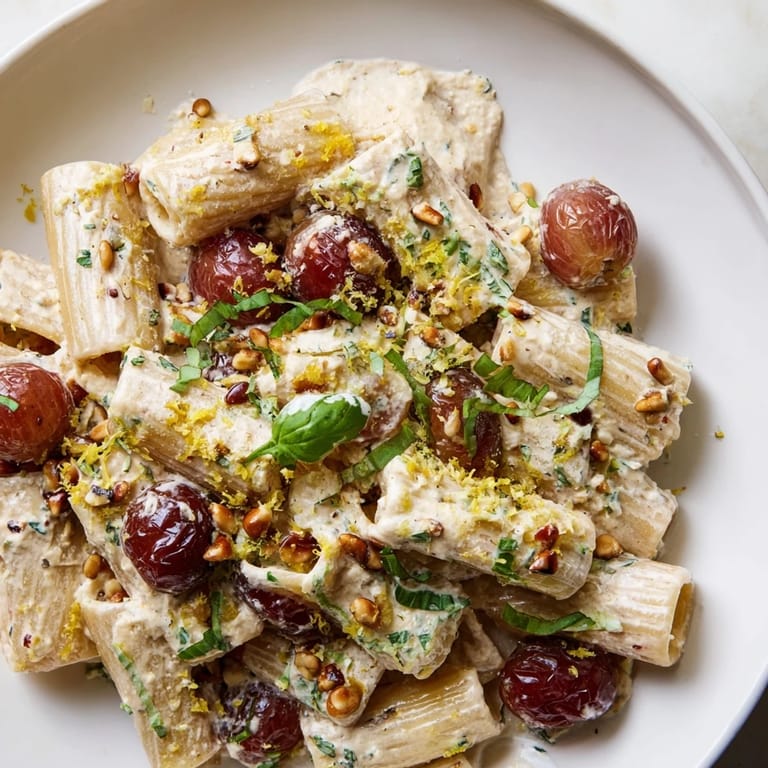
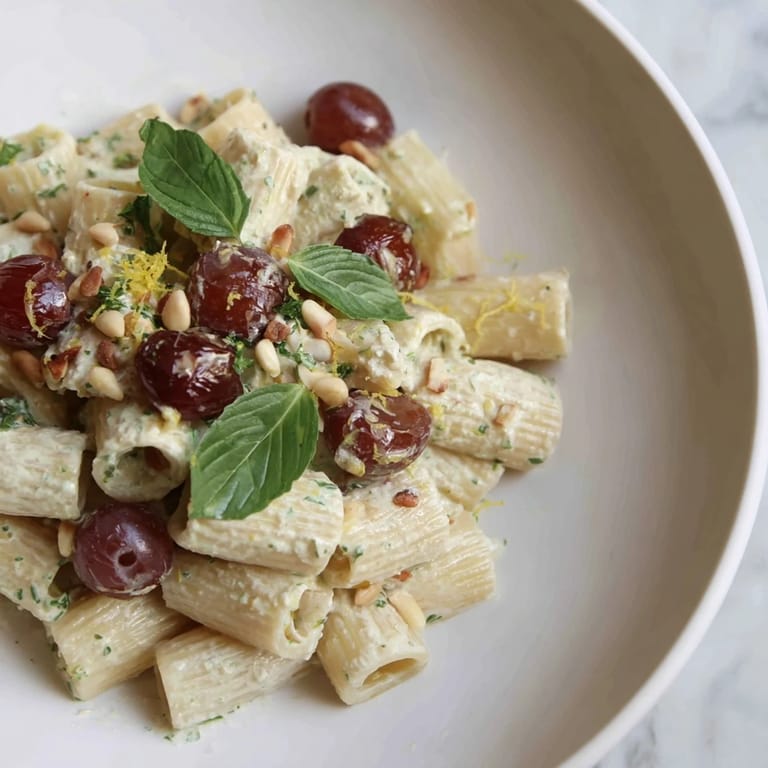
- Divide among plates and top with pine nuts, fresh basil, black pepper, and Parmesan if you like. Serve immediately while the pasta is still warm and the ricotta creamy.
 Pin It
 This dish taught me that fruit and cheese aren't strange bedfellows—they're actually old friends in Italian cooking, and I'd just never thought to introduce them properly on a weeknight. Now it's become the meal I make when I want to feel like I'm cooking something sophisticated without actually breaking a sweat.
Why This Combination Works
The magic lives in the contrast: sweet roasted grapes against creamy ricotta, bright lemon cutting through both, and fresh herbs tying everything back to earth. It's the kind of balance that makes you pause between bites, wondering how something so simple can taste so complete. The pasta is just the vehicle carrying all these flavors to your plate.
Variations You Can Try
If you want to play around, swap the ricotta for goat cheese and watch the tang shift everything into sharper territory. Or go nut-free and let the roasted grapes be the star, adding a handful of crispy breadcrumbs for texture instead. I've also stretched this further with a touch of mascarpone mixed into the ricotta when I'm feeling indulgent, or thinned it with a splash of white wine if I want it more like a light broth than a creamy sauce.
Make It Your Own
The framework here is flexible—this is a dish that invites tinkering. Taste as you build it and trust your instincts about how much lemon brightness you want, how much creaminess feels right. Some nights I add more parsley because the basil ran out; other times I finish with a tiny drizzle of balsamic if the grapes feel a little too one-note.
- If your ricotta is very thick, thin it with a splash of milk before mixing.
- Toast your pine nuts fresh in a dry pan for about two minutes if they're raw—the difference is remarkable.
- Serve immediately, because pasta waits for no one and the magic lives in that warm, creamy moment right after cooking.
 Pin It
 This pasta reminds me that the best recipes are the ones that feel like you invented them, even when they're rooted in something much older. Make it, tweak it, make it again slightly different—that's how a dish becomes yours.
Recipe FAQs
- → How do roasted grapes enhance the pasta?
Roasting grapes caramelizes their natural sugars, creating a sweet, slightly blistered texture that complements the creamy ricotta and brightens the flavors in the dish.
- → Can I use different pasta types for this dish?
Short pasta varieties like penne, rigatoni, or fusilli work best as they hold the creamy sauce and roasted grapes well.
- → What is the purpose of lemon zest and juice in the mixture?
Lemon zest and juice add brightness and acidity, balancing the richness of ricotta and the sweetness of the roasted grapes.
- → Are toasted pine nuts necessary?
Toasted pine nuts add a crunchy texture and nutty flavor, but they can be omitted for a nut-free version without compromising the dish’s core taste.
- → How can I modify the dish for dietary preferences?
Substitute goat cheese for ricotta for a tangier taste, or use gluten-free or whole-wheat pasta to suit dietary needs.