 Pin It
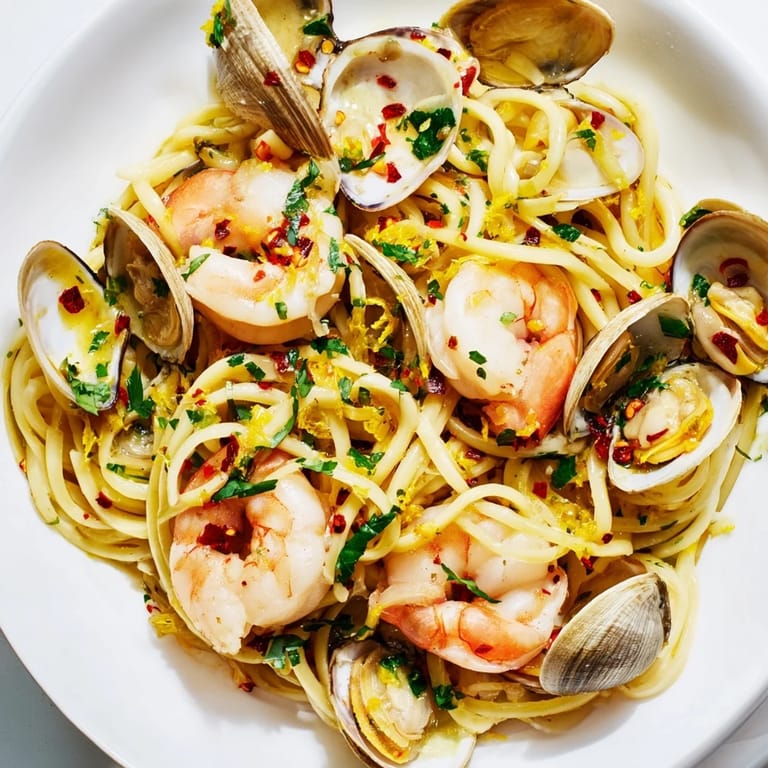
 There's something about the sound of clams hitting a hot pan that signals dinner is about to be extraordinary. I discovered this pasta years ago when a friend's Italian grandmother casually mentioned that the best aglio e olio was actually just a vehicle for whatever seafood you had on hand. That night, tossing shrimp and clams in garlic-infused oil over spaghetti, something clicked—it wasn't fussy, it wasn't pretentious, it was pure and honest.
I made this for my partner on a random Tuesday when the fish market had just restocked their clams, and watching their face when they realized it was ready in under 40 minutes was worth every minute. The pasta steamed gently in the pan, soaking up all that garlic-lemon magic, and suddenly a simple weeknight felt like a small celebration.
Ingredients
- Large shrimp (250g, peeled and deveined): Buy them as fresh as possible or quality frozen ones thawed properly—they cook in seconds, so there's no time to hide tough texture.
- Fresh clams (500g, scrubbed and rinsed): The key is scrubbing under cold running water just before cooking; any sand that sneaks through will ruin the whole dish.
- Spaghetti (400g): Don't skip the al dente instruction—you need that slight firmness so it doesn't turn to mush when tossed in the hot pan.
- Extra virgin olive oil (6 tbsp): This is your base flavor, so use something you actually enjoy tasting straight; cheap oil will show immediately.
- Garlic cloves (5, thinly sliced): Slice them yourself right before cooking—pre-minced garlic turns bitter before you even start the pan.
- Red chili flakes (1/2–1 tsp): Start low and taste as you go; some batches are spicier than others, and there's no bringing heat down once it's added.
- Dry white wine (1/2 cup): The wine steams the clams open and adds acidity that brightens everything—skip it and they won't open properly.
- Lemon (zested and juiced): The zest gives you little bursts of citrus oil, while the juice keeps the whole dish from tasting one-note and rich.
- Fresh flat-leaf parsley (1/4 cup chopped): Add most of it at the end so the heat doesn't destroy its fresh brightness.
- Salt and black pepper: Taste as you build, because the seafood and lemon juice are already contributing salt.
Tired of Takeout? 🥡
Get 10 meals you can make faster than delivery arrives. Seriously.
One email. No spam. Unsubscribe anytime.
Instructions
- Start the pasta:
- Bring a large pot of generously salted water to a rolling boil—it should taste like the sea. Drop in the spaghetti and set a timer for one minute before the package says it's done, because you want it with just a whisper of resistance.
- Build your base:
- Pour olive oil into a large skillet and set it over medium heat. Once the oil is warm but not smoking, add those thinly sliced garlic cloves and watch them start to color—the moment they're golden and the kitchen smells insanely good, add your chili flakes and stir for just a few seconds so they bloom.
- Cook the shrimp:
- Lay the shrimp in the pan and let them sit for about a minute before stirring—this gives them a chance to catch color. They'll go from gray to pink almost before you realize it, usually around two minutes total.
- Open the clams:
- Pour in the white wine and immediately add all the clams, then cover the pan. The steam does the work here; give it a shake every minute or so, and after 3 to 5 minutes they'll start popping open like little gifts. Any that stubbornly stay closed should go straight in the trash.
- Bring it all together:
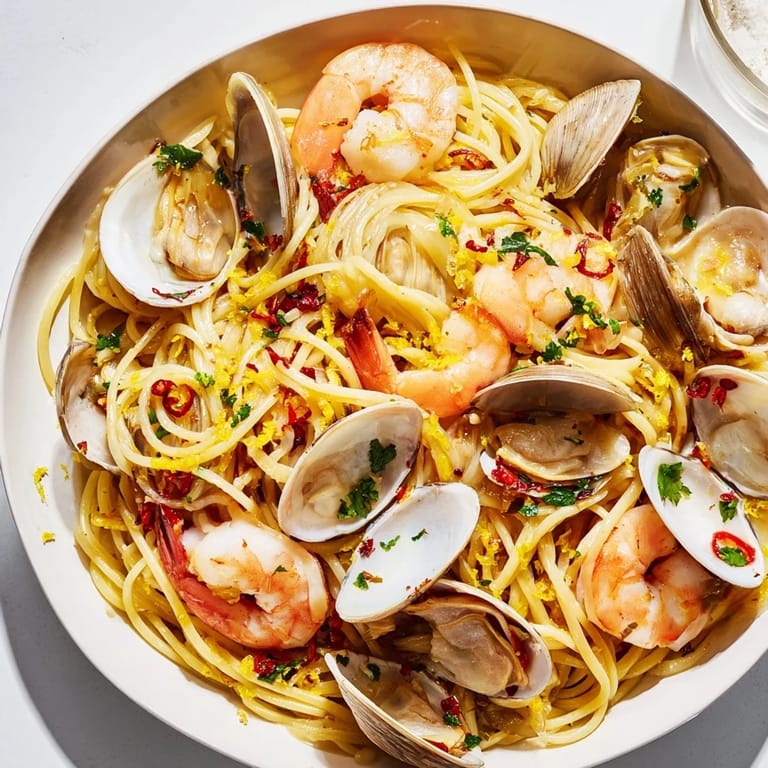
- Return the shrimp to the pan, drain your pasta directly into the skillet, then add the lemon zest, lemon juice, and most of that parsley. Toss everything so the pasta gets coated in all that golden oil, loosening it with splashes of reserved pasta water until it flows like silk around every strand and piece of seafood.
- Taste and serve:
- A pinch of salt and fresh pepper to finish, then get it into bowls immediately while everything is still steaming—this dish doesn't wait.
 Pin It
 What struck me most was realizing this dish doesn't need a long list of fancy ingredients to feel like a restaurant meal—it just needs things in perfect balance and the confidence not to overcomplicate them. That Tuesday dinner taught me that sometimes the best nights are the unplanned ones, when you work with what you have and let the simplicity be the point.
Why This Works
The magic of aglio e olio is that it's one of the oldest, most respected pasta dishes in Italian cooking, and adding seafood doesn't change that—it just gives it company. The garlic oil naturally complements shellfish because they share that briny, oceanic quality, and instead of fighting each other, they make the flavors deeper. Pasta water becomes your secret weapon here, turning emulsified oil into something that clings to every surface and makes each bite feel intentional.
Cooking Timing Matters
This is a dish where every component needs to arrive at the pan in the right order and at the right moment—there's no sitting around waiting or reheating. The shrimp cooks fast enough that overcooking by even a minute turns them rubbery, and clams need steam but not aggressive boiling or they toughen up. I've learned to have everything prepped before the first garlic clove hits oil, because once the kitchen smells like toasted garlic, you're committed to moving quickly.
Variations and Swaps
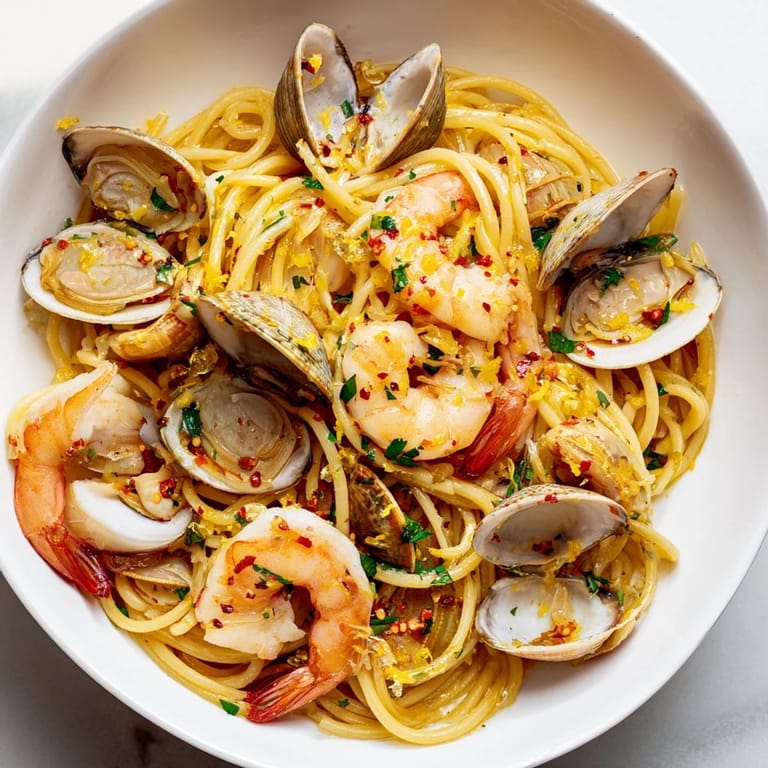
You can absolutely swap mussels for clams if that's what your market has, or throw in some calamari cut into rings for a different texture—both will cook in roughly the same time and take beautifully to the garlic oil. Some nights I'll add a small handful of fresh chili or a pinch more lemon zest depending on my mood. Gluten-free pasta works perfectly here, though it needs a touch more pasta water since it absorbs differently.
- Try it with a splash of brandy instead of white wine for a richer, deeper flavor.
- Add a few anchovy fillets melted into the oil for a savory depth that almost no one will identify but everyone will taste.
- Finish with a drizzle of really good finishing oil and fresh herbs to make it feel even more special.
 Pin It
 This pasta reminds me that the best meals aren't always the ones with the longest ingredient lists—they're the ones where you respect each element enough to let it shine. That night I made it for my partner, we sat with the ocean still on our tongues and realized we'd made something worth repeating.
Recipe FAQs
- → Can I substitute clams with other seafood?
Yes, mussels or calamari can be used as alternatives to clams to vary the seafood profile without altering the dish’s character.
- → How do I prevent garlic from burning while sautéing?
Cook the garlic over medium heat and stir continuously. Remove from heat as soon as it turns golden to avoid bitterness.
- → Is white wine essential in this dish?
White wine adds depth and acidity, but you can substitute it with seafood broth or water if preferred.
- → What’s the best way to achieve a silky sauce?
Reserve some pasta water and add it gradually to the skillet while tossing the pasta, which helps bind the sauce smoothly.
- → Can I make this dish gluten-free?
Yes, use gluten-free spaghetti to accommodate dietary needs without compromising flavor.
- → How spicy is the dish with chili flakes?
The amount of chili can be adjusted to taste, ranging from mild warmth to a more pronounced heat depending on preference.