 Pin It
 I'll never forget the first time I arranged a Star of David salad platter for my family's Hanukkah dinner. I was nervous about getting the geometry perfect, but as I worked with those vibrant greens and jewel-toned vegetables, something magical happened. The kitchen filled with the scent of fresh herbs and lemon, and suddenly I wasn't just making a salad—I was creating edible art that told a story of celebration and togetherness.
My teenage daughter asked if she could help arrange the vegetables for Hanukkah that year, and we stood together at the kitchen counter, carefully placing each slice of cucumber to form those two perfect triangles. She had never understood why this shape mattered until I explained its ancient meaning, and watching her eyes light up as the star came together—that was when I realized this salad was about so much more than just feeding people. It was about creating memory.
Ingredients
- Baby spinach and arugula: These delicate greens form your canvas and should be completely dry so they don't wilt under the weight of the toppings. I learned the hard way that a salad spinner is your best friend here—wet greens slide around and ruin your careful design.
- Cucumbers: Choose firm, unblemished ones and slice them consistently thin so they drape beautifully along your triangle outlines. The thinner they are, the more flexible and forgiving they become when you're arranging them.
- Cherry tomatoes: These little gems add pops of color and shouldn't be too large—halving them keeps the scale balanced with the other vegetables.
- Bell peppers in two colors: The yellow and red create a stunning contrast that makes the star pop. Slice them against the grain for maximum structure and flexibility.
- Purple cabbage: This is your secret weapon for visual depth. Its deep color grounds the lighter vegetables and adds a satisfying crunch that guests won't expect.
- Red onion: Optional but worth including if your crowd can handle the sharp bite—it adds a whisper of complexity.
- Feta cheese: Crumbled feta fills the gaps between sections and adds a salty, creamy richness. If you're serving dairy-free guests, vegan feta has come a long way.
- Kalamata olives and capers: These briny accents should be halved so they don't overshadow the fresher vegetables. Use them to trace the edges of your star for definition.
- Pine nuts: Toast them yourself if you have time—the warmth brings out their buttery sweetness. They catch the light beautifully and add welcome texture.
- Olive oil, lemon juice, and red wine vinegar: This is a classic Mediterranean dressing base that lets the vegetables shine. The honey balances the acidity with a whisper of sweetness, while mustard adds subtle structure to the emulsion.
Tired of Takeout? 🥡
Get 10 meals you can make faster than delivery arrives. Seriously.
One email. No spam. Unsubscribe anytime.
Instructions
- Create your canvas:
- Spread that platter in front of you like you're about to paint a masterpiece. Take your time arranging the spinach and arugula in an even, thin layer. This is where patience pays off—every little gap you leave now will show in your finished star.
- Outline your triangles:
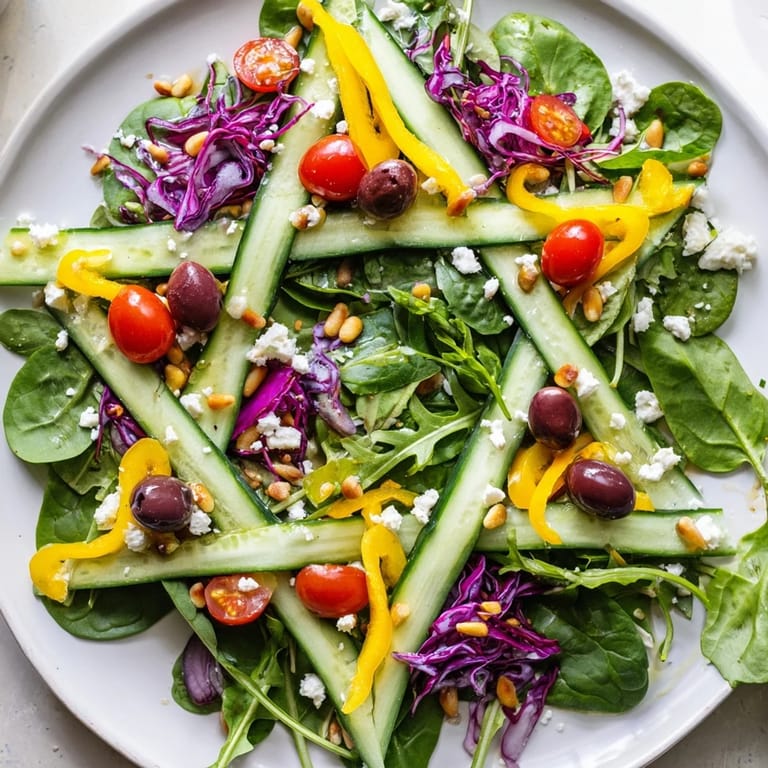
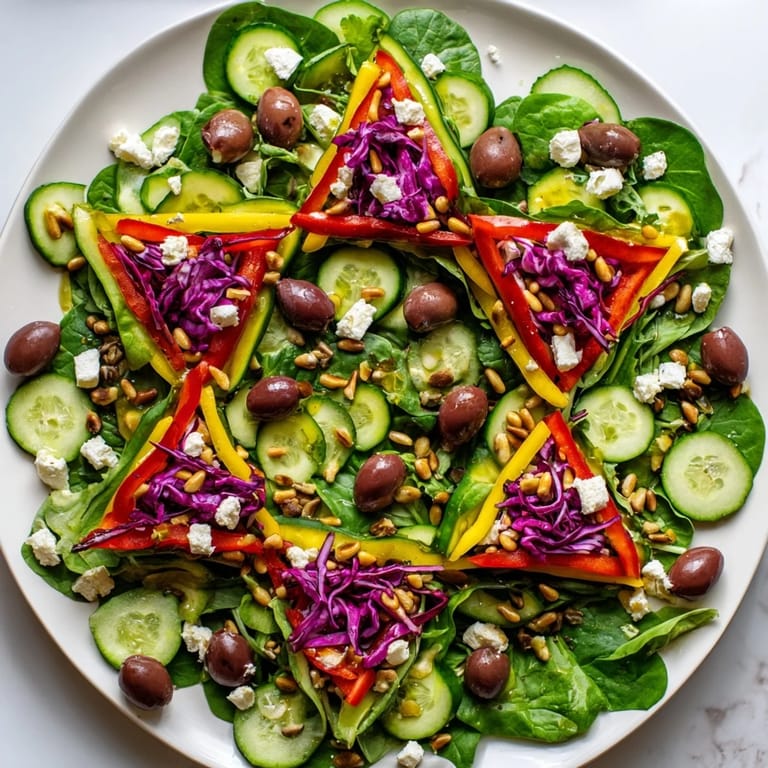
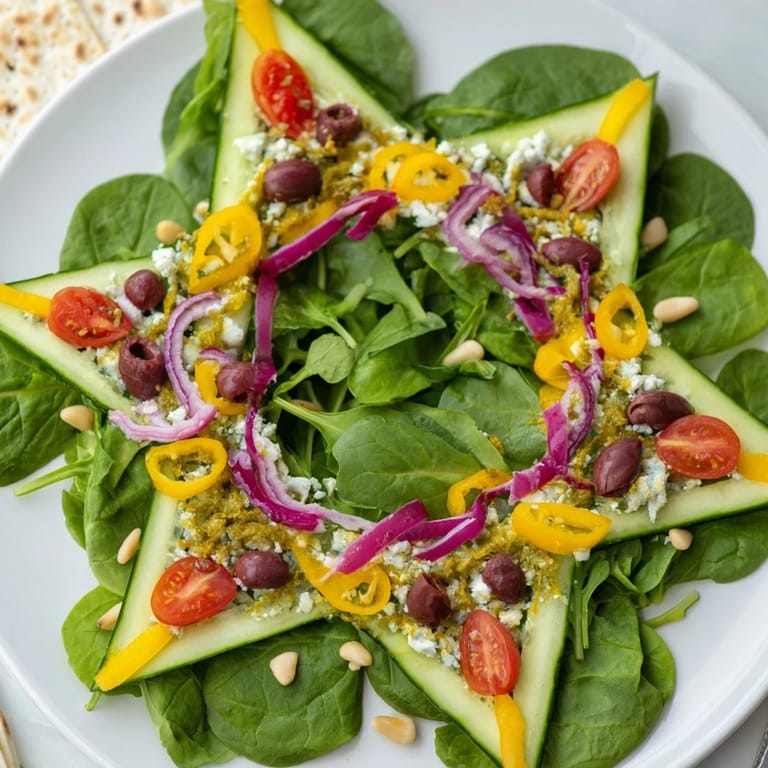
- Using those cucumber slices, you're going to imagine two overlapping equilateral triangles pointing in opposite directions. Start with one point at the top, work your way around methodically, and adjust as you go. If you're a visual person, lightly sketch the outline with a piece of toothpick first. There's no shame in using a cookie cutter template—I keep one handy for exactly this reason.
- Fill with color:
- Now comes the fun part. Take your cherry tomatoes and fill one triangle section, then switch to bell peppers for contrast, then cabbage for depth. You want each section to have its own identity while the overall effect remains harmonious. Step back frequently and look at your work from above—this is what your guests will see.
- Accent with texture:
- Sprinkle feta along the edges of your star where sections meet. Nestle those halved olives and capers into the lines to define and deepen the geometry. The pine nuts should scatter across the surface, catching light and drawing the eye.
- Whisk your dressing:
- In a small bowl, combine olive oil, lemon juice, vinegar, honey, and mustard. Whisk with intention until the mixture becomes creamy and emulsified. Taste and adjust seasoning—this is your chance to balance brightness with richness. Some days I add a touch more honey if I want it gentler, a splash more vinegar if I want it brighter.
- The final touch:
- Just before you bring this to the table, drizzle the dressing lightly across the star. If you're nervous about disrupting your arrangement, serve the dressing on the side and let guests dress their own portions. Either way works beautifully.
 Pin It
 Years later, I still serve this salad whenever we gather to celebrate. It's become less about the geometry and more about the tradition—that moment when someone walks into the kitchen and audibly gasps at what's waiting on the table. That's when I know I've created more than just a meal. I've created an experience.
Building Your Star with Confidence
The truth is, most people who see this platter assume it took hours to create, and it's wonderfully satisfying to tell them it took thirty minutes. The secret is doing your prep work ahead—wash and dry your greens, slice your vegetables, and have everything ready to go. Then, when you're actually assembling, you can focus entirely on the creative part without scrambling for tools or ingredients. I like to lay out all my prepared vegetables in small bowls around my workspace so I can reach each color without taking my eyes off the platter.
Scaling and Substitutions that Keep the Magic Alive
This recipe feels elegant at eight servings, but it's endlessly flexible. For a smaller gathering, use a regular dinner platter and reduce quantities by half. For a larger crowd, create two stars on adjacent platters instead of trying to squeeze everything onto one. If pine nuts aren't in your budget or your guests have allergies, sunflower seeds toast beautifully and cost a fraction of the price. Dairy-free? Vegan feta has genuinely improved, or simply increase the amount of olives and capers to provide that salty punctuation. The star remains beautiful with whatever ingredients you choose to fill it.
The Gift of Edible Art
What I've learned from making this platter again and again is that food is never just about nutrition or taste. It's about meaning. It's about telling your family that their celebration matters enough for you to arrange cucumbers into a six-pointed star. It's about creating something so beautiful that people take photographs before they eat. And yes, every time you make it, you'll get a little faster, a little more confident, and the star will become a little more recognizably yours.
- Don't stress about absolute precision—slight imperfections add character and authenticity to your star
- Toast your pine nuts fresh on serving day if possible; they lose their vitality when stored more than a few hours after toasting
- Save this platter recipe for moments when you want to impress but also have room to be present with your guests instead of hidden in the kitchen
 Pin It
 Every time you make this, you're not just serving a salad. You're serving a moment of intention, a burst of color, and a quiet reminder that celebration deserves beauty. That's what keeps people coming back to your table.