 Pin It
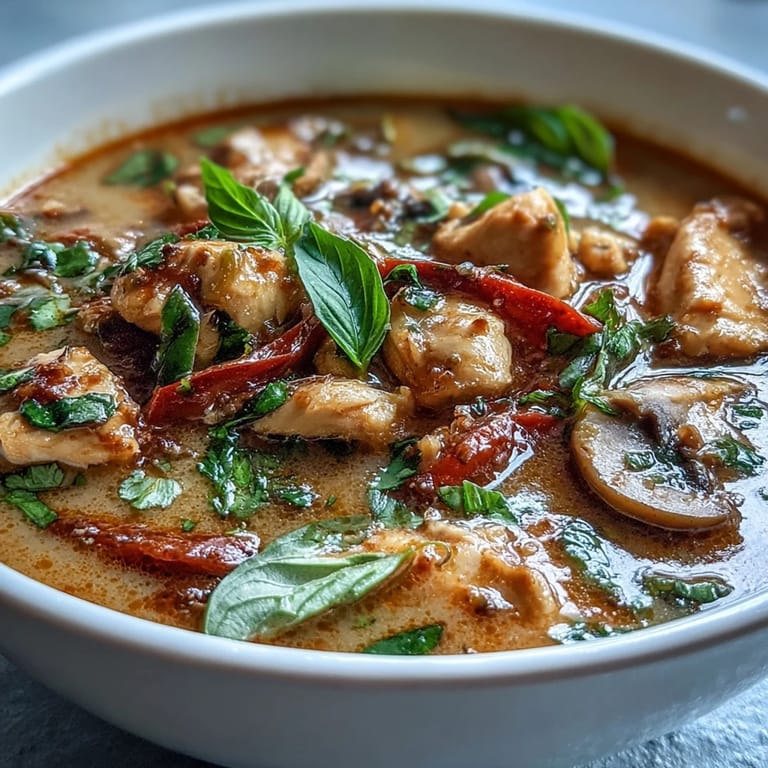
 A friend handed me a steaming bowl of this curry soup on a rainy Bangkok afternoon, and I watched the steam curl up carrying that unmistakable blend of coconut, ginger, and red curry into the air. The first spoonful was a revelation—creamy but not heavy, aromatic without being overwhelming, with tender chicken that practically melted on my tongue. I spent the next week trying to recreate it in my own kitchen, and this version captures exactly why I became obsessed with it. The beauty is how quickly it comes together, transforming simple ingredients into something that tastes like you've been simmering it for hours.
My partner came home from work one particularly exhausting Thursday, and I had this soup bubbling away when they walked through the door—the kitchen smelled like a Thai restaurant, and suddenly their whole mood shifted. We sat at the kitchen table with bowls in our laps, and they asked for a second bowl before I'd even finished the first. That's when I knew this recipe was a keeper, the kind of dish that reminds people why home cooking matters.
Ingredients
- Boneless, skinless chicken thighs or breasts (400 g): Thighs stay more forgiving and tender, but breasts work if that's what you have—just don't overcook them or they'll toughen up.
- Fresh ginger (1 tbsp, finely grated): The fibrous texture matters here; grating releases the oils and makes the soup taste brighter than mincing would.
- Garlic (3 cloves, minced): Mince it fine so it dissolves into the broth rather than leaving chunky bits.
- Shallots (2, thinly sliced): They're milder than onions and add a subtle sweetness that balances the spice.
- Red curry paste (2 tbsp): This is your flavor foundation—quality matters here, so use a brand you trust or make your own if you're feeling ambitious.
- Coconut milk (400 ml, full-fat): Never use light; the fat is what carries all those beautiful curry flavors and makes the broth silky.
- Chicken broth (750 ml): Use homemade if you have it, but good quality store-bought works perfectly fine.
- Fish sauce (1 tbsp): This ingredient intimidates people, but trust it—it deepens every other flavor without tasting fishy when used properly.
- Soy sauce (1 tbsp): Use gluten-free tamari if you need to, and remember you can always add more but can't take it out.
- Brown sugar (1 tsp): A tiny bit of sweetness rounds out the spice and creates balance on your palate.
- Lime juice (from 1 lime): Fresh is essential; bottled lime juice tastes flat and tired in comparison.
- Red bell pepper (1, thinly sliced): The thin slices cook quickly and stay slightly crisp, which is exactly what you want.
- Shiitake mushrooms (100 g, sliced): They're earthy and meaty, and they absorb the curry flavors beautifully.
- Snow peas (100 g, trimmed): They add a fresh crunch that brightens the richness of the coconut.
- Fresh cilantro and Thai basil for garnish: These aren't optional—they're what transform the soup from good to unforgettable.
- Sliced red chili (optional): Add it if you like heat, or skip it if you prefer to let people customize their own spice level.
Tired of Takeout? 🥡
Get 10 meals you can make faster than delivery arrives. Seriously.
One email. No spam. Unsubscribe anytime.
Instructions
- Build your aromatic base:
- Heat oil in your pot over medium heat, then sauté the shallots, ginger, and garlic for about 2 minutes until the kitchen smells incredible and the aromatics have softened slightly. You'll know it's ready when the garlic turns golden at the edges.
- Toast the curry paste:
- Stir in your red curry paste and let it cook for a full minute, stirring constantly so it doesn't stick to the bottom. This step is crucial—it releases the deeper spice notes and prevents the paste from tasting raw.
- Sear the chicken briefly:
- Add your chicken pieces and stir for 2 to 3 minutes until they're coated in the paste and starting to turn opaque on the outside. You're not cooking them through yet, just building flavor.
- Add the liquid base:
- Pour in your chicken broth and coconut milk, stirring gently to combine everything and bring the pot to a gentle simmer. Watch for small bubbles breaking the surface rather than a rolling boil.
- Season and balance:
- Add the fish sauce, soy sauce, and brown sugar, stirring until the sugar dissolves. Taste as you go—this is where the magic happens.
- Cook the vegetables:
- Add your bell pepper, mushrooms, and snow peas, then simmer for 10 to 12 minutes until the chicken is cooked through and the vegetables are tender but still have a bit of life to them. The chicken is done when it's no longer pink inside.
- Finish with brightness:
- Squeeze in your lime juice and taste again, adjusting with more fish sauce if it needs depth, more lime if it needs brightness, or more sugar if the spice is too forward. This final step is where you make it perfectly yours.
- Serve with intention:
- Ladle the soup into bowls and let everyone garnish their own with cilantro, Thai basil, chili, and a squeeze of fresh lime. This way people get exactly the flavor experience they want.
 Pin It
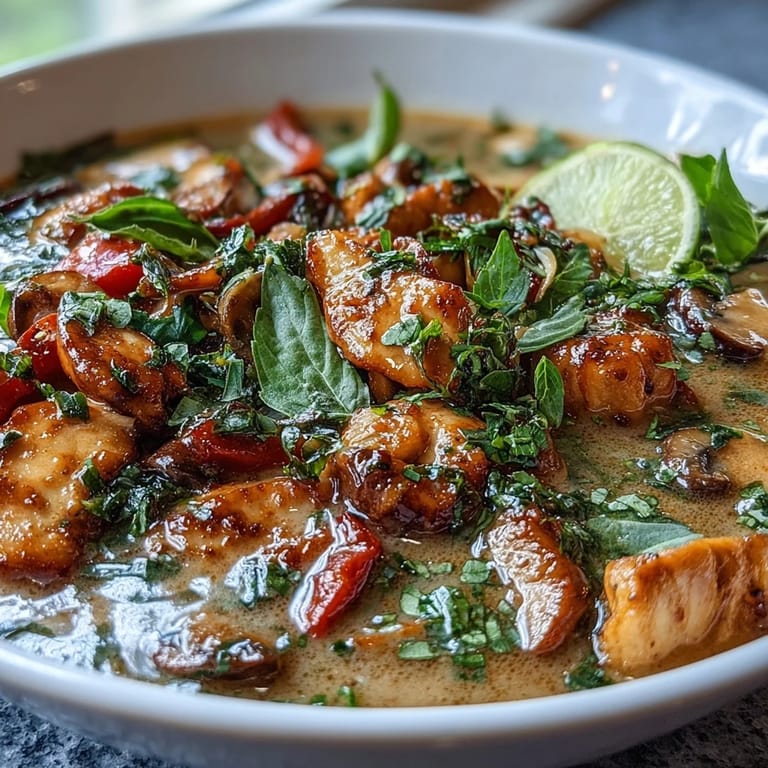
 There's a moment when everything comes together in a soup like this—when you taste it and suddenly understand why people crave Thai food, why comfort exists in a warm bowl. That's the moment this recipe gave me, over and over, and it's what I hope it gives you too.
Making It Your Own
This soup is forgiving enough to work with whatever vegetables you have on hand, though I'd always keep at least one crisp element like snow peas or snap peas to contrast with the creamy broth. Swap the chicken for shrimp if you want something lighter, or use firm tofu and vegetable broth if you're cooking vegetarian—the curry paste carries so much flavor that the protein is almost secondary. I've even added cooked rice noodles straight into the pot on nights when everyone's especially hungry, turning it into a more substantial meal.
Playing with Heat and Spice
The beauty of this soup is that the red curry paste provides a warm, balanced heat rather than a face-melting spice, which means it works for different heat tolerances in the same household. If you like things on the milder side, use the full recipe as written and let people add fresh chili to their own bowls—this respects everyone's preferences without compromising the dish. On nights when I want more intensity, I add an extra half tablespoon of curry paste to the aromatics, or I mince a fresh Thai chili and cook it down with the shallots from the beginning.
Timing and Make-Ahead
This soup actually improves if you make it a few hours ahead, as the flavors deepen and marry together while it sits, though you should add the fresh lime juice and garnishes just before serving. On busy weeks, I prep all my vegetables the night before and keep them in containers, so it's genuinely a 10-minute assembly job once the pot hits the stove. The soup keeps beautifully in the refrigerator for three days and freezes well for up to a month—though I always leave out the snow peas if I'm freezing it, since they become mushy when thawed.
- Make it ahead of time and let the flavors develop while you focus on other things.
- Prep vegetables the night before to cut actual cooking time down to a breeze.
- Freeze without the delicate garnishes so you can add those fresh when you reheat.
 Pin It
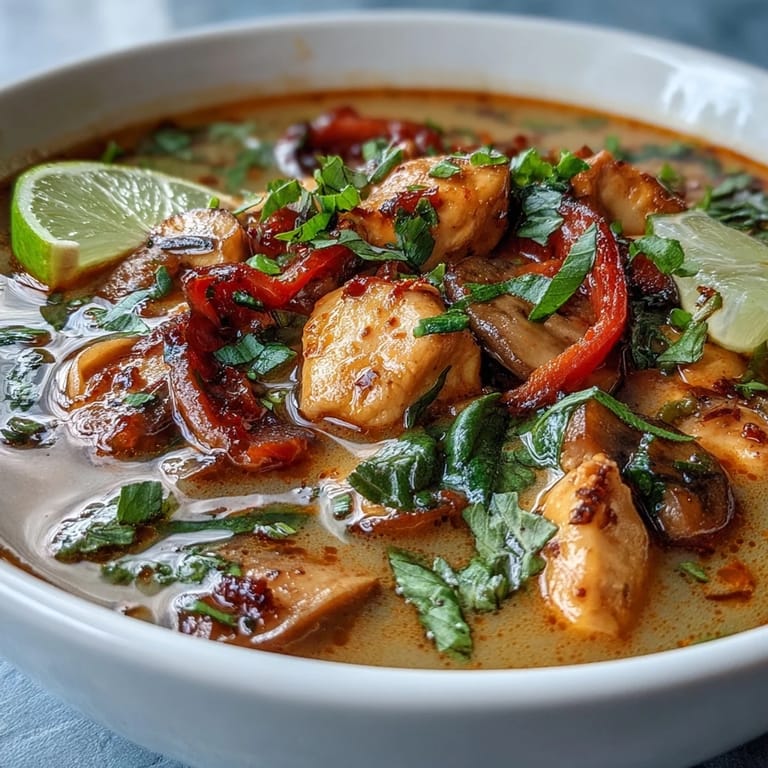
 This soup has become my answer to almost every question: when someone's sick, when we need comfort without effort, when friends drop by unexpectedly and I want to offer something special. It's proof that simple ingredients, treated with a little attention and respect, can taste like something remarkable.
Recipe FAQs
- → Can I make this soup spicy?
Absolutely. Adjust the heat by adding more red curry paste during cooking or fresh sliced chilies as a garnish. Start with an extra teaspoon and taste as you go.
- → What proteins work as substitutions?
Shrimp, tofu, or cubed sweet potatoes work beautifully. For shrimp, add during the last 3-4 minutes of cooking to prevent overcooking. For tofu, use firm cubes and simmer with the vegetables.
- → Can I freeze this curry soup?
Yes, freeze for up to 3 months. Cool completely before transferring to airtight containers. The coconut milk may separate slightly when reheated—simply whisk to restore creaminess.
- → How do I make it vegetarian?
Use vegetable broth instead of chicken broth, replace fish sauce with soy sauce or a vegetarian fish sauce alternative, and swap chicken for extra-firm tofu or chickpeas.
- → What can I serve alongside?
Jasmine or sticky rice soaks up the flavorful broth perfectly. Naan bread, roti, or crispy wonton strips also make excellent accompaniments.
- → Why is my curry soup too thick?
If consistency is too rich, simply add more chicken broth or water, ½ cup at a time, until desired thickness is reached. The soup will naturally thicken as it cools.