 Pin It
 There's something about crème brûlée that stops conversations. My friend Claire brought one to a dinner party years ago, and I watched everyone pause mid-sentence when they heard that distinctive crack of the torch hitting caramelized sugar. That sound, followed by the collective sigh when spoons shattered through the golden shell—it felt like magic, especially knowing she'd made it with practically nothing: cream, eggs, sugar. I realized that night that the most impressive desserts aren't always the most complicated ones.
I made this for my partner on a random Tuesday evening, nothing special planned, just a craving for something beautiful. The smell of warm cream filling the kitchen, the careful whisking to keep the eggs from scrambling, and then that moment when you pull the ramekins from the oven and they jiggle just slightly in the center—it all felt like a small act of care. When we cracked into them two hours later, the look on their face made me understand why people keep making this dessert over and over.
Ingredients
- Heavy cream (2 cups): This is your foundation, so use the best quality you can find—it makes an audible difference in the final silkiness.
- Egg yolks (4 large): They're what transform cream into custard through gentle heat, so keep them room temperature if you can and never rush the whisking.
- Granulated sugar (1/2 cup plus 4 tablespoons): Half goes into the custard for subtle sweetness, and the rest becomes that glorious crispy top that everyone remembers.
Tired of Takeout? 🥡
Get 10 meals you can make faster than delivery arrives. Seriously.
One email. No spam. Unsubscribe anytime.
Instructions
- Heat your cream gently:
- Warm the cream in a saucepan over medium heat until steam rises from the surface and tiny bubbles form around the edges. This takes about 5 minutes and you'll smell that rich, almost nutty cream aroma—that's your signal to stop before it boils.
- Create your egg mixture:
- Whisk the yolks with the 1/2 cup sugar in a bowl until the mixture turns pale yellow and slightly thickens, about 2 minutes of steady whisking. This step is important because it helps prevent the eggs from scrambling when you add the hot cream.
- Combine slowly and carefully:
- Pour the warm cream into the egg mixture in a slow, steady stream while whisking constantly. If you rush this, you'll end up with scrambled egg bits instead of smooth custard, so patience here pays off.
- Strain for perfection:
- Push the mixture through a fine sieve into a measuring cup or bowl, using the back of a spoon to help it through. This removes any tiny cooked bits and gives you that restaurant-quality silky texture.
- Fill and prepare for the oven:
- Divide the custard evenly among four 6-ounce ramekins, then arrange them in a deep baking dish. Pour hot water into the dish until it reaches halfway up the sides of the ramekins—this water bath keeps the edges from cooking faster than the centers.
- Bake low and slow:
- Place in a 325°F oven for 30 to 35 minutes until the custards are just set but still slightly wobbly in the very center when you gently shake a ramekin. They continue cooking from residual heat after you remove them, so resist the urge to bake longer.
- Chill thoroughly:
- Remove the ramekins from the water bath, let them cool to room temperature on the counter, then refrigerate for at least 1 hour, or up to 2 days ahead if you're planning. Cold custard holds its shape better when you caramelize the top.
- Caramelize the finish:
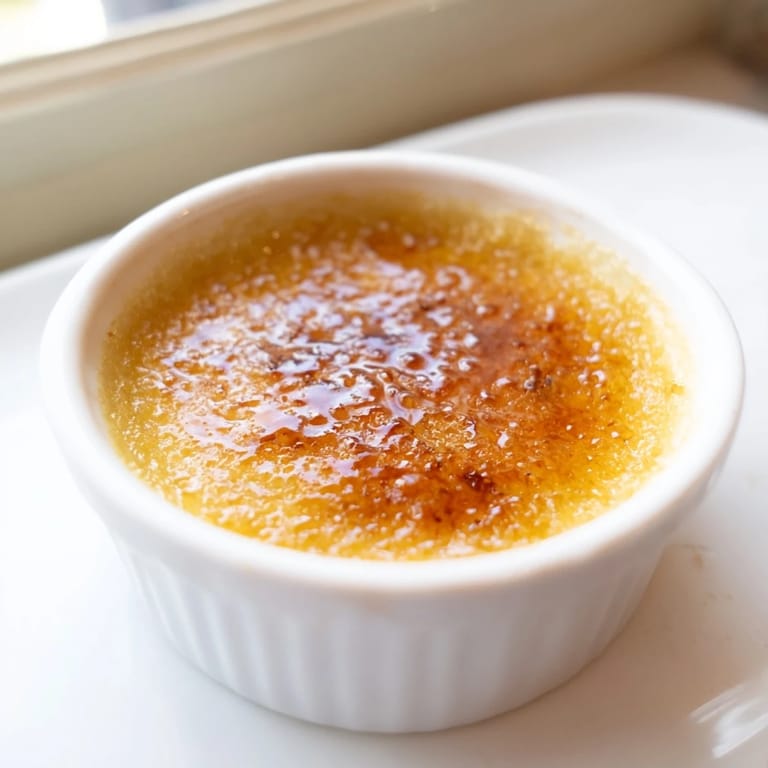
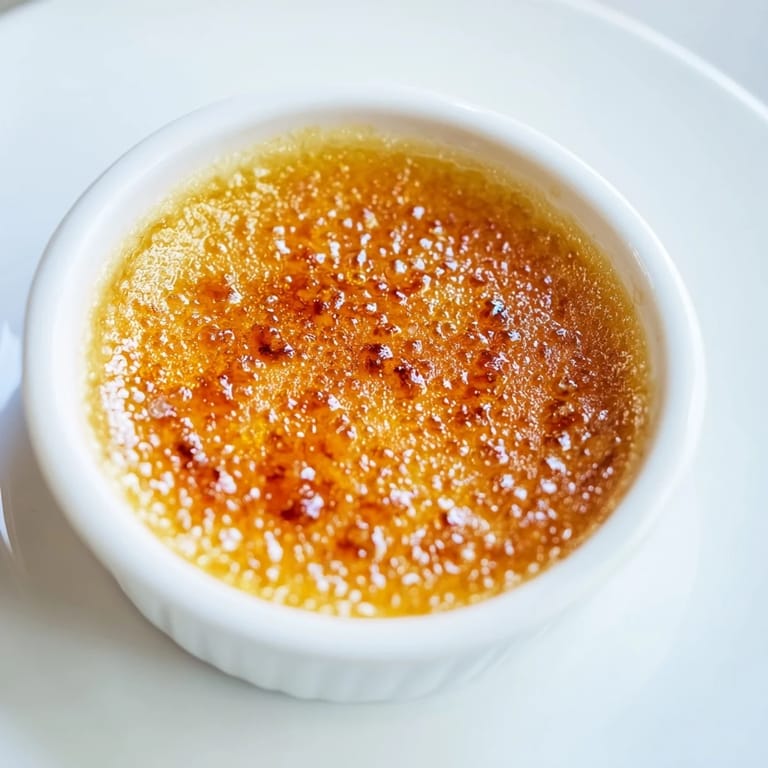
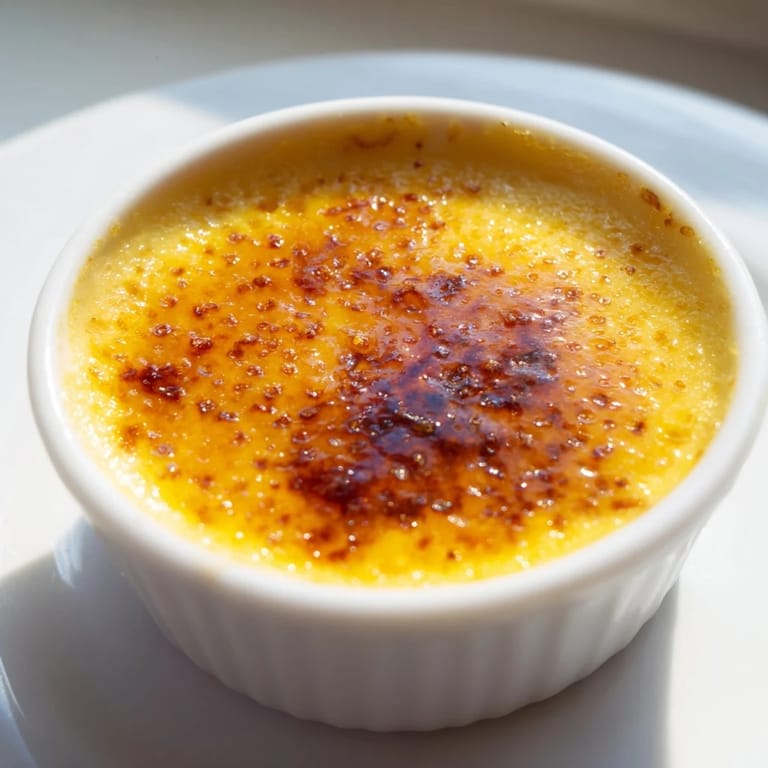
- Just before serving, sprinkle 1 tablespoon of sugar evenly over each custard and use a kitchen torch to melt and brown it until it's deep golden and crisp, about 1 to 2 minutes per ramekin. Let it sit for a minute to harden before serving so it shatters beautifully under your spoon.
 Pin It
 There's a reason this dessert has been made the same way for centuries—because it works, and because it reminds people that simplicity and elegance are not mutually exclusive. Every time someone cracks that caramelized shell with their spoon, they're participating in a small ritual that feels both indulgent and timeless.
Why This Recipe Is Actually Forgiving
I used to think crème brûlée was fussy and temperamental, the kind of thing that required a culinary degree. The truth is, once you understand that you're essentially poaching eggs in cream, the mystique disappears. The water bath is your safety net—it keeps the heat gentle and even. The sieve removes any mistakes. And even if your caramelized top cracks a little, no one minds because they're too busy eating your delicious custard.
Flavor Variations Worth Trying
The three-ingredient version is perfect as is, but once you master it, the door opens to endless possibilities. Infuse your cream with vanilla bean, split lengthwise and scraped, by heating it with the cream and letting it steep for 10 minutes before you begin. Or add the zest of a lemon or orange to the cream as it heats for a bright citrus note. Some people swear by a pinch of sea salt sprinkled on top before caramelizing, which sounds unusual until you taste how it deepens everything.
The Magic of Timing and Temperature
This recipe teaches you something fundamental about cooking: that technique matters more than ingredients. The same cream, eggs, and sugar made carelessly will taste flat and possibly curdled, but treated with attention—slow heating, constant whisking, gentle baking—become something transcendent. It's a lesson that applies far beyond this one dessert.
- Room temperature eggs combine more easily with warm cream and cook more evenly in the water bath.
- A food thermometer can help—your custard should reach 160°F for food safety without overdoing it.
- Make these the day before if you're cooking for guests so you can focus on the caramelizing moment, which is always the most satisfying part.
 Pin It
 Make this dessert when you want to feel like you've accomplished something elegant with minimal fuss. It's the kind of recipe that becomes a quiet superpower in your kitchen.
Recipe FAQs
- → How do you achieve the perfect custard texture?
Gently heating the cream and combining it slowly with the beaten egg yolks prevents curdling. Baking in a water bath ensures even, gentle cooking for a silky texture.
- → What is the best method to caramelize the sugar topping?
Using a kitchen torch allows precise caramelization for a crisp, even crust. Alternatively, broiling works if watched carefully to avoid burning.
- → Can the custard mixture be flavored?
Yes, infusing the cream with vanilla bean or adding citrus zest before mixing adds subtle, aromatic notes to the custard.
- → How long should the custard chill before serving?
Chilling for at least one hour firms the custard and enhances flavors. It can be refrigerated up to two days without compromising quality.
- → What garnishes complement this dessert?
Fresh berries or a sprig of mint provide a contrasting freshness and visual appeal alongside the rich custard and caramelized crust.