 Pin It
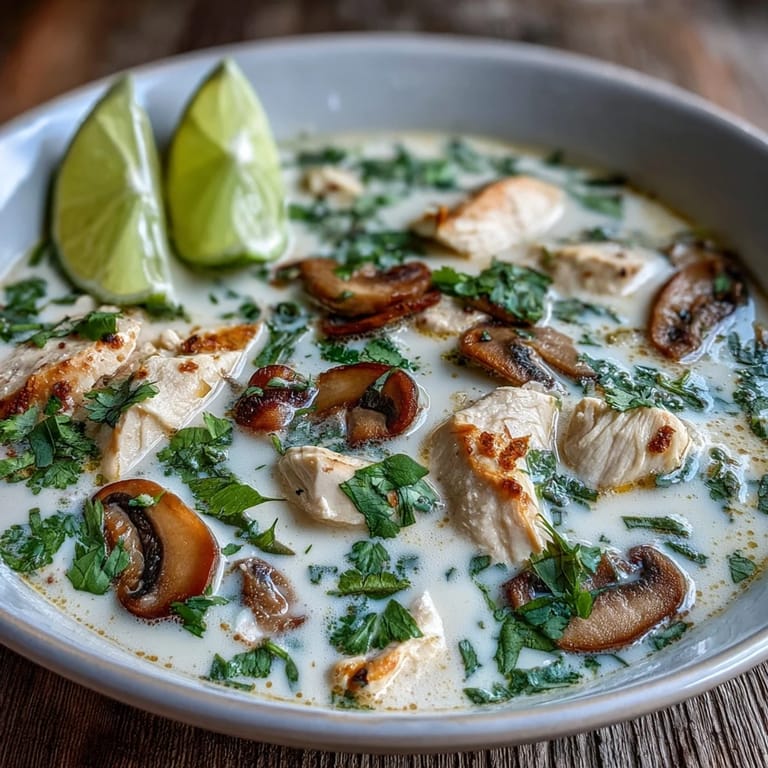
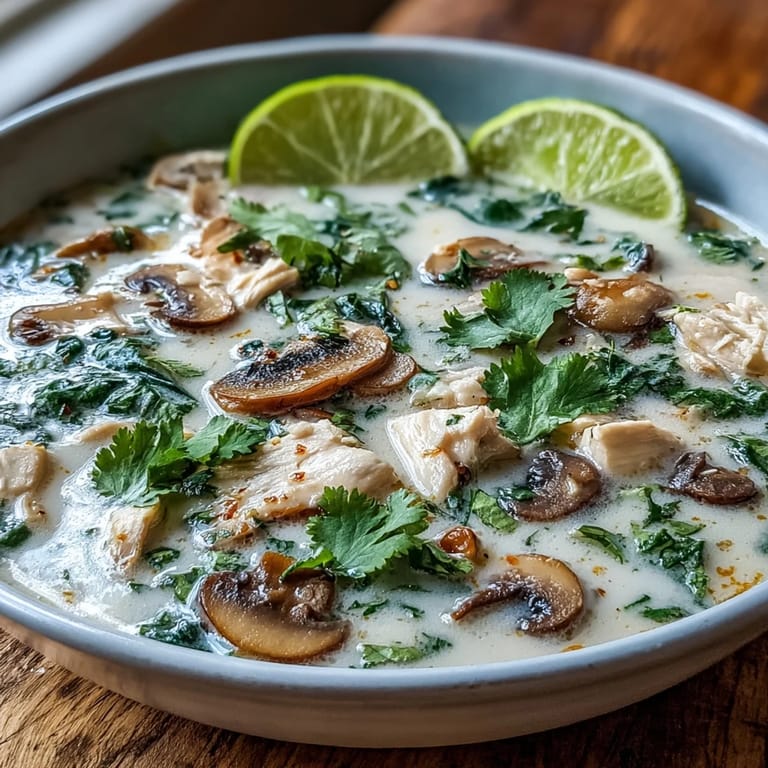
 The first time I made Tom Kha, I was standing in my kitchen on a gray afternoon, watching steam rise from a pot and suddenly finding myself transported somewhere warm and verdant. My neighbor had just returned from Bangkok and wouldn't stop talking about this soup, describing it with such longing that I knew I had to try making it myself. What started as curiosity turned into something I now make whenever I need comfort, or when someone stops by and I want them to feel welcomed with something special. There's magic in how a few humble ingredients—coconut, lemongrass, chicken—can create something so unmistakably luxurious and soothing.
I made this for my partner one evening when they'd had a rough week, and watching their face soften after the first spoonful reminded me why cooking matters so much. The kitchen filled with that unmistakable lemongrass-and-coconut fragrance, the kind that makes everything feel gentler. They asked for seconds before finishing the first bowl, and I realized that sometimes the most meaningful conversations happen over a bowl of soup that tastes like someone cares.
Ingredients
- Boneless, skinless chicken breast or thighs (300 g): Thighs are my preference—they stay more tender and forgiving, but breast works beautifully too if you slice it thin and don't overcook it.
- Coconut cream (400 ml): This is the soul of the soup, giving it that velvety richness that makes every spoonful feel like a small luxury.
- Chicken stock (500 ml): Use homemade if you can, but good quality store-bought works just fine and won't disappoint.
- Lemongrass (2 stalks): Bruise it gently with the side of your knife to release the oils—this small step makes a noticeable difference in how deeply the flavor develops.
- Fresh galangal (4 slices) or ginger: Galangal has a peppery, slightly medicinal bite that's distinct from ginger, but if you can't find it, fresh ginger is a reliable substitute.
- Kaffir lime leaves (4): These add a citrusy floral note that you really can't replicate; they're worth seeking out in Asian markets.
- Button mushrooms (200 g): Slice them fairly thin so they cook quickly and soak up all the surrounding flavors.
- Shallots (2 small): They sweeten and mellow as they simmer, becoming almost melting in the broth.
- Garlic (2 cloves): Smashing it rather than mincing releases more of its aromatic essence into the soup.
- Thai bird's eye chilies (2–3, optional): Start with one if you're unsure about heat, and add more as you taste—you can always make it spicier, but you can't take it back.
- Fish sauce (2 tbsp): It sounds intimidating but trust it; it's the backbone that ties everything together with a savory depth.
- Fresh lime juice (1 tbsp plus extra): The brightness at the end is essential, cutting through the richness and bringing everything into focus.
- Sugar (1 tsp): Just a touch to balance the heat and salt without making anything sweet.
- Salt: Taste as you go; this is your final adjustment tool.
- Fresh cilantro and lime wedges for serving: Don't skip the garnish—it's the last chance to add freshness and let people customize their own bowl.
Tired of Takeout? 🥡
Get 10 meals you can make faster than delivery arrives. Seriously.
One email. No spam. Unsubscribe anytime.
Instructions
- Combine your broth base:
- Pour the coconut cream and chicken stock into a large saucepan and set it over medium heat. Add the lemongrass stalks, galangal slices, kaffir lime leaves, sliced shallots, smashed garlic, and your chilies if using them. Let everything come together gently without rushing—this is where patience pays off.
- Let the aromatics work their magic:
- Simmer everything for about 10 minutes, just until you can smell that distinctive Thai fragrance filling your kitchen—earthy, bright, and unmistakably aromatic. You're not trying to boil it aggressively; a gentle simmer is all you need.
- Add your protein and vegetables:
- Slide your sliced chicken and mushrooms into the pot and let them simmer for 8 to 10 minutes until the chicken is cooked through and the mushrooms have softened. You'll know it's ready when the chicken loses its pink color and the mushrooms are tender enough to cut with a spoon.
- Clean up your broth:
- Fish out and discard the lemongrass stalks, galangal slices, and lime leaves—they've given all they have to give, and you want the soup to be smooth when you eat it.
- Season to perfection:
- Stir in the fish sauce, lime juice, and sugar, then taste carefully. This is your moment to adjust; if it needs more lime for brightness or more fish sauce for depth, add it a little at a time and taste again.
- Serve with care:
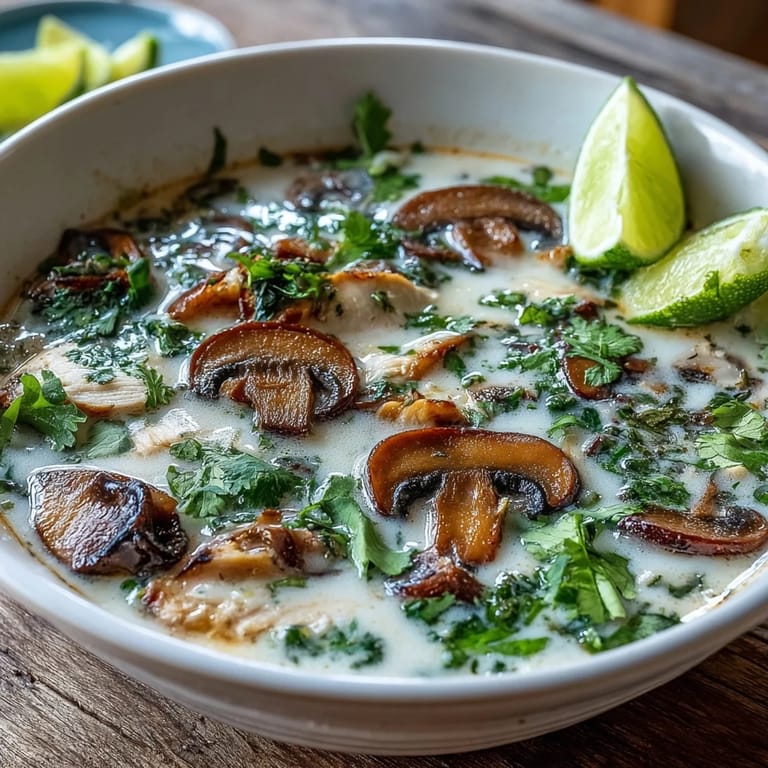
- Ladle the soup into bowls and scatter cilantro over the top, then set a lime wedge alongside each bowl so people can add more brightness if they like. Serve immediately while it's still steaming.
 Pin It
 There's a moment near the end of cooking when the kitchen smells so good that your friends text to ask what you're making, and you can't quite explain that it's just a soup—it feels like more than that. I've learned that this dish has a way of bringing people together, of making an ordinary evening feel a little more intentional and connected.
The Heart of Tom Kha
What makes this soup special isn't any single ingredient but the conversation between them—how the creamy coconut wraps around the sharp citrus notes, how the lemongrass and galangal create a base that feels both exotic and somehow familiar. I've made it dozens of times now, and I still get a small thrill from that moment when the broth comes together, when you can taste that balance shifting from ingredients to something whole. It's teaching me that the best recipes aren't about complexity; they're about understanding how simple, quality ingredients can elevate each other.
Working with Fresh Aromatics
The first time I bought fresh lemongrass and galangal, I wasn't entirely sure I was holding the right things or using them correctly, but there's something forgiving about this soup—it's hard to go wrong as long as you're working with fresh ingredients. I've discovered that bruising the lemongrass with the side of my knife, rather than cutting it into neat pieces, releases so much more flavor into the broth. The galangal and lime leaves are less negotiable; they're the signature flavors that make this soup unmistakably Thai, so if you find yourself at an Asian market, grab them rather than trying to substitute.
Adjusting Heat and Flavor
One of my favorite discoveries was realizing that heat isn't the only thing to layer in this soup—the lime juice and fish sauce are equally important for creating that complex, rounded flavor that keeps you coming back to the bowl. I used to be nervous about fish sauce, worried it would make everything smell like the sea, but I learned that when it's balanced with lime and the richness of coconut, it becomes invisible in the best way—you don't taste fish sauce, you taste depth. Here are a few last-minute touches that have never failed me:
- Add the fish sauce and lime juice at the very end so you can taste and adjust rather than guessing at quantities.
- If you're making this ahead, add the lime juice and cilantro only when you're about to serve so everything stays bright.
- A tiny pinch of extra sugar can balance heat if your chilies turned out spicier than expected.
 Pin It
 Tom Kha is one of those recipes that gets better the more often you make it, not because the dish changes but because you learn where your own preferences lie. I hope this soup brings you moments of warmth and ease, and maybe even a few unexpected conversations over a steaming bowl.
Recipe FAQs
- → What makes Tom Kha different from Tom Yum?
Tom Kha features coconut cream creating a rich, velvety texture, while Tom Yum has a clear, sharp broth. Tom Kha is milder and creamier with aromatic galangal and lemongrass notes.
- → Can I make this vegetarian?
Absolutely. Replace chicken with firm tofu and substitute fish sauce with soy sauce. The aromatic base remains the same, delivering authentic flavors.
- → Is galangal essential or can I use ginger?
Galangal provides distinct piney, citrus notes. While ginger works in a pinch, it lacks the authentic Thai flavor profile. Look for galangal in Asian markets.
- → How do I adjust the spice level?
Start with one bird's eye chili and taste before adding more. Removing seeds reduces heat, or omit chilies entirely for a mild version everyone can enjoy.
- → Can I use coconut milk instead of cream?
Yes. Coconut milk creates a lighter version with subtle flavor. Coconut cream delivers the traditional rich, velvety texture Tom Kha is known for.