 Pin It
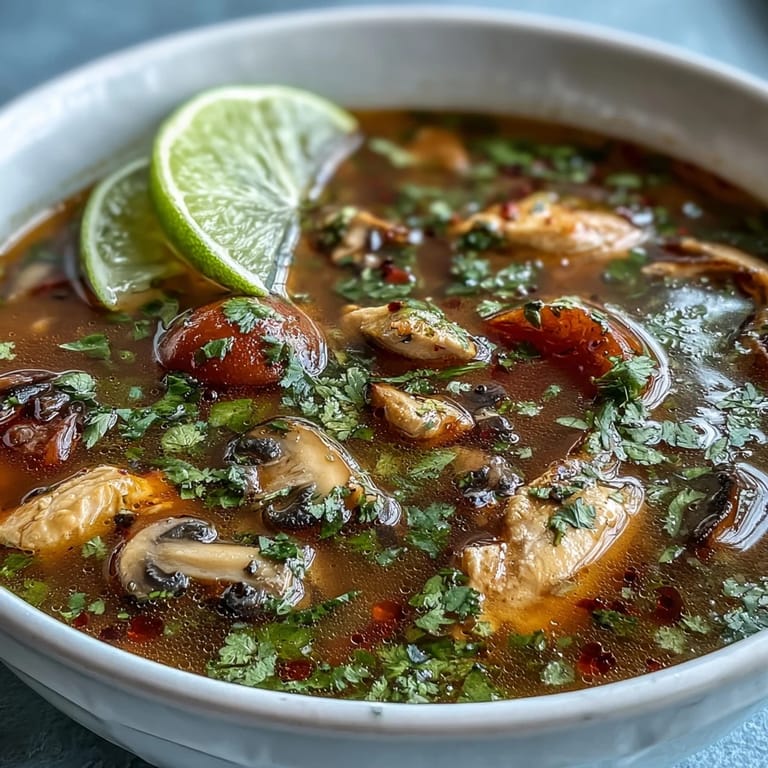
 The first time I tasted authentic Tom Yum Gai was in a cramped Bangkok street stall during monsoon season, steam rising from massive pots while the vendor moved with practiced speed. That bold, punchy broth hit differently than anything I'd made at home, and I spent the next year chasing that exact balance of heat, sourness, and aromatic depth. What I eventually understood wasn't about exotic ingredients alone, but about patience and intuition, letting the broth breathe before rushing through the steps. Now when I make it, I'm transported back to that humid afternoon, except I'm in my own kitchen and the magic tastes just as real.
I made this for my partner on a Tuesday night when we were both exhausted, and watching their face light up after that first spoonful reminded me why I love cooking. The apartment filled with lemongrass and chile steam, and suddenly we weren't just eating soup, we were sitting in Bangkok together. That bowl became our favorite weeknight ritual, the kind of meal that feels both comforting and adventurous at the same time.
Ingredients
- Boneless, skinless chicken breast or thighs (350 g): Thighs stay more tender through cooking, but breast works fine if you slice thin and don't overcook; I've learned to cut them almost translucent so they cook in seconds.
- Chicken stock (1.2 L): Use homemade or quality store-bought as your base; the broth is everything here, so don't skip on this.
- Lemongrass (2 stalks): Smashing it opens up those citrusy oils and fills your kitchen with the most incredible fragrance; fresh is non-negotiable.
- Kaffir lime leaves (5 leaves): These give Tom Yum its signature floral-citrus note that you can't fake with regular lime; tear them slightly to release their essential oils.
- Galangal (3 slices): This root tastes peppery and medicinal in the best way; fresh ginger is a reasonable substitute if you can't find it, though the flavor shifts slightly.
- Thai birds eye chiles (2 whole): Start with less and add more if you want heat; these pack a serious punch and I've learned to taste as I go.
- Oyster or button mushrooms (150 g): Slice them thin so they absorb the broth and cook quickly without becoming rubbery.
- Tomatoes (2 medium): Cut into wedges so they soften into the broth without dissolving; ripe tomatoes make a difference in the final flavor.
- Onion (1 small): Sliced thin so it cooks fast and stays slightly textured in the finished soup.
- Nam prik pao (2 tbsp): This Thai roasted chili paste is the magic ingredient; it brings depth and a subtle sweetness that store-bought chili sauce can't match.
- Fish sauce (2 tbsp): It smells funky in the bottle but transforms the broth into something transcendent; this is where the umami lives.
- Sugar (1 tbsp): Balances the heat and sourness, bringing harmony to the bold flavors.
- Salt (1/2 tsp): Start conservatively since nam prik pao and fish sauce both bring saltiness.
- Lime juice (2 tbsp fresh): Always use fresh lime, never bottled; that bright acidity is what makes your mouth come alive in this soup.
- Fresh cilantro (2 tbsp): Adds a fresh, herbaceous finish that cuts through the richness.
Tired of Takeout? 🥡
Get 10 meals you can make faster than delivery arrives. Seriously.
One email. No spam. Unsubscribe anytime.
Instructions
- Build your aromatic base:
- Pour the stock into a large saucepan and bring it to a gentle boil, then add the smashed lemongrass, torn kaffir lime leaves, sliced galangal, and whole smashed chiles. Let this simmer for 5 minutes so the broth drinks in all those essential oils and you'll see the liquid turn slightly golden and smell absolutely incredible.
- Cook the chicken through:
- Slide in your thinly sliced chicken and let it poach gently for 3 to 4 minutes until it just turns opaque and feels firm to the touch. You'll want to skim off any foam that rises to the surface, which keeps the broth clear and clean looking.
- Add the vegetables:
- Toss in the sliced mushrooms, tomato wedges, and onion slices, then simmer for another 3 to 4 minutes until they're tender but still holding their shape. Listen for when the mushrooms start to soften, and you'll know the timing is right.
- Season and balance:
- Stir in the nam prik pao, fish sauce, sugar, and salt, then let everything meld together for 2 minutes. Taste here and adjust, because this is where you dial in your personal preference for spice level and salt.
- Finish with brightness:
- Remove from heat and stir in the fresh lime juice, which will lift all the flavors and add that sharp, clean finish. Taste once more and add extra lime if you want more pucker, or a pinch more salt if it needs grounding.
- Plate and serve:
- Ladle the hot soup into bowls, scatter cilantro over top, and add extra sliced chiles if you're feeling brave. Set lime wedges on the side so everyone can adjust the sourness to their own taste.
 Pin It
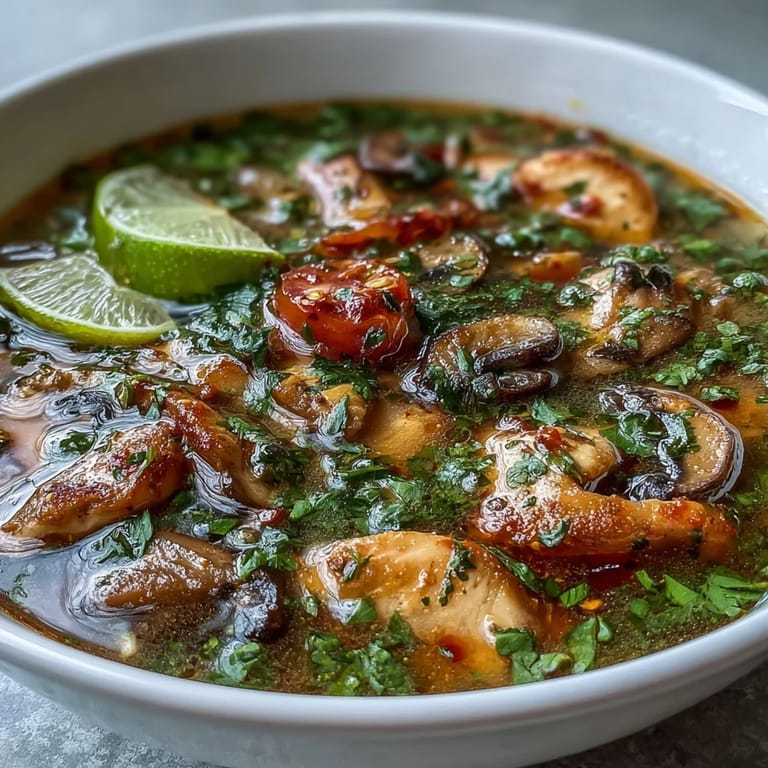
 There's this moment when someone takes their first spoonful and goes quiet for a second, eyes closing, and you know you've gotten something right. That's when Tom Yum Gai stops being a recipe and becomes a small act of generosity.
Why Fresh Lemongrass Changes Everything
Dried lemongrass tastes like straw compared to the fresh herb, and I learned this the hard way after trying a shortcut I immediately regretted. The fresh stalks release this bright, slightly sweet citrus essence that's impossible to replicate, and smashing them isn't optional, it's essential. When you crush those stalks with the side of your knife, you're literally breaking open the cells that hold the oils, and that's what makes your broth sing.
The Fish Sauce Truth
If you've never cooked with fish sauce, it smells aggressively funky in the bottle and you'll wonder if you've made a terrible mistake. But trust the process, because once it hits the hot broth, it transforms into pure umami and no one will taste 'fishy' anything, just deep, satisfying flavor. I spent way too long avoiding it before understanding it's not meant to taste like fish, it's meant to make everything else taste better.
Customizing Heat and Sourness
Tom Yum Gai is beautifully personal because heat and sourness are intensely individual preferences, and I've learned to see this soup as a template rather than a rigid formula. Some people want it mouth-numbingly spicy and pucker-inducing, others prefer gentler warmth and softer sourness, and the recipe should bend to what you actually enjoy. I always taste as I go and keep lime wedges at the table so people can adjust their own bowls to their preference.
- Start with one chile if you're chili-cautious and add more once you taste the baseline level.
- Fresh lime juice at the end is adjustable, so go easy at first and let people add extra to their bowls.
- Nam prik pao already carries some heat, so account for that when deciding how much fresh chile to add.
 Pin It
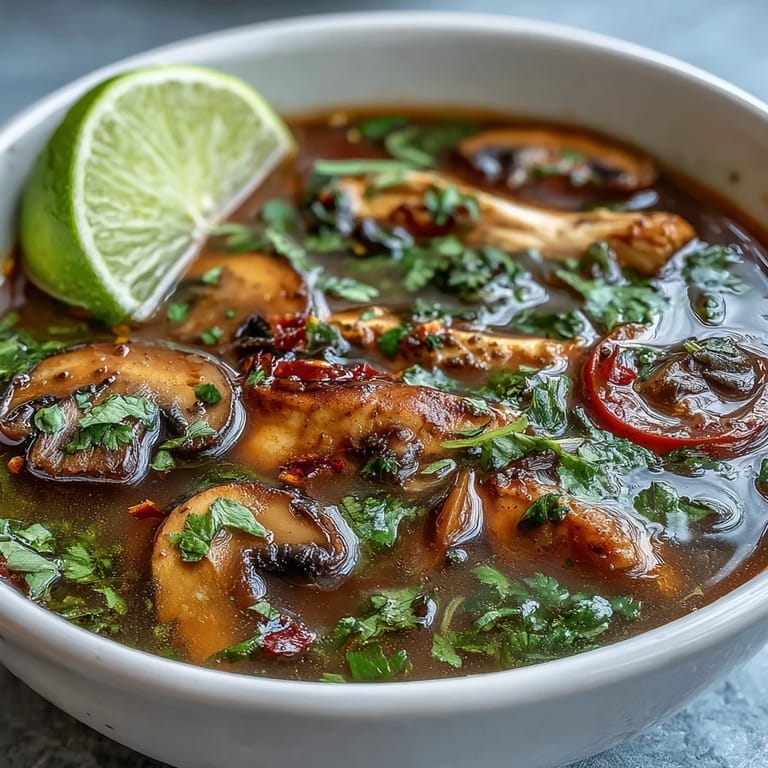
 This soup reminds me that the best meals don't need to be complicated, they just need to be made with attention and a little bit of courage. Make this for someone you care about, and watch their face when they taste what you've created.
Recipe FAQs
- → What makes Tom Yum Gai authentic?
Authentic Tom Yum Gai requires three key aromatic ingredients: lemongrass, galangal, and kaffir lime leaves. These Thai staples create the distinctive fragrance and flavor base. Nam prik pao (roasted chili paste) adds depth and richness, while fresh lime juice and fish sauce provide the essential sweet-sour-savory balance.
- → Can I adjust the spiciness level?
Absolutely. Start with 1-2 smashed Thai chiles in the broth, then taste before serving. Add sliced fresh chiles as garnish for extra heat. Removing chile seeds reduces intensity while maintaining flavor. The nam prik pao also contributes heat, so adjust that quantity as well.
- → What's the best substitute for galangal?
Fresh ginger works as a substitute, though the flavor profile will differ slightly. Use slightly more ginger than galangal called for in the recipe. Dried galangal slices rehydrated in warm water are another option. Avoid ginger powder, which lacks the fresh aromatic qualities needed.
- → How do I store and reheat leftovers?
Store cooled soup in an airtight container for up to 3 days. The flavors actually develop and intensify overnight. Reheat gently over medium-low heat, being careful not to boil vigorously as this can toughen the chicken. Add fresh lime juice before serving to restore the bright citrus notes.
- → Can I make this with shrimp instead of chicken?
Yes, this becomes Tom Yum Goong with shrimp. Add peeled raw shrimp during the last 2-3 minutes of cooking to prevent overcooking. Shrimp cook faster than chicken, so time accordingly. The broth preparation remains exactly the same.
- → Why add lime juice off the heat?
Lime juice loses its bright, fresh flavor and becomes bitter when boiled. Adding it after removing the pot from heat preserves the citrusy tang and keeps the broth vibrant. This technique also allows you to adjust the sourness to your taste before serving.