 Pin It
 I'll never forget the year my aunt brought a turkey tail charcuterie board to our Thanksgiving gathering. Everyone walked in, and the whole room just stopped. There, sprawled across this massive wooden board, was this absolutely gorgeous arrangement of meats, cheeses, and fruits fanned out like a turkey in full display. It wasn't just food anymore—it was art. That moment, watching my cousins gather around it taking photos before even tasting anything, I realized that some dishes aren't just about flavor. They're about creating a memory before anyone takes a single bite. Now, whenever I arrange one of these boards, I'm chasing that same magic of turning simple ingredients into something that makes people smile the second they see it.
I remember my sister asking if I could bring something for her office Thanksgiving potluck, and I was stuck. Then this board came to mind. I spent about twenty minutes arranging it on her favorite cutting board, carefully fanning each slice of prosciutto like delicate feathers. When she walked into that break room, her coworkers actually applauded. Someone even said it was too pretty to eat. She just laughed and started pulling off slices. That's when I knew this recipe was special—it's the kind of thing that makes people feel celebrated.
Ingredients
- Smoked turkey breast, thinly sliced (100 g): The star of the show—get it sliced thin at the deli counter, almost paper-thin if they can manage it. This is what makes those beautiful, delicate folds when you layer it. If smoked turkey isn't available, regular turkey works, but the smokiness adds that festive depth.
- Salami, thinly sliced (100 g): Choose a quality salami with good flavor—this contributes real character. The deeper color helps create visual contrast against the lighter cheeses and creates a rich base for your tail feathers.
- Prosciutto, thinly sliced (100 g): This is the delicate, elegant layer. It drapes beautifully and adds a silky texture. If it's too thick, it won't fan properly, so definitely ask for it paper-thin.
- Sharp cheddar cheese, sliced (150 g): The sharpness cuts through the richness of the meats and adds brightness. Slice it about a quarter-inch thick so it holds its shape but still feels easy to eat.
- Swiss cheese, sliced (100 g): Those little holes add visual interest and the mild flavor balances the sharper cheeses beautifully.
- Gouda cheese, sliced (100 g): The slightly sweet, smoky notes here tie everything together. It's the bridge between the meats and the other cheeses.
- Round butter crackers (1 cup): These are your canvas for guests to build bites. Their pale golden color lets the meats and cheeses shine, and they're sturdy enough to hold up to toppings.
- Whole wheat crackers (1 cup): These add earthiness and texture variation. They're also heartier, which some guests really appreciate.
- Seeded baguette slices (1 cup): Toast these lightly if you want them to stay crisp, or leave them soft—it's entirely your call. The seeds add visual texture and a subtle nuttiness.
- Dried apricots (1/2 cup): These jewel-like pieces of fruit add sweetness and color. They're chewy and pair beautifully with salty meats and tangy cheeses.
- Red grapes (1/2 cup): Fresh grapes provide a crisp contrast and their round shape echoes the turkey feather theme if you position them right. They're also a nice palate cleanser between bites.
- Pecan halves (1/2 cup): These add crunch and earthiness. Toast them lightly for about five minutes if you want to deepen their flavor—I learned this trick after years of wondering why some boards tasted better than others.
- Fresh rosemary sprigs and sage leaves: These aren't just decoration—they actually smell incredible and people love nibbling on fresh herbs. They ground the whole thing in that autumn, farmhouse feeling.
- Small round cheese ball (for the head): This is your turkey's personality. You could make your own or buy a prepared one. It anchors the entire design and gives the board character.
- Whole black peppercorns (2): Tiny but essential—these become the turkey's eyes and give it real presence.
- Small piece of red bell pepper (for wattle): Just a small triangle, which adds that final touch of realism. The bright red is unmistakably turkey.
- Thin carrot slice (for beak): One thin slice, positioned just right, completes the transformation from charcuterie board to festive art.
Tired of Takeout? 🥡
Get 10 meals you can make faster than delivery arrives. Seriously.
One email. No spam. Unsubscribe anytime.
Instructions
- Set your stage:
- Choose your board—I use a large round or oval one because the shape naturally suggests a turkey's body. Make sure it's clean and dry. This is your canvas, so pick one you love looking at. If you're using a wooden board, let it breathe for a moment before you start arranging.
- Create the tail feathers with meat:
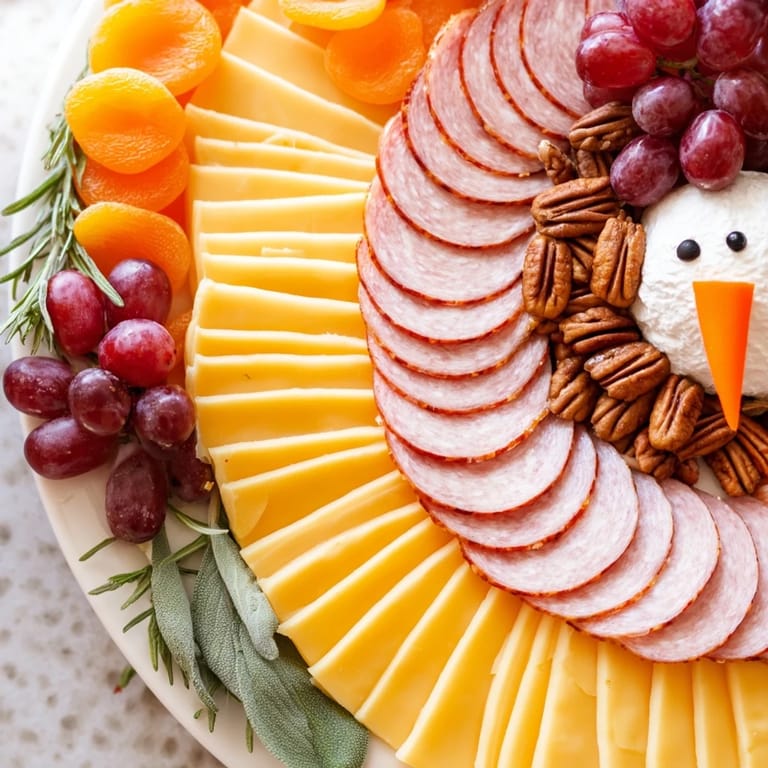
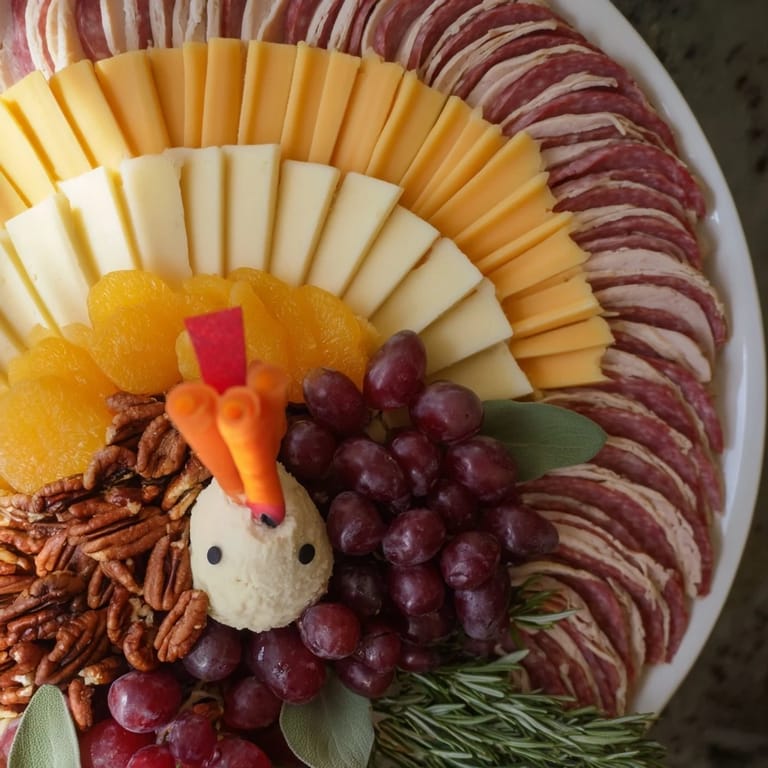
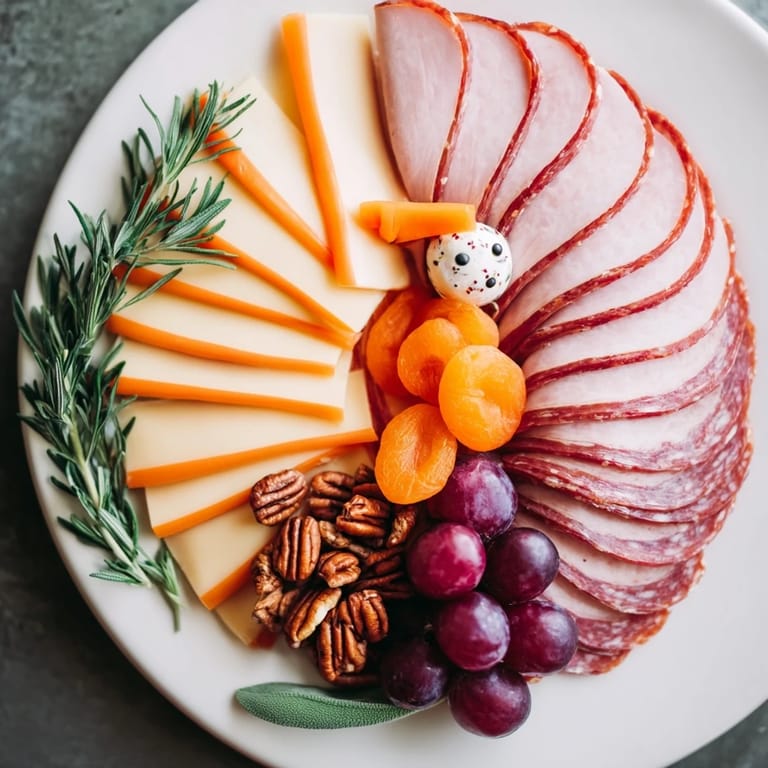
- Starting at the upper half of the board, lay down your first row of overlapping smoked turkey slices. I fan them out in a gentle curve, like they're catching a breeze. Each slice should overlap the last by about a third, creating that feathered effect. Once you get the first row down, add your salami and prosciutto rows beneath it, each following the same sweeping semicircle. This is where patience pays off—take your time and adjust as you go. Step back and look at it. You'll know when it feels right.
- Build the foundation with crackers and cheese:
- Beneath your meat rows, begin layering crackers and cheese slices, still maintaining that curved fan shape. Alternate between the three cheeses as you go—this creates visual rhythm. Place the round butter crackers in one row, whole wheat in another. The baguette slices can go wherever they feel right. This is where the board starts to feel substantial and real.
- Add color and texture with fruits and nuts:
- Now comes the fun part where you really make it yours. Cluster your dried apricots in little groups—I like to place them in the spaces between cheese rows. Scatter your grapes throughout, letting their round shapes echo the button-like appearance of a turkey's feathers. Tuck your pecan halves into gaps, creating little pockets of texture and warmth. Don't overthink this—if it looks good to you, it is good.
- Arrange the greenery:
- At the base of your tail fan, create a little nest of fresh rosemary and sage leaves. This grounds the whole design and adds that forest, autumn feeling. It also tells people that this is a thoughtfully composed board, not just random items thrown together.
- Position the turkey's head:
- Place your cheese ball at one end of the board, positioning it so it's clearly the head of your turkey. This is the moment everything clicks into place—suddenly it's not just a charcuterie board anymore. It's a turkey.
- Give your turkey personality:
- This is the detail work that brings everything to life. Press those black peppercorns into the cheese ball for eyes—position them so your turkey has a friendly, slightly quizzical expression. Cut a small triangle from your red bell pepper and position it beneath the eyes for the wattle. Finally, take your thin carrot slice and position it as the beak. Stand back. Your turkey is born.
- Serve with intention:
- Bring this to the table and give it a moment. Let people appreciate it before they dive in. Set out small plates and napkins nearby so guests can easily build their own bites. The best part of this board is how it invites people to interact with it, to create their own flavor combinations as they go.
 Pin It
 I remember one Thanksgiving when my neighbor came over early and just stood there watching me arrange the board. She was quiet for a while, and then she asked if I could teach her because she wanted to make one for her family. We spent the next hour together, and I realized this board does something special—it brings people together before anyone even eats. That's the real magic of it.
The Art of Board Arrangement
Creating a beautiful charcuterie board is less about rules and more about intuition. The key is thinking in curves and layers, like you're building something with depth. Start with your darkest, richest items and work toward lighter elements. This creates visual balance where the eye travels around the whole composition. I've found that odd numbers work better than even ones—three clusters of something looks more natural than four. Leave some breathing room too. A board that's packed to every corner looks chaotic. The empty spaces are just as important as the filled ones.
Seasonal Variations and Swaps
This board is endlessly flexible, which is one reason I come back to it again and again. In winter, I sometimes add candied nuts or dried cranberries instead of apricots. For a spring gathering, fresh strawberries and soft cheeses feel lighter and brighter. In summer, I swap crackers for fresh crudités and add creamy burrata. The structure stays the same—it's always that beautiful fan shape—but you can absolutely make it your own. I've even made a completely vegetarian version by omitting all meats and doubling down on cheeses, roasted vegetables, and nuts. The turkey still works beautifully even without the traditional poultry theme.
Pairing and Serving Suggestions
This board feels festive served alongside something simple to drink. A crisp Sauvignon Blanc is my go-to because it's bright enough to cut through the richness of the meats and cheeses. Sparkling apple cider is perfect if you want a non-alcoholic option that still feels celebratory. For coffee gatherings, this board works beautifully, too—the fruit and nuts make it less heavy in a morning context. I like to set out small plates and have a good knife nearby so people can slice more of whatever they want. Some guests love building open-faced sandwiches on the crackers, while others prefer to enjoy everything separately. Let them lead.
- Set out small forks or toothpicks so people can easily grab things without getting their fingers too messy.
- If this board will sit out for more than an hour, cover it loosely with plastic wrap and keep it out of direct sunlight so the cheeses don't soften too much.
- Keep extra crackers and cheese in the kitchen so you can refresh the board if certain items get picked over.
 Pin It
 Making this board has become one of my favorite Thanksgiving rituals, not because it's complicated, but because it's a moment of creativity that brings joy before the meal even begins. Every time someone sees it, something shifts in the room.
Recipe FAQs
- → What types of cheeses work best for this board?
Sharp cheddar, Swiss, and gouda provide a balanced range of flavors and textures that complement the meats and fruits.
- → Can I make a vegetarian version?
Yes, omit the meats and replace them with roasted vegetables or additional cheeses for a colorful, satisfying alternative.
- → How do I arrange the elements to resemble a turkey tail?
Layer meats in overlapping rows along the upper half, then add curved layers of cheeses and crackers beneath, forming a fan shape.
- → What garnishes enhance the presentation?
Fresh rosemary and sage sprigs add greenery, while a cheese ball decorated with peppercorns, bell pepper, and carrot creates a turkey head.
- → Are there gluten-free options?
Yes, using gluten-free crackers or bread slices ensures the board accommodates gluten sensitivities.
- → What beverages pair well with this charcuterie?
Light white wines like Sauvignon Blanc or sparkling apple cider complement the savory and fruity elements nicely.