 Pin It
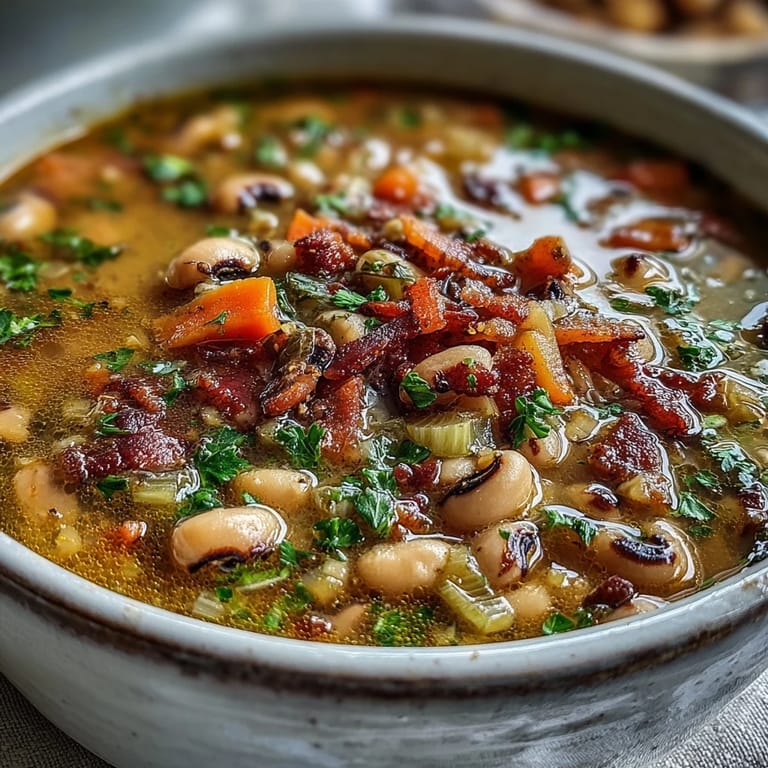
 My grandmother used to make this soup on the first cold snap of autumn, and the smell of bacon fat hitting the pot was basically a dinner bell for the whole neighborhood. Years later, I realized she'd been teaching me something without saying much at all—that the best comfort food doesn't need to be complicated, just honest. There's something about black-eyed peas that feels like home, especially when they're swimming in a broth that tastes like smoke and care. I've made this soup dozens of times since, and it never fails to turn a random Tuesday into something worth sitting down for.
I made this for a potluck once where everyone brought something fussy, and this humble soup showed up in a beat-up Dutch oven. By the end of the night, the pot was empty and three people asked for the recipe. That's when I knew it wasn't about impressing anyone—it was just genuinely good.
Ingredients
- Smoked bacon, 8 oz diced: Don't skip the bacon or try to substitute—it's the whole personality of this soup, and that rendered fat is liquid gold for cooking your vegetables.
- Black-eyed peas, 2 cups dried (soaked) or 3 cans: Dried peas have better texture and flavor, but canned saves you time; either way, drain them well so you control the broth consistency.
- Yellow onion, 1 medium finely chopped: The foundation of everything—take a minute to chop it properly because it melts into the broth and builds the base flavor.
- Carrots, 2 medium diced: They add sweetness and body to the soup; don't shred them, just chunk them into rough dice so they hold their shape.
- Celery, 2 stalks diced: This is the quiet ingredient that makes people say the soup tastes like it was made with care, even if they can't identify it.
- Garlic, 3 cloves minced: Add it after the softer vegetables so it doesn't burn—you want the aroma to wake up your kitchen, not char.
- Low-sodium chicken broth, 6 cups: Low-sodium matters here because you're going to taste the broth, not just use it as liquid; good quality makes a real difference.
- Bay leaf, 1: One leaf is perfect; don't be tempted to add more, and remove it before serving or someone will find it and never forgive you.
- Dried thyme, 1/2 tsp: This herb ties everything together without shouting; it's the reason the soup tastes like it was made by someone who knows what they're doing.
- Smoked paprika, 1/2 tsp: This is what adds that subtle smoky depth that makes people ask if there's more bacon hiding somewhere.
- Black pepper, 1/4 tsp freshly ground: Fresh ground pepper makes a real difference in taste and texture; pre-ground will work but tastes flat by comparison.
- Salt, to taste: Always taste at the end and adjust; the bacon and broth are already salty, so go easy at first.
- Fresh parsley, 2 tbsp chopped: A bright finish that adds color and a little freshness to cut through the richness.
Tired of Takeout? 🥡
Get 10 meals you can make faster than delivery arrives. Seriously.
One email. No spam. Unsubscribe anytime.
Instructions
- Render the bacon until it sings:
- Chop your bacon and set it in a cold pot, then turn the heat to medium. This way it crisps evenly and the fat renders slowly instead of burning. When it's golden and crackling, about 6 to 8 minutes, pull it out with a slotted spoon and let it sit on a paper towel while you move forward.
- Build your flavor base in the bacon fat:
- Add your chopped onion, carrot, and celery to that rendered bacon fat—this is the moment where the magic starts. Let them soften and get a little caramelized at the edges, which takes about 5 to 6 minutes of gentle stirring, then add your minced garlic and cook just until you can smell it hitting the hot oil.
- Bring the soup together:
- Stir in your black-eyed peas, pour in the broth, and add the bay leaf, thyme, smoked paprika, and pepper. Give it a stir and turn up the heat until it's at a boil—you'll see the surface move and steam rise, which is your signal to move to the next step.
- Let it simmer and become itself:
- Drop the heat to low, cover the pot, and walk away for 30 to 35 minutes if you're using dried soaked peas, or just 20 minutes if you went the canned route. This is when the flavors meld and the peas get tender; you'll know it's ready when a pea breaks easily between your fingers.
- Taste and adjust before serving:
- Fish out that bay leaf, then taste a spoonful of broth and add salt until it tastes right to you. Everyone's preference is different, so don't overthink it—just make it taste how you like it.
- Finish with bacon and parsley:
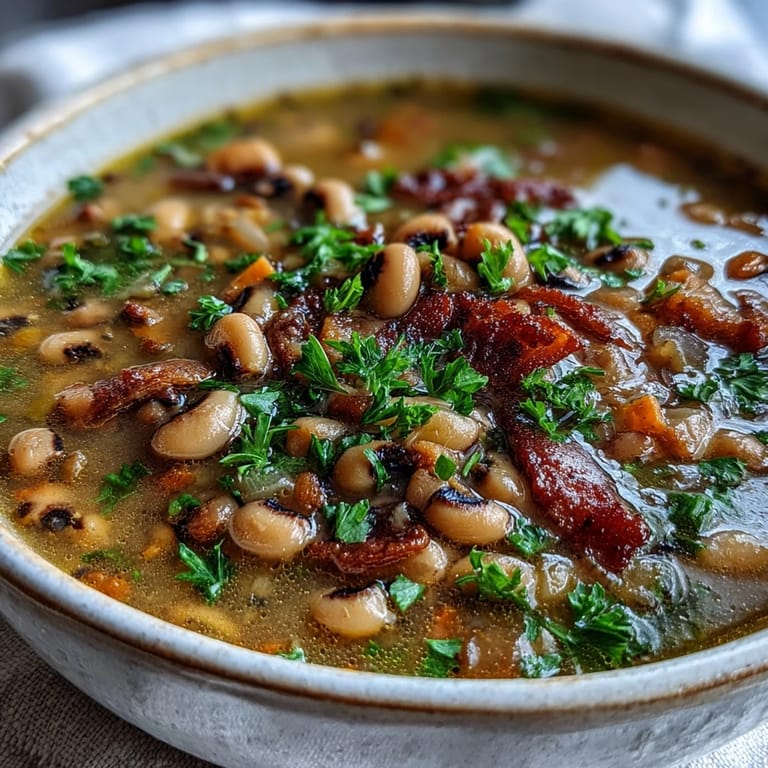
- Ladle the soup into bowls and scatter the reserved bacon and fresh parsley over the top. The bacon adds texture and a salty punch, while the parsley brightens everything up.
 Pin It
 There was an evening when my neighbor smelled this cooking and knocked on my door asking if everything was okay. When I explained I was just making soup, she looked genuinely disappointed it wasn't something more elaborate, but she stayed for a bowl anyway and came back the next week asking me to teach her. That's when I understood that simple food made with attention is worth more than complicated food made half-heartedly.
The Bacon Decision
I once tried to make this with turkey bacon thinking I was being clever, and the whole soup tasted like a compromise. Go back to regular smoked bacon—the fat is what makes the vegetables taste incredible, and nothing else does that job as well. The smoked variety adds a layer of flavor that cheap bacon doesn't have, so if you can find a good quality one, it's worth it.
Dried Versus Canned
Soaking dried peas overnight seems like a pain, but the texture and flavor payoff is real. They hold their shape better, the broth ends up silkier, and somehow the whole thing feels more intentional. That said, canned peas are not a failure—they're a shortcut that still tastes good, and if that's what gets dinner on the table, then that's the right choice for that day.
Variations Worth Trying
This soup is generous enough to accept a few additions without falling apart. In the last 10 minutes, you can stir in chopped collard greens or kale for more nutrition, which adds a slight bitter edge that balances the richness beautifully. If you want to make it vegetarian, skip the bacon and use vegetable broth, then add a splash of liquid smoke to replace that smoky depth the bacon provided. You could also crumble a little cornbread on top instead of having it on the side, or serve it with hot sauce on the table for people who like their soup with a kick.
- Add diced tomatoes in the last 5 minutes for brightness and acidity.
- Stir in a handful of rice or small pasta if you want to make it more filling.
- A squeeze of lemon juice at the table wakes up all the flavors without changing the soup.
 Pin It
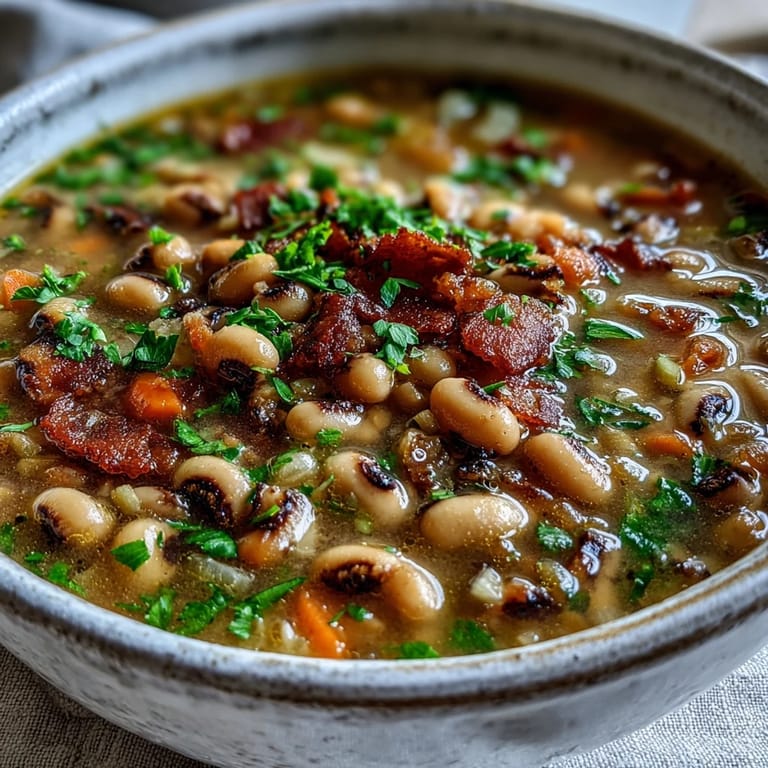
 This soup tastes like it's been in my life for longer than it actually has, which is the best compliment I can give any recipe. Make it once and you'll find yourself making it again.
Recipe FAQs
- → Can I make this vegetarian?
Yes, simply omit the bacon and use vegetable broth instead of chicken broth. Add a dash of liquid smoke to maintain the smoky flavor profile that bacon typically provides.
- → Do I need to soak the black-eyed peas overnight?
If using dried peas, overnight soaking is recommended for even cooking. However, you can use canned black-eyed peas as a convenient shortcut—just rinse, drain, and reduce simmering time to 20 minutes.
- → How long does this soup keep in the refrigerator?
The soup stores well in an airtight container for 4-5 days. The flavors often improve after a day or two as they meld together. Reheat gently on the stovetet, adding a splash of broth if needed.
- → Can I freeze this soup?
Yes, this freezes beautifully for up to 3 months. Cool completely before transferring to freezer-safe containers. Thaw overnight in the refrigerator and reheat on the stovetop. The texture holds up well after freezing.
- → What goes well with this soup?
Cornbread is the classic Southern accompaniment, but crusty bread, dinner rolls, or buttery biscuits work beautifully. A simple green salad with vinaigrette adds freshness to balance the hearty soup.
- → Can I add other vegetables?
Absolutely. Chopped collard greens, kale, or spinach can be added during the last 10 minutes of simmering. Diced potatoes or bell peppers also work well if you want to bulk up the vegetables.