 Pin It
 My cast-iron skillet has seen a lot of dinner experiments, but the night I decided to smash lasagna and garlic bread together in one pan felt like pure kitchen inspiration. I'd been craving that crispy, butter-soaked bread texture alongside rich, meaty layers, and instead of making two separate dishes, I thought: why not layer them right there in the skillet? That first golden-brown pull from the oven changed everything about how I think about weeknight cooking.
I made this for my neighbors on a random Tuesday when they'd helped us move boxes, and watching them take that first bite—the surprise when they realized the bread was actually IN the lasagna—made me understand why comfort food matters so much. Everyone went back for seconds, and someone asked if I could bring it to the next block party. That's when I knew this recipe had staying power.
Ingredients
- 1 large baguette or Italian loaf, cut into 2-inch cubes: The bread is your textural hero here, so don't use day-old or stale bread—you want something with enough structure to hold up to layering and sauce without turning to mush.
- 4 tbsp unsalted butter, melted: Use actual butter, not margarine; the flavor difference is noticeable, especially since the garlic and parsley are relying on it to shine.
- 3 cloves garlic, minced (for bread cubes): Fresh garlic makes all the difference; jarred garlic will leave a slightly metallic aftertaste that you'll regret.
- 2 tbsp fresh parsley, chopped: Fresh herbs brighten the whole dish at the end, so resist the urge to substitute dried parsley here.
- 1/4 tsp salt (for bread): This seems small, but it seasons the bread layer specifically, so don't skip it.
- 1 lb ground beef or Italian sausage: Ground beef works beautifully, but Italian sausage adds a fennel note that's genuinely special if you want to go that route.
- 1 small onion, diced: The onion breaks down into the meat sauce and adds sweetness that balances the acid from the marinara.
- 2 cloves garlic, minced (for sauce): This is separate from the bread garlic, so don't skimp; you need both hits of garlic flavor.
- 1 (24 oz) jar marinara sauce: Choose a sauce you actually like eating by itself; this isn't the place to economize on quality.
- 1 tsp dried oregano and 1/2 tsp each black pepper and salt: These seasonings should taste bold when you taste the raw sauce, because they'll mellow once layered with cheese and bread.
- 1 cup ricotta cheese, 1 large egg, and 1/4 cup Parmesan: The ricotta mixture is your binding agent and creamy layer, so mix it until totally smooth with no lumps.
- 2 cups shredded mozzarella cheese: Fresh mozzarella will break and separate, so stick with low-moisture mozzarella; it melts evenly and gets those gorgeous brown spots.
Tired of Takeout? 🥡
Get 10 meals you can make faster than delivery arrives. Seriously.
One email. No spam. Unsubscribe anytime.
Instructions
- Preheat and prepare:
- Get your oven to 375°F and let it heat while you work through the next steps. A properly heated oven is the difference between undercooked centers and perfectly golden tops.
- Make the garlic bread coating:
- Melt butter, stir in minced garlic, parsley, and salt, then toss your bread cubes until every piece has a light golden coat. Don't go overboard with butter, or the bread will be greasy rather than crispy.
- Brown the meat and soften the onion:
- Heat your cast-iron skillet over medium heat, crumble in the ground beef with diced onion, and let it cook until the meat loses its pink color and the onion becomes translucent, about 5 to 6 minutes. Pour off any excess fat so the sauce doesn't taste greasy.
- Build the sauce:
- Add minced garlic, marinara sauce, oregano, pepper, and salt to the cooked meat, then let it simmer for 5 minutes so the flavors marry together. Taste it and adjust seasoning now, because once everything is layered, you can't fix it.
- Combine the ricotta mixture:
- In a separate bowl, whisk together ricotta, egg, and Parmesan until completely smooth with no streaks. This mixture will be your creamy glue between layers.
- Divide and reserve the sauce:
- Remove exactly half of the meat sauce from the skillet and set it aside in a bowl. This is important because you're creating two distinct layers of sauce with bread and cheese between them.
- Build the first layer:
- Spread half of your garlic bread cubes over the sauce still in the skillet, then dollop half the ricotta mixture over the bread and sprinkle 1 cup of mozzarella on top. The layers don't need to be perfectly even; rustic is fine here.
- Add the middle sauce layer:
- Pour the reserved sauce over your cheese layer, spreading it gently so it reaches into the corners.
- Finish the second layer:
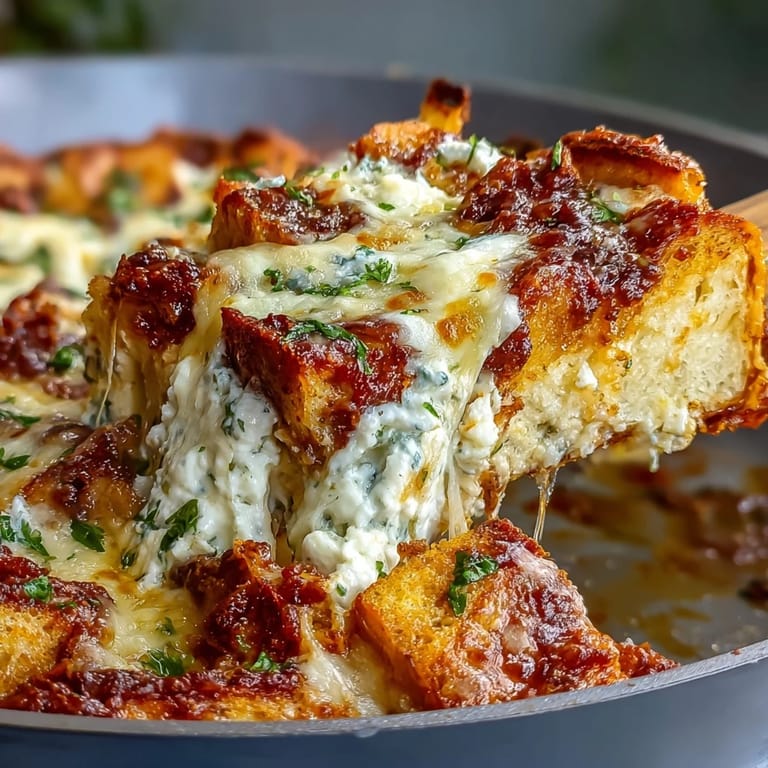
- Top with the remaining bread cubes, then the last of the ricotta mixture, and finish with the remaining mozzarella. This top layer will brown beautifully and get those crispy-edged cheese spots.
- Bake covered, then exposed:
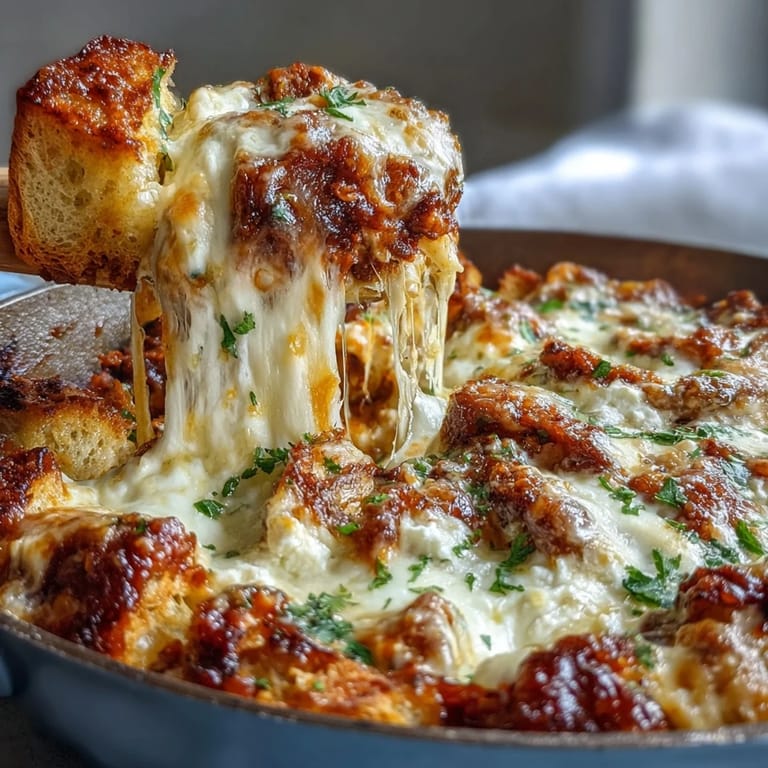
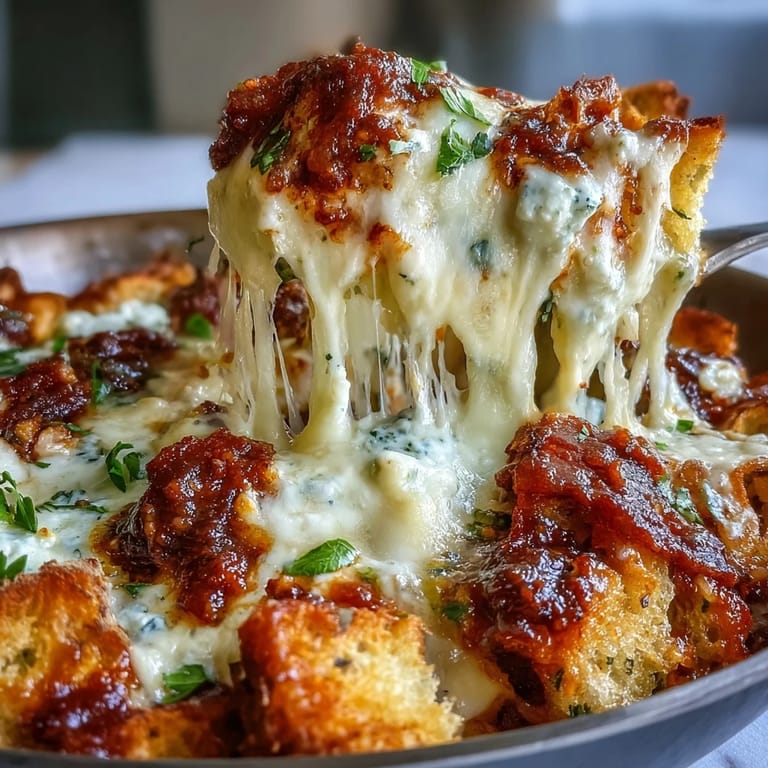
- Cover the skillet loosely with foil and bake for 20 minutes so the layers warm through without the top browning too fast. Remove the foil and bake another 10 to 15 minutes until the cheese bubbles at the edges and the top turns golden brown with some deeper brown spots.
- Rest before serving:
- Let the skillet cool for 10 minutes; this isn't just about avoiding burned mouths, it's about giving the layers time to set slightly so they don't fall apart when you scoop.
 Pin It
 There's something deeply satisfying about pulling a skillet straight from the oven to the table, the cheese still bubbling and the kitchen smelling like garlic and bread and melted cheese all at once. It feels like celebration food, but it's easy enough that you can make it on a regular Tuesday and feel proud of yourself.
Why Cast Iron Makes This Better
A cast-iron skillet holds heat evenly and creates those crispy, slightly caramelized edges on the bread that you simply can't get in a glass baking dish. The sides and bottom brown beautifully, adding texture and flavor that matters. If you don't have cast iron, a 9x13-inch baking dish works in a pinch, but start checking for doneness at 25 minutes since it won't brown as aggressively on the sides.
Building Flavor Layers
This dish works because you're not just dumping ingredients on top of each other; you're creating pockets of flavor that get discovered with each bite. The bread soaks up sauce from below while staying crispy on top, the ricotta adds creaminess without heaviness, and the two separate garlic hits—one in the bread, one in the sauce—give you garlic flavor in different forms throughout the dish. It's thoughtful layering, not lazy assembly.
Make It Your Own
This recipe is flexible enough to bend to what you have on hand or what you're craving. Use Italian sausage instead of ground beef for an herbaceous shift, or brown some mushrooms and lentils for a vegetarian version that's just as satisfying. A pinch of red pepper flakes mixed into the garlic bread butter creates a spicy undertone, and some people swear by adding a handful of fresh spinach to the ricotta mixture for color and nutrition.
- If you want more greens without changing the flavor profile, layer fresh spinach between the ricotta and mozzarella on the top layer only, so it wilts slightly but stays bright.
- Leftover garlic bread lasagna reheats beautifully in a 350°F oven covered with foil for about 15 minutes, though it's honestly incredible cold straight from the fridge as a weird, wonderful breakfast.
- Serve this alongside a simple green salad with lemon vinaigrette to cut through the richness, or with garlic bread on the side if you want to lean fully into the indulgence.
 Pin It
 This skillet has become my answer to the question of what to make when people are coming over and you want them to feel cared for without spending all day cooking. It's the kind of dish that makes your kitchen smell incredible and leaves everyone asking for the recipe.
Recipe FAQs
- → Can I make this vegetarian?
Yes, replace the ground beef with plant-based meat crumbles or sautéed mushrooms. The vegetarian version maintains all the cheesy, garlicky goodness while being completely meat-free.
- → What type of bread works best?
A day-old baguette or Italian loaf cut into 2-inch cubes holds up beautifully during baking. Slightly stale bread absorbs the sauce without becoming mushy, while still developing a crispy, golden top.
- → Can I assemble this ahead of time?
Assemble the entire skillet up to 24 hours in advance, cover tightly, and refrigerate. When ready to bake, let it sit at room temperature for 20 minutes before adding 5-10 minutes to the covered baking time.
- → Why use a cast-iron skillet?
Cast iron provides even heat distribution and retains heat exceptionally well, ensuring the cheese melts evenly and the bottom layer of bread becomes perfectly crisp without burning.
- → How do I prevent the bread from getting soggy?
The key is not over-baking and allowing the 10-minute resting period after baking. This lets the layers set and ensures the bread maintains some texture while still absorbing flavors.
- → Can I freeze leftovers?
Yes, portion cooled leftovers into airtight containers and freeze for up to 3 months. Thaw overnight in the refrigerator and reheat at 350°F until warmed through.