 Pin It
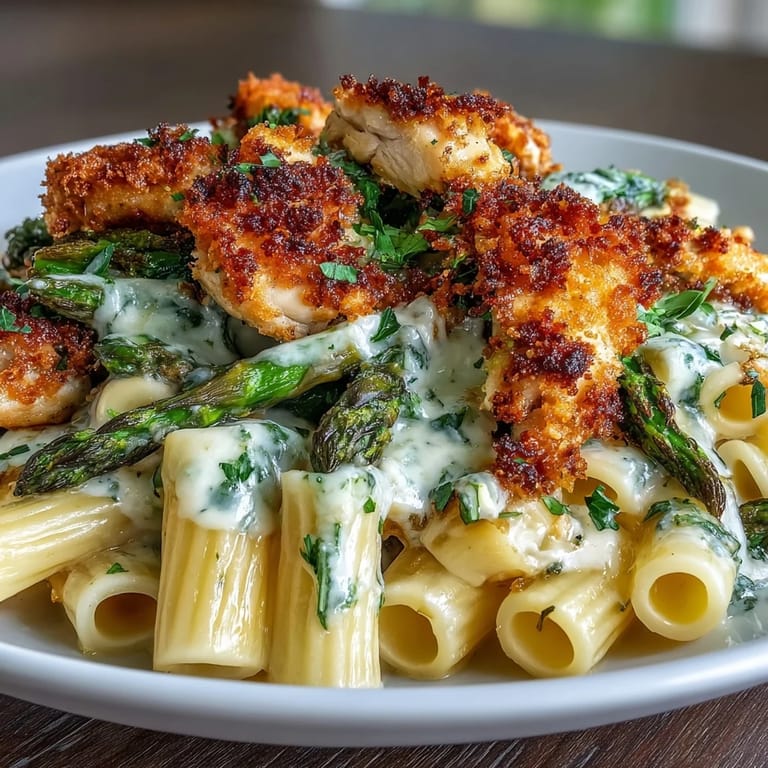
 My cooking notebook from last spring has a coffee stain next to this recipe, which tells you something about how often I've made it. A friend texted me a photo of crispy asparagus at her favorite restaurant, and instead of ordering it myself, I became slightly obsessed with recreating that golden crunch at home. The first time I combined it with lemon cream sauce and chicken, my kitchen filled with this bright, buttery aroma that made everyone pause mid-conversation. That moment sold me completely.
I made this for four friends on a Friday when someone cancelled their plans last minute, and I had just enough ingredients in my fridge to pull it off. Watching them twirl pasta and comment on the asparagus topping felt like the small victory it was, and I realized this dish had become my reliable go-to when I wanted to impress without overthinking. There's something satisfying about a recipe that works every single time.
Ingredients
- Penne or rigatoni, 340 g (12 oz): Choose a pasta shape with grooves to catch the lemon cream, and cook it to actual al dente, not soft, because it'll continue cooking slightly when tossed with the hot sauce.
- Boneless, skinless chicken breasts, 2 large (about 450 g/1 lb), sliced into strips: Slicing them yourself gives you control over thickness and ensures they cook evenly, staying tender instead of drying out.
- Salt, 1/2 tsp: Season the chicken generously and taste as you go, because the Parmesan and Asiago will add saltiness later.
- Black pepper, 1/4 tsp: Freshly cracked makes a noticeable difference in flavor depth.
- Garlic powder, 1/2 tsp: This seasons the chicken before cooking, giving it background depth that complements the fresh garlic in the sauce.
- Olive oil, 1 tbsp (for chicken): Use a good quality oil and let it get hot enough to sizzle when the chicken hits the pan, which creates that golden crust.
- Asparagus, 1 bunch (about 300 g/10 oz), trimmed and cut into 2.5 cm pieces: Bend each spear gently until it snaps at its natural breaking point, which removes the woody ends without waste.
- Olive oil, 1 tbsp (for asparagus): Toss it well so every piece gets a light coating before the panko mixture goes on.
- Panko breadcrumbs, 1/2 cup (50 g): Panko stays crispier than regular breadcrumbs because of its larger texture, and this is where your crunch comes from.
- Grated Parmesan cheese, 1/4 cup (25 g) for asparagus topping: The combination of Parmesan and Asiago creates a more interesting flavor than either cheese alone.
- Grated Asiago cheese, 1/4 cup (25 g): Asiago has a slightly nutty note that lifts the topping beyond ordinary breadcrumbs.
- Unsalted butter, 2 tbsp: Unsalted gives you control over seasoning and tastes richer than margarine or oil in the sauce base.
- Garlic, 3 cloves, minced: Fresh garlic in the cream sauce provides brightness that dried garlic cannot replicate.
- Lemon zest, from 1 lemon: Zest before juicing, and don't be shy, because the oils in the zest carry most of the lemon flavor.
- Lemon juice, about 2 tbsp: Fresh lemon juice prevents the cream from feeling heavy and ties all the flavors together.
- Heavy cream, 1 cup (240 ml): Full fat cream creates a silky sauce that coats the pasta beautifully, so don't substitute with half and half.
- Grated Parmesan cheese, 1/2 cup (50 g) for sauce: Stir it in at the end over low heat to prevent the sauce from breaking or becoming grainy.
- Salt and pepper, to taste: Taste after adding the cream and cheese, then adjust, because the sauce concentrates flavors as it cooks.
- Fresh parsley, 1/4 cup (15 g), chopped: Add this just before serving so it stays bright green and aromatic instead of darkening in the hot pasta.
Tired of Takeout? 🥡
Get 10 meals you can make faster than delivery arrives. Seriously.
One email. No spam. Unsubscribe anytime.
Instructions
- Heat your oven and start the pasta:
- Preheat the oven to 200°C (400°F) and bring a large pot of salted water to a rolling boil. Cook the pasta until just al dente, which usually takes about 10 minutes depending on your brand, then reserve 1/2 cup of pasta water before draining. This starchy water becomes your secret for loosening the sauce to exactly the right consistency later.
- Prepare and roast the asparagus:
- Toss asparagus pieces with olive oil and spread them in a single layer on a baking sheet. In a small bowl, mix panko, Parmesan, and Asiago, then sprinkle this mixture evenly over each piece of asparagus. Roast for 10 to 12 minutes until the asparagus is crisp-tender and the topping is golden brown, watching near the end to catch it just as it turns color.
- Cook the chicken until golden:
- While the asparagus roasts, season your chicken strips with salt, pepper, and garlic powder. Heat olive oil in a large skillet over medium-high heat until it shimmers, then add the chicken in a single layer without crowding. Sauté for about 5 to 6 minutes, stirring occasionally, until the chicken is cooked through and has golden edges.
- Build the lemon cream sauce:
- In the same skillet (no need to clean it, those browned bits add flavor), melt butter over medium heat. Add minced garlic and lemon zest, stirring for about 1 minute until the kitchen smells incredibly fragrant. Pour in lemon juice and heavy cream, bring to a gentle simmer, then reduce heat and stir in the grated Parmesan until the sauce is smooth and creamy.
- Bring it all together:
- Add your cooked pasta and chicken back to the skillet with the cream sauce, tossing everything gently to coat. If the sauce seems too thick, add reserved pasta water a splash at a time until you reach your preferred consistency, remembering that the sauce will thicken slightly as it cools.
- Finish with the asparagus and parsley:
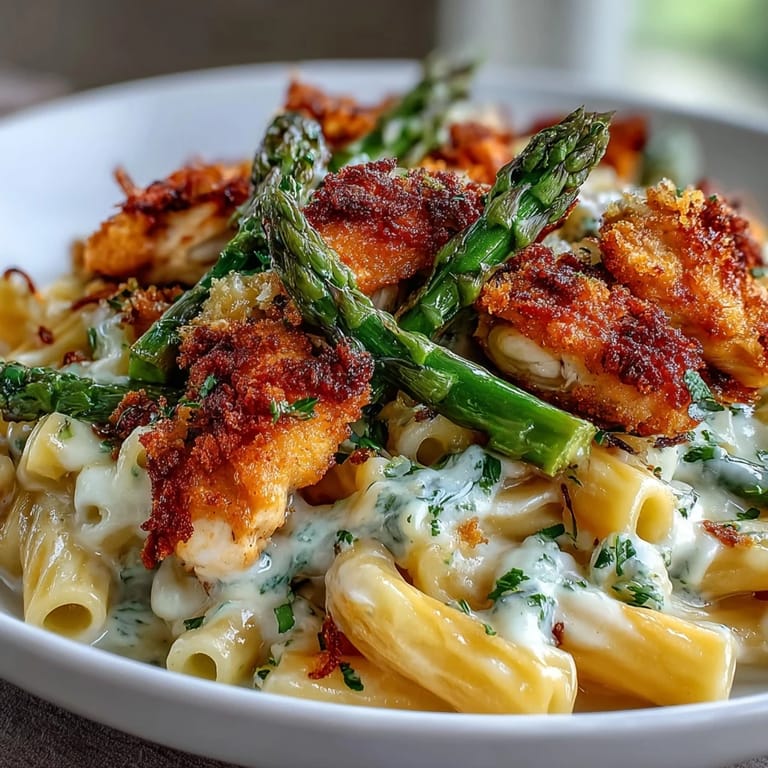
- Gently fold in the roasted asparagus with all its crispy topping, being careful not to break the spears. Sprinkle fresh chopped parsley over the top just before serving, which adds color and a fresh finish.
 Pin It
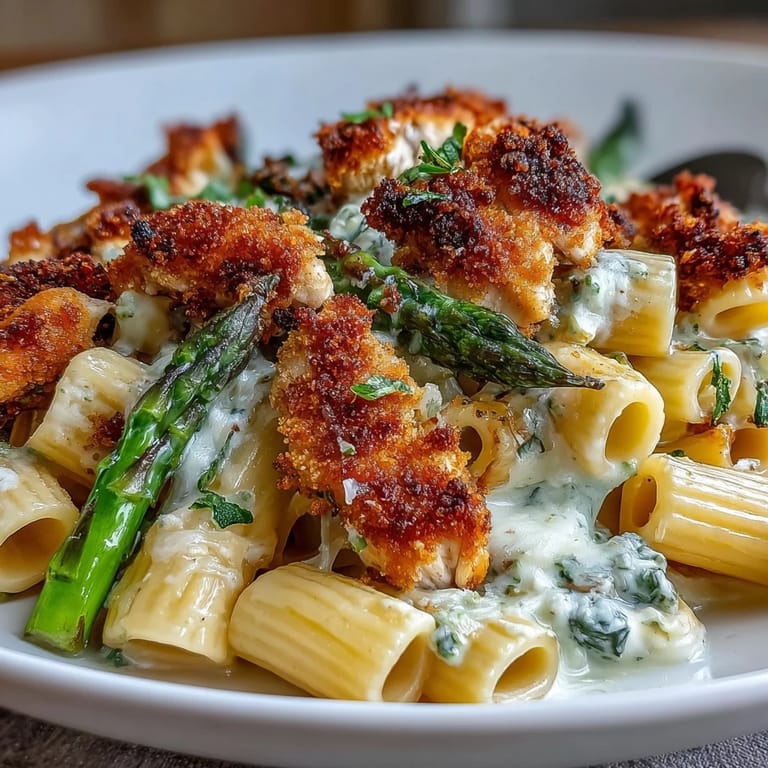
 My neighbor smelled this cooking one evening and asked for the recipe, which sparked a whole conversation about why we don't cook Italian food at home as much as we should. There's something about the combination of crispy, creamy, bright, and herbaceous that makes this dish feel celebratory without being complicated.
Why Lemon and Cream Work So Well Together
This pairing isn't accidental. The acidity of lemon cuts through the richness of cream, preventing the sauce from feeling heavy or cloying, while the cream softens the brightness of the lemon so it doesn't overwhelm your palate. The first time I understood this chemistry was when a restaurant dish tasted light despite being decadent, and I realized it was the lemon doing the work. Now I use this principle in other sauces too.
Making This Dish Your Own
The beauty of this recipe is that it's flexible enough to adapt without losing its character. If you don't have Asiago, Pecorino Romano brings a sharper note that's equally interesting, or you can double down on Parmesan for something more understated. Some nights I add crispy pancetta to the sauce for extra depth, and other times I throw in sun-dried tomatoes if I have them open in the fridge.
Storage and Make-Ahead Tips
This pasta is best eaten fresh, but leftovers keep in an airtight container for up to 2 days if you store the crispy asparagus topping separately. You can prep all your ingredients ahead of time, which cuts your cooking time in half on a busy day. One more thing: if you're cooking for someone with dietary needs, gluten-free pasta works beautifully here, and the dish remains just as satisfying.
- Keep the asparagus topping in its own container so it doesn't soften in the sauce.
- Reheat gently in a skillet with a splash of cream or pasta water to restore the sauce consistency.
- Make the sauce earlier in the day and refrigerate it, then reheat and combine with fresh pasta for a quick weeknight dinner.
 Pin It
 This dish has become the recipe I reach for when I want to feel like a capable cook without spending hours in the kitchen. It's proof that good food doesn't require long ingredient lists or complicated steps, just thoughtful choices and attention to what's happening in the pan.
Recipe FAQs
- → Can I use a different pasta shape?
Yes, fusilli, farfalle, or gemelli work beautifully. The cream sauce clings well to textured shapes.
- → How do I prevent the cream sauce from separating?
Keep heat at medium-low once cream is added and stir constantly. Avoid boiling vigorously.
- → Can I make this gluten-free?
Substitute pasta with gluten-free penne and use gluten-free breadcrumbs or crushed gluten-free crackers.
- → Can I use chicken thighs instead?
Absolutely. Boneless thighs work well—adjust cooking time to 7–8 minutes to ensure thorough cooking.
- → How do I store leftovers?
Refrigerate in an airtight container up to 3 days. Reheat gently with a splash of cream or pasta water to restore sauce consistency.
- → Can I add other vegetables?
Sugar snap peas, broccoli florets, or sun-dried tomatoes complement the flavors. Add during asparagus roasting or sauté with chicken.