 Pin It
 There's something magical about unwrapping a foil packet at the table—the steam rises, the aromas hit you all at once, and suddenly dinner feels like an occasion. I stumbled onto these Greek chicken packets during a sweltering summer when my air conditioning broke and the last thing I wanted was a hot kitchen. Turns out, cooking dinner inside aluminum becomes oddly intimate, almost meditative, and the flavors that emerge are brighter than anything I'd made in months.
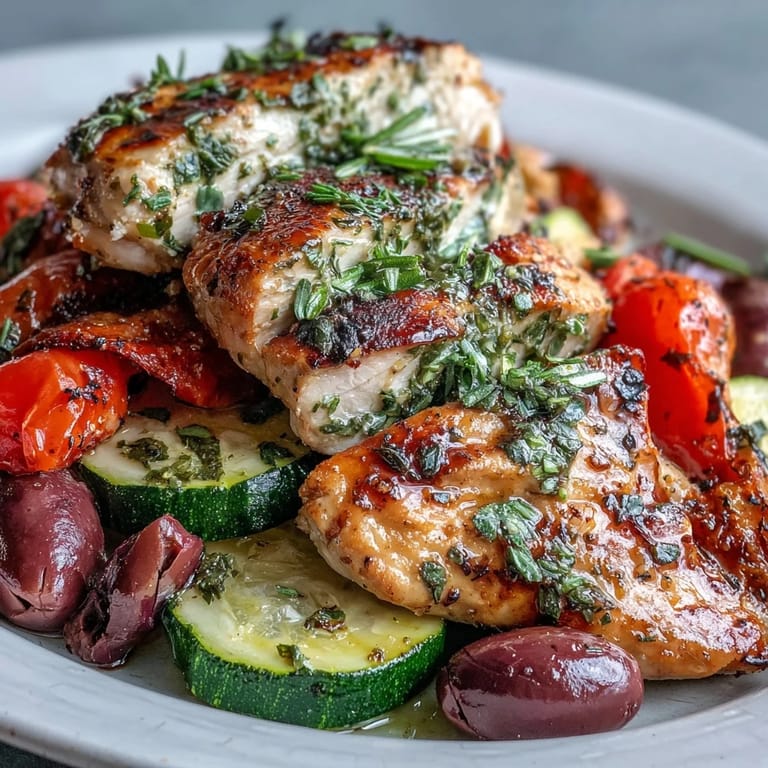
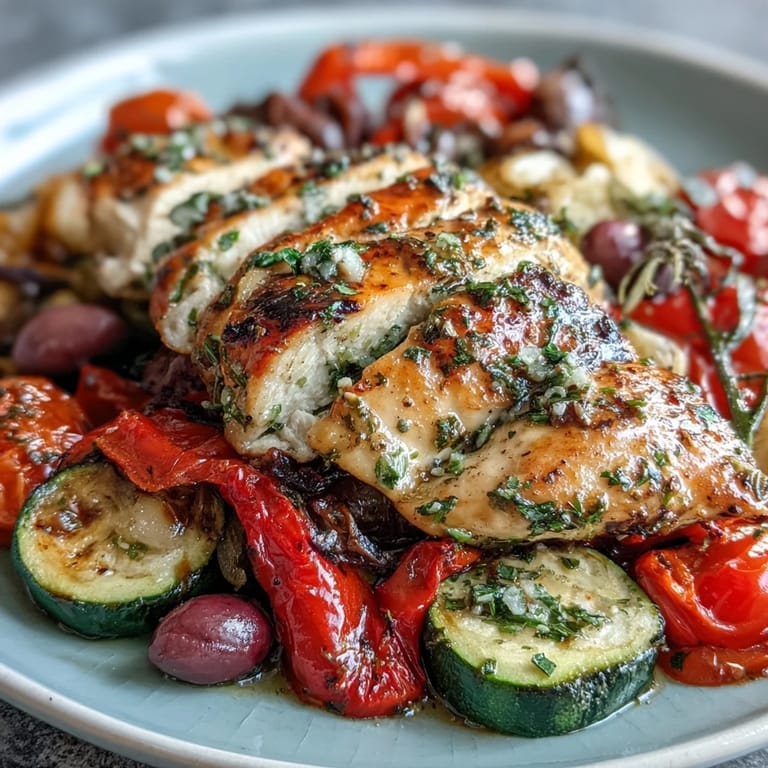
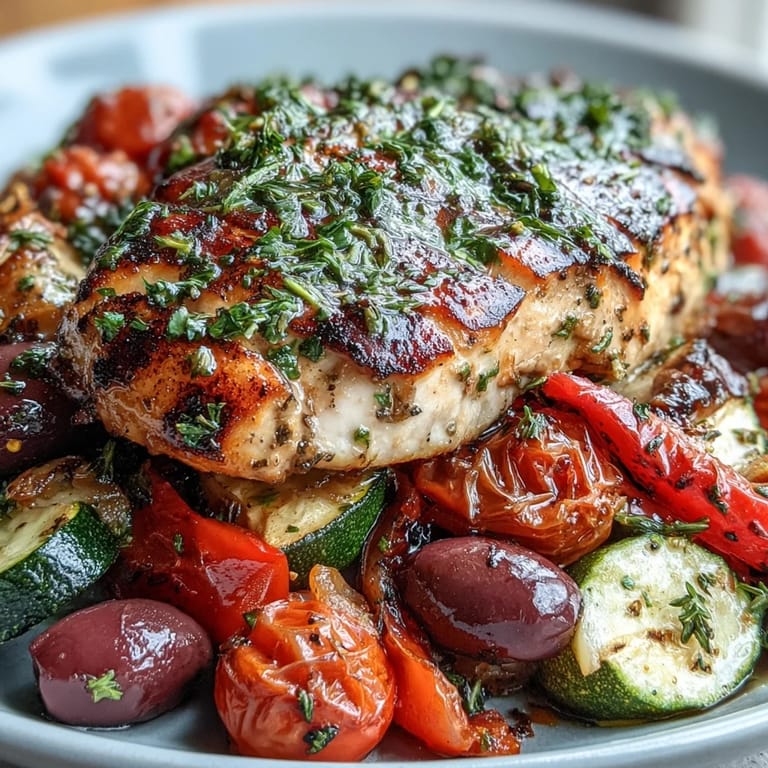
I made these for a potluck once where I was nervous about showing up with "just chicken," but when people opened their packets at the picnic table and saw those vibrant peppers and glistening olives, something shifted. My neighbor asked for the recipe before she even took a bite, and that's when I realized how much personality these simple ingredients actually have when they're left to mingle in the heat.
Ingredients
- Boneless, skinless chicken breasts: Look for ones that are roughly the same thickness so they cook evenly; if one is thicker, you can gently pound it down before marinating.
- Red and yellow bell peppers: The sweetness matters here—they caramelize slightly in the foil, which deepens their flavor.
- Zucchini: Slice it thin enough that it softens but thick enough that it doesn't turn to mush, usually about a quarter-inch works beautifully.
- Cherry tomatoes: Halving them releases their juices, which create a light sauce that flavors everything around them.
- Kalamata olives: The briny punch is essential; don't skip them thinking you'll add something else instead.
- Extra-virgin olive oil: This is worth spending a bit more on because you taste it directly, especially in the marinade.
- Fresh lemon juice and zest: Fresh lemon makes all the difference in brightness; bottled just won't give you that same zing.
- Dried oregano: It's the backbone of the Greek flavor profile, so don't be shy with it.
- Garlic, salt, and pepper: These three form the flavor foundation; mince the garlic finely so it distributes evenly through the marinade.
- Feta cheese: Crumbled on at the end, it stays creamy rather than melting into oblivion, which is the whole point.
Tired of Takeout? 🥡
Get 10 meals you can make faster than delivery arrives. Seriously.
One email. No spam. Unsubscribe anytime.
Instructions
- Mix your Greek magic:
- Whisk together the olive oil, lemon juice, lemon zest, oregano, minced garlic, salt, and pepper in a small bowl until it looks like a loose emulsion. This is your flavor foundation, so take a moment to taste it—it should make your mouth water a little.
- Marinate the chicken:
- Toss your chicken breasts in half of that marinade and let them sit for at least 10 minutes; if you have the time, an hour is even better because the lemon will start to gently cook the surface. Even 10 minutes makes a real difference, though.
- Build your packets:
- Tear off four large sheets of heavy-duty foil and lay them out. Divide your sliced peppers, zucchini, onion, tomatoes, and olives evenly among them, piling everything in the center of each sheet. Think of it as creating a little vegetable nest for each chicken breast.
- Assemble and seal:
- Place a marinated chicken breast on top of each vegetable pile and drizzle with the remaining marinade. Fold the foil up and over, crimping the edges tightly so steam can't escape—you're creating a little oven within an oven.
- Cook with steam:
- Whether you're baking at 400°F or grilling these packets, cook for 25 to 30 minutes until the chicken reaches 165°F inside. The foil will puff slightly as steam builds, which is exactly what you want.
- Open carefully and finish:
- Use tongs to transfer the packets to plates and carefully peel back the foil—the steam that escapes is hotter than you think. Top each packet with crumbled feta, a handful of fresh parsley, and serve with lemon wedges on the side.
 Pin It
 These packets taught me something quiet: that the best meals aren't always the most complicated ones, and that sometimes the simplest act of wrapping food in foil and trusting the heat can create something that tastes like you've been in the kitchen for hours. My kid, who usually suspects anything green, actually asked for seconds once, which felt like winning the lottery.
Why This Works for Everyone
The beauty of foil packets is that they level the playing field—beginner and experienced cooks both get stellar results because the foil does the work of distributing heat evenly. There's no searing, no watching something in a pan, just assembly and waiting. I've handed the printed instructions to friends who claimed they couldn't cook, and they came back raving about their results.
Grilling vs. Oven: What I've Learned
The oven is more forgiving and predictable, which is why I use it on nights when I'm tired. Grilling adds a subtle smokiness and feels more ceremonial, which is why I pull out the grill when people are coming over and I want dinner to feel like an event. Both methods work equally well; choose based on your mood and the weather.
Meal Prep and Make-Ahead Magic
I've assembled these packets in the morning and cooked them eight hours later with zero difference in quality, which makes them perfect for busy weeks. You can even freeze assembled packets for up to three months, though I'd cook them straight from frozen and just add five to ten minutes to the cooking time. The whole reason I started making these was because I needed dinner that felt effortless on chaotic evenings, and meal prep turned them into an actual weapon against takeout.
- Prep packets in the morning and store them in the fridge, covered loosely so the foil doesn't stick to itself.
- Frozen packets cook beautifully straight from the freezer—just don't thaw them first.
- Double or triple the recipe on a Sunday and you've got dinner sorted for three nights without thinking twice.
 Pin It
 These packets remind me why I love cooking: it's not about perfection, it's about those moments when something simple becomes the reason people linger at the table a little longer. I hope your kitchen fills with that same lemony, oregano-scented steam and that your own table becomes a place where foil packets and good conversation go hand in hand.
Recipe FAQs
- → Can I use chicken thighs instead of breasts?
Yes, boneless, skinless chicken thighs will work well, offering a juicier texture and richer flavor. Adjust cooking time as needed.
- → What vegetables work best in foil packets?
Bell peppers, zucchini, red onion, cherry tomatoes, and olives complement each other and cook evenly in foil packets, providing vibrant colors and textures.
- → How do I prevent the foil from tearing?
Use heavy-duty aluminum foil and avoid overstuffing the packets. Fold and seal edges tightly to retain juices while cooking.
- → Can I prepare the packets ahead of time?
Yes, assemble the foil packets and refrigerate for up to a few hours before cooking to deepen the marinade’s flavor and save time.
- → Is it better to bake or grill the packets?
Both methods work well. Baking offers consistent heat, while grilling adds a subtle smoky flavor. Adjust cooking time to ensure chicken is fully cooked.