 Pin It
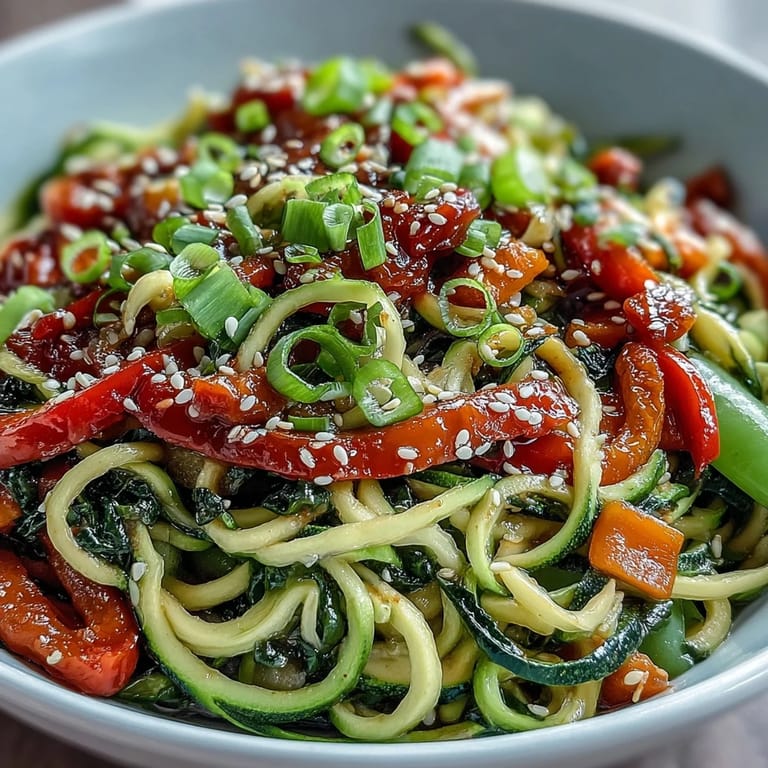
 There's something almost meditative about spiralizing vegetables on a Tuesday evening when you're tired of the usual rotation but still want something that feels exciting on the plate. I discovered this zucchini noodle stir fry during a phase where my kitchen counter seemed perpetually crowded with farmers market bags, and I kept reaching for the same tired pasta recipes. One night, I grabbed the spiralizer I'd been meaning to use, tossed it with whatever colorful vegetables were about to wilt, and suddenly had something that tasted like takeout but felt genuinely nourishing. It became my go-to when I wanted dinner to feel a little less ordinary without the stress.
I made this for my sister when she was visiting and experimenting with cutting back on grains, and watching her actually go back for seconds without the usual "well, I'm being healthy" sigh felt like a small triumph. She kept asking about the sauce, convinced there was something secret in it, and honestly, there kind of is—it's just the right balance of umami and brightness that makes vegetables feel like an event instead of a obligation. That's when I realized this wasn't just a weeknight dinner hack, it was something worth making intentionally.
Ingredients
- Zucchini, spiralized: The foundation here, and honestly, the best part is they stay slightly crisp if you time it right—add them near the end so they don't turn into mush.
- Red bell pepper: Sliced thin so it softens just enough to be tender but keeps that slight bite, which is what makes the texture interesting.
- Carrot, julienned: Cut into matchsticks so they cook quickly and stay sweet without becoming mushy.
- Snap peas: These are the ones that convinced me vegetables could still have personality—they stay crisp and add that slight sweetness.
- Green onions: Scattered at the end mostly, but some go in during cooking to mellow out and become part of the sauce.
- Garlic and ginger: Thirty seconds in the hot oil and your kitchen smells like someone who actually knows what they're doing—don't skip the aroma moment, it matters.
- Low-sodium soy sauce: The backbone of the sauce; if you're avoiding gluten, tamari is genuinely indistinguishable and worth the swap.
- Toasted sesame oil: Just a tablespoon because it's potent—it's the difference between a decent sauce and one you'll think about later.
- Rice vinegar: Adds that subtle brightness without being aggressive; white vinegar will work but tastes slightly harsher.
- Honey or maple syrup: A teaspoon of sweetness to balance the salt and acid, nothing more needed.
- Chili flakes: Optional but honestly, the gentle heat rounds out the whole thing beautifully—start conservative if you're unsure.
- Sesame seeds and fresh herbs: These aren't just garnish; they're what makes it feel intentional and fresh when you serve it.
Tired of Takeout? 🥡
Get 10 meals you can make faster than delivery arrives. Seriously.
One email. No spam. Unsubscribe anytime.
Instructions
- Make the sauce first, so you can be hands-free later:
- Whisk together the soy sauce, sesame oil, rice vinegar, honey, and chili flakes in a small bowl and set it somewhere you won't forget about it. This takes two minutes and changes everything because you're not scrambling once the pan gets hot.
- Get your pan singing:
- Heat your skillet or wok over medium-high heat until it's properly hot—you'll know because a drop of water sizzles immediately. Add just a splash of neutral oil if your pan isn't naturally non-stick, then toss in the garlic and ginger.
- Wake up the aromatics:
- Let the garlic and ginger sit for about thirty seconds until the smell hits you—that's when you know they're releasing their flavor into the oil. Don't walk away during this part; thirty seconds is all it takes to go from fragrant to burnt.
- Build the vegetable layers:
- Add the bell pepper, carrot, and snap peas all at once, then stir constantly for three to four minutes until they're bright and just beginning to soften. You want them to retain some resistance when you bite them—that's what keeps the texture interesting.
- Bring in the zucchini noodles:
- Add the spiralized zucchini and green onions, then stir-fry for two to three minutes until everything is warm and the noodles are just tender but still have a slight firmness to them. This is the critical moment where timing matters—overdo it by a minute and they collapse.
- Marry everything together with the sauce:
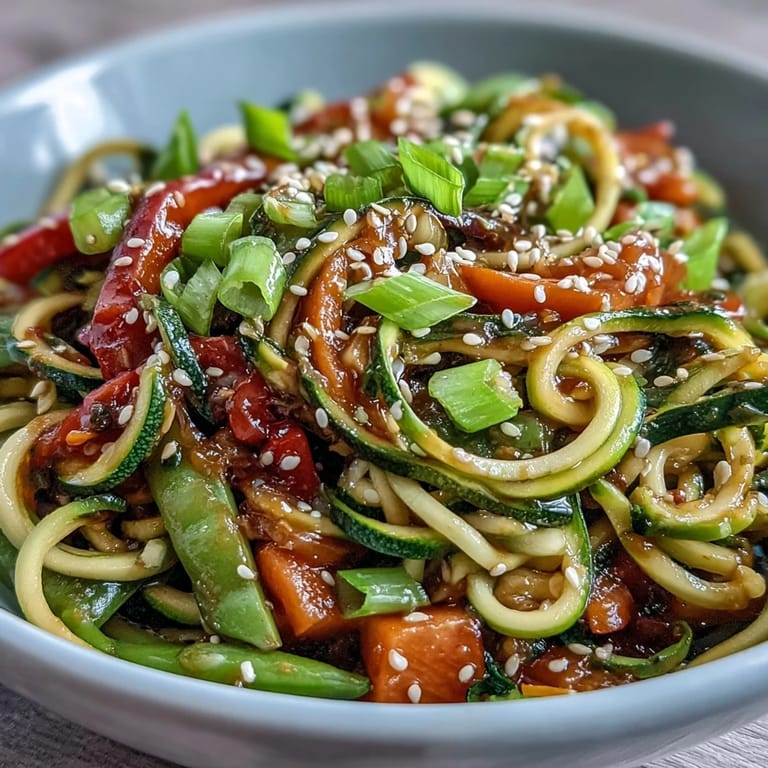
- Pour in your prepared sauce and toss everything together for one to two minutes, making sure every strand of vegetable gets coated in that glossy, fragrant sauce. The heat will help the flavors meld and warm everything through evenly.
- Finish and serve:
- Pull it off the heat and divide between bowls while it's still steaming, then scatter the sesame seeds and fresh herbs over top. A squeeze of lime at the very end adds a final brightness that somehow makes the whole thing taste better.
 Pin It
 What makes this dish stick with me is that it somehow convinced my friend who lives on pasta that vegetables could be the main event, not the supporting role. She started making it weekly, sometimes with tofu, sometimes with leftover shrimp, and eventually told me it was the reason she actually looked forward to cooking on a Tuesday night instead of just ordering in. That's when food stops being about nutrition and becomes about discovering something that genuinely makes you happy to eat.
Making It Your Own
The beauty of this recipe is that it's genuinely flexible without losing its soul—I've made it with whatever vegetables were in the crisper drawer and it works beautifully. Some nights I add shredded cabbage or mushrooms, other times I toss in snap peas and call it a day. The sauce is so perfectly balanced that it carries whatever vegetables you choose, which is why I keep coming back to it when I'm tired of overthinking dinner.
The Protein Question
This dish is vegetarian as written, but honestly, it's the kind of base that welcomes protein without changing its personality. I've made it with pan-fried tofu that gets slightly crispy, with shrimp added during the final minute of cooking, and even with leftover roasted chicken torn into pieces and warmed through at the end. The sauce handles all of it equally well, which is remarkable considering how finicky some dishes can be about additions.
Storage and Flexibility
Leftovers are slightly tricky because the noodles continue absorbing sauce overnight and become softer than fresh, but honestly, that's not entirely a bad thing—they're more noodle-like that way, which some people prefer. If you're meal prepping, store the components separately and toss them together just before eating for the best texture. I've also discovered that this is absolutely delicious the next morning chilled, almost like a vegetable salad, which feels like an accidental bonus.
- Make extra sauce because you'll want more than you think once you taste it.
- A splash of lime juice right before serving actually changes the whole flavor profile for the better.
- If the noodles seem watery after cooking, drain them briefly in a colander before adding the sauce.
 Pin It
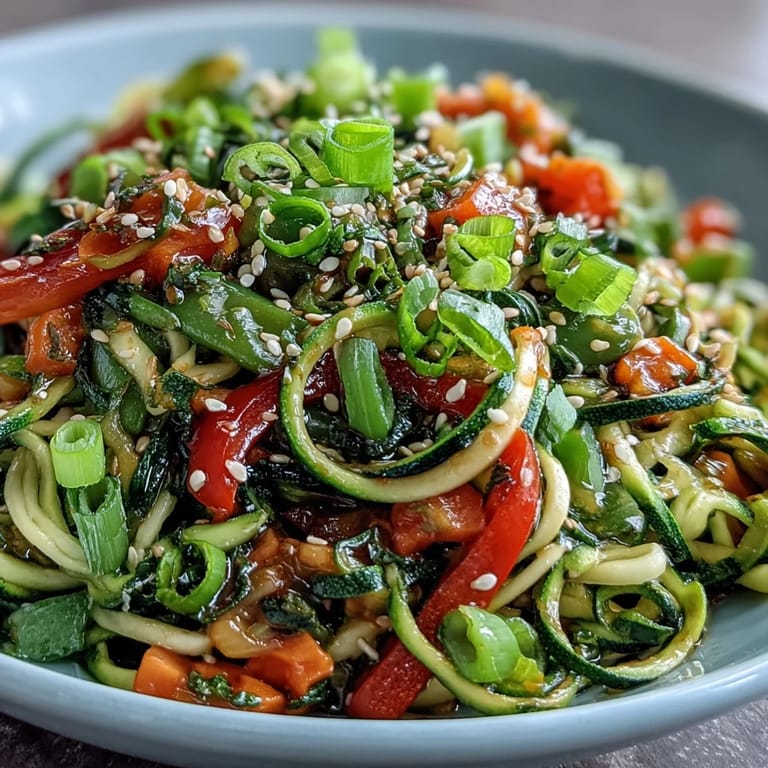
 This recipe became my proof that healthy eating doesn't require sacrifice or willpower, just the right combination of ingredients and a willingness to try something that sounds simple. Make it once and you'll understand why I keep returning to it.
Recipe FAQs
- → Can I add protein to this dish?
Yes, cooked tofu, shrimp, or chicken can be added for extra protein without altering the flavor profile.
- → What is the best way to spiralize zucchini?
Use a spiralizer or a julienne peeler to create long, thin noodles that cook evenly and maintain a crisp texture.
- → How do I keep the noodles from getting soggy?
Cook the zucchini noodles briefly, just until slightly softened but still firm, and stir fry quickly over medium-high heat.
- → Can I adjust the heat level of the stir fry?
Yes, add or reduce chili flakes to suit your preferred spice level.
- → Are there gluten-free options for the sauce?
Using tamari instead of regular soy sauce ensures a gluten-free alternative without compromising flavor.