 Pin It
 My roommate brought home a falafel bowl from this tiny Mediterranean spot near campus, and I watched her demolish it in about five minutes flat. The way everything just worked together—crispy on the outside, creamy in the middle, bright herbs cutting through richness—I knew I had to figure out how to make it at home. Turns out, it's less about complicated technique and more about layering textures and flavors that actually talk to each other. Now it's my go-to when I want something that feels fancy but doesn't require me to stress.
I made this for my partner last week when they were stressed about work, and something shifted when they tasted it. They closed their eyes for a second and actually smiled, and I realized a bowl of vegetables and chickpea fritters had somehow become comfort food. That's when I understood this dish isn't just about eating well—it's about slowing down and tasting what you're actually putting in your mouth.
Ingredients
- 12 store-bought or homemade falafel balls: The backbone of this bowl—if you're pressed for time, quality store-bought falafel is totally legitimate and often just as good as homemade.
- 1 cup hummus: This creamy base isn't just a spread; it's insulation that keeps the greens from getting soggy and adds protein to the mix.
- 1 cup tzatziki: The cool, tangy counterpoint that makes every bite brighter—don't skip it even if you're dairy-free, because the flavor gap is real.
- 1/4 cup tahini sauce: Drizzle this like it's liquid gold because honestly, it kind of is; if you can't find it pre-made, whisk tahini with lemon juice and water until pourable.
- 4 cups mixed salad greens: Pick whatever greens are fresh right now—arugula has bite, spinach is mild, romaine gives you structure; you genuinely cannot go wrong.
- 1 cup cherry tomatoes, halved: The little bursts of sweetness that remind you why fresh vegetables matter.
- 1/2 cup cucumber, sliced: Keep the skin on for texture and nutrients, and don't slice too thin or they'll disappear into the sauce.
- 1/4 cup red onion, thinly sliced: Raw onion sounds intense but trust me—it cuts through the richness and adds a sharp note that everything else builds around.
- 1/4 cup shredded carrots: A bit of sweetness and crunch that makes the bowl feel intentional rather than random.
- 2 tablespoons fresh parsley, chopped: The finishing touch that smells like you actually know what you're doing in the kitchen.
- 1 tablespoon toasted sesame seeds: Don't use regular sesame seeds—toasted ones have a nutty depth that changes the entire vibe.
- Lemon wedges, for serving: These are your safety net; a squeeze of acid lifts everything when a bowl tastes just slightly flat.
Tired of Takeout? 🥡
Get 10 meals you can make faster than delivery arrives. Seriously.
One email. No spam. Unsubscribe anytime.
Instructions
- Warm your falafel:
- If using store-bought, follow the package instructions—usually means a quick oven toast or pan warm to crisp up the outside without drying out the inside. If you're making homemade, cook them however you prefer and let them rest for a minute so they cool just enough to handle.
- Build your sauce base:
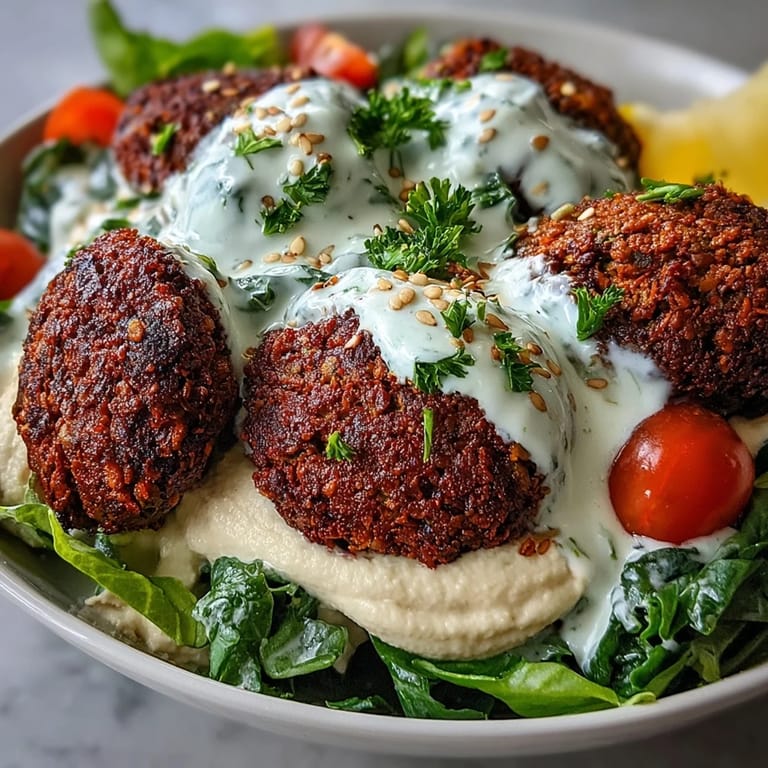
- Divide the hummus and tzatziki between four bowls, spreading them in rough swoops that give you room to add the greens. Think of this as creating pockets where flavors can mingle rather than making it perfectly neat.
- Layer your greens and vegetables:
- Start with a generous handful of mixed greens on top of the sauce, then arrange the tomatoes, cucumber slices, red onion, and carrots in a way that looks intentional to you. It doesn't need to be Instagram-perfect, but a little care in plating makes you actually want to eat it.
- Crown with falafel:
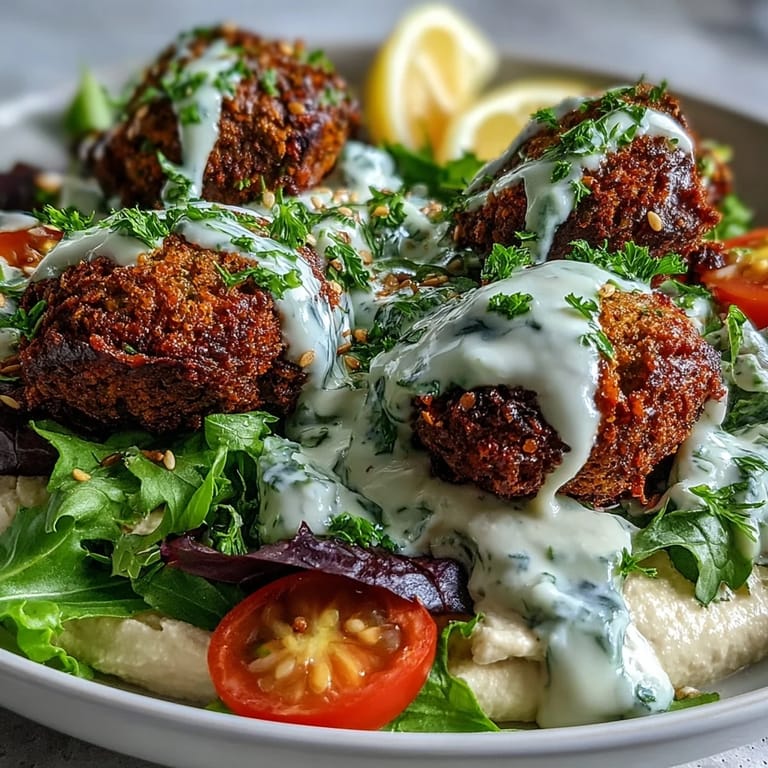
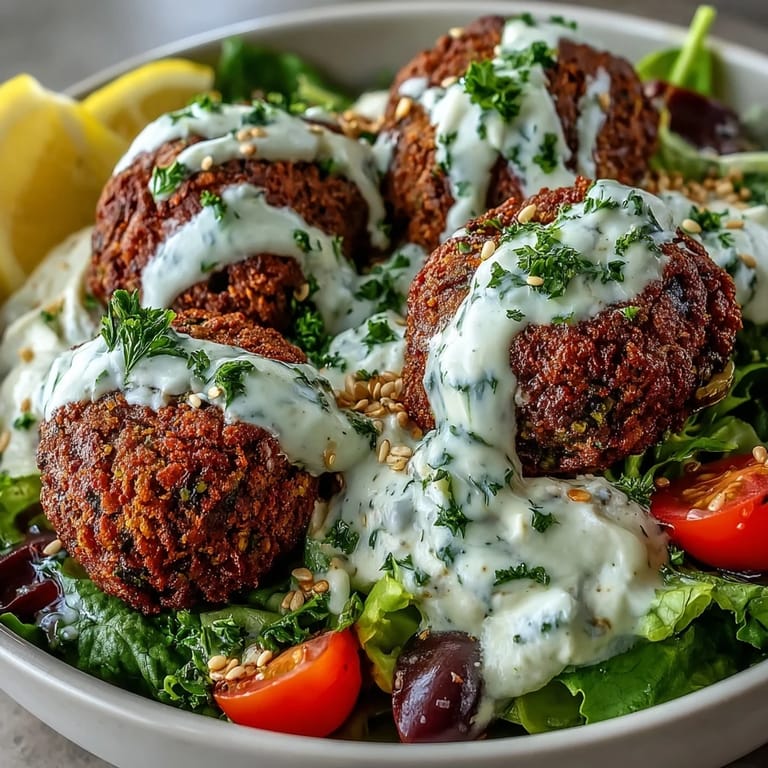
- Place three falafel balls on top of each bowl so they're visible and people know what they're getting into. The height matters—it keeps the falafel from getting soggy and signals that this is a proper meal.
- Finish with tahini and garnishes:
- Drizzle tahini sauce over the whole thing in a thin stream, then scatter parsley and sesame seeds across the top. The green and white flecks make everything look alive, and the sesame seeds give you little pops of toasted nuttiness.
- Serve right away with lemon:
- Hand everyone a lemon wedge and let them squeeze it in—this gives people control over the brightness level, and honestly, squeezing fresh lemon over a bowl you just made feels good.
 Pin It
 My mom came over the other day, took one bite, and asked if I'd somehow started a Mediterranean restaurant in my kitchen. It was such a small moment, but there was this quiet pride in making something that felt both simple and special at the same time.
Making It Your Own
This bowl is genuinely a canvas—I've made it with roasted vegetables when I wanted something warmer, added chickpeas when I needed more protein, and honestly, it works. The only rule is that you need some creamy element (the sauces), something crispy (the falafel), fresh vegetables, and an acid like lemon to tie it all together. Everything else is negotiable based on what you have and what you're craving.
Dietary and Allergen Flexibility
For vegans, skip the tzatziki or use a cashew-based version—it loses something but not everything. If gluten is a concern, check your hummus and falafel labels because store-bought versions are sometimes hiding wheat as a binder. For extra substance, I often add cooked quinoa or brown rice directly into the bowl, which makes it even more satisfying and gives you something to soak up all those beautiful sauces.
- Dairy-free tzatziki or a simple tahini-lemon mix works as a stand-in if you need to skip yogurt.
- Pickled vegetables or kalamata olives add a salty brightness that some bowls desperately need.
- Grilled vegetables like zucchini or eggplant can replace raw ones if you want more substance or are prepping ahead.
Pairing and Serving Suggestions
This bowl pairs unexpectedly well with cold crisp white wines like a Sauvignon Blanc, or you can go the non-alcoholic route with mint tea, which echoes the flavors in the falafel and feels intentional. I've also found that these bowls work brilliantly as a centerpiece for casual entertaining—everyone builds their own intensity level by adjusting the lemon and sauce, so people feel invested in what they're eating.
 Pin It
 This bowl became something I return to again and again because it never feels like a chore, and it genuinely nourishes in a way that feels intentional. Make it once and you'll understand why Mediterranean bowls have lasted this long.
Recipe FAQs
- → Can I make this bowl ahead of time?
Yes, prepare components in advance and store separately. Assemble bowls just before serving to maintain the crispy texture of falafel and fresh crunch of vegetables.
- → What can I use instead of store-bought falafel?
Homemade falafel works wonderfully. You can also use baked chickpea patties or even roasted chickpeas for a lighter variation while keeping the Mediterranean essence.
- → How do I make this bowl more filling?
Add cooked quinoa, brown rice, or warm pita bread on the side. These grains complement the Mediterranean flavors while adding substance to keep you satisfied longer.
- → Can I make this dairy-free?
Absolutely. Simply use a dairy-free tzatziki alternative or substitute with extra hummus and tahini sauce. The bowl remains delicious and satisfying without dairy.
- → What other vegetables work well in this bowl?
Fresh bell peppers, shredded cabbage, grilled eggplant, or roasted cauliflower all complement the falafel beautifully. Choose whatever fresh produce you have available for variety.