 Pin It
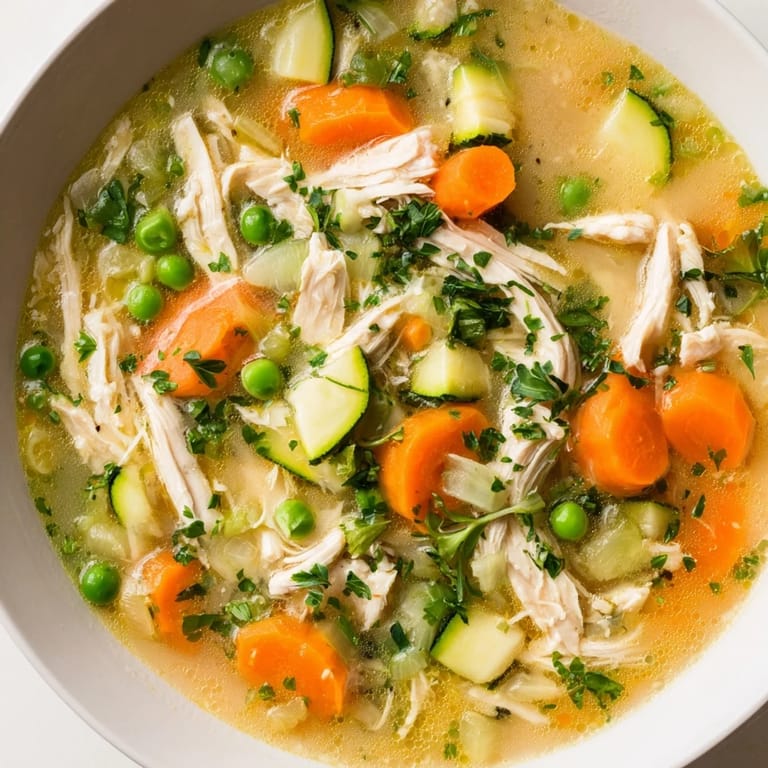
 There was this gray, rainy Tuesday last March when nothing sounded good and I ended up staring at a bag of frozen peas and some chicken in the fridge. Something about the weather made me crave broth, so I started throwing things in a pot without much of a plan. The house filled with that classic mirepoix smell, onions and carrots softening together, and suddenly my kitchen felt like a restaurant. My roommate wandered in, mug in hand, asking what smelled so comforting. We ended up eating it standing at the counter while rain tapped against the window.
My grandmother used to make something similar whenever anyone in the family felt under the weather. She would always say the broth needed to smile, which I eventually realized meant tasting it and adjusting until it made you happy. Now I find myself adding lemon juice at the end, just like she did, watching the oil swirl on top like tiny golden suns. Last month my sister called from college asking for the recipe, claiming nothing else quite hit the spot during finals week.
Ingredients
- 2 boneless skinless chicken breasts: Poaching them directly in the broth keeps the meat incredibly tender and infuses the liquid with flavor
- 2 medium carrots peeled and sliced: These add natural sweetness and that classic soup flavor everyone recognizes
- 1 medium zucchini diced: Summer squash brings freshness without overwhelming the delicate broth
- 1 cup fresh or frozen peas: Little pops of sweetness that make every spoonful interesting
- 1 medium yellow onion finely chopped: The foundation of flavor, worth taking the time to dice evenly
- 2 celery stalks sliced: Essential for that aromatic base that makes soup taste like home
- 2 garlic cloves minced: Add this after the vegetables soften so it does not burn and turn bitter
- 6 cups low-sodium chicken broth: Starting with low-sodium lets you control the final seasoning perfectly
- 1 bay leaf: A subtle background note that makes the broth taste deeper and more complex
- 1 teaspoon dried thyme: Earthy and floral, this herb pairs perfectly with chicken and spring vegetables
- 2 tablespoons fresh parsley chopped: Bright and fresh, added at the end to maintain its vibrant flavor
- Salt and freshly ground black pepper: Season generously at the end since the broth needs time to concentrate first
- Juice of ½ lemon: The secret ingredient that makes all the flavors pop and sing together
Tired of Takeout? 🥡
Get 10 meals you can make faster than delivery arrives. Seriously.
One email. No spam. Unsubscribe anytime.
Instructions
- Build your flavor base:
- Heat a drizzle of olive oil in a large pot over medium heat, then add onion, celery, and carrots, sautéing for 4 to 5 minutes until they soften and release their sweet aroma.
- Wake up the garlic:
- Stir in the minced garlic and cook for just 1 minute until it becomes fragrant, being careful not to let it brown or it will turn bitter.
- Create the broth:
- Pour in the chicken broth, add the bay leaf and thyme, and bring everything to a gentle boil while the herbs begin to infuse their flavor.
- Cook the chicken:
- Add the chicken breasts to the boiling liquid, reduce heat to low, cover, and simmer for 15 to 18 minutes until the meat is cooked through and tender.
- Shred the meat:
- Remove the cooked chicken to a plate and use two forks to pull it apart into satisfying shreds, letting it cool slightly so you do not burn your fingers.
- Add the spring vegetables:
- Drop the zucchini and peas into the simmering broth and cook for 5 to 7 minutes until they are just tender but still hold their shape.
- Bring it all together:
- Return the shredded chicken to the pot along with parsley and lemon juice, then season generously with salt and pepper before removing the bay leaf.
 Pin It
 This soup became my go-to during my first year of teaching, when I would come home exhausted but still wanted something nourishing. There was something meditative about chopping vegetables and hearing the gentle simmer that helped me transition from the chaos of the classroom to the peace of home. Now whenever I make it, I think of all the times it saved me from ordering takeout.
Making It Your Own
Sometimes I toss in a handful of small pasta or cooked rice during the last few minutes if I want something more substantial. The starch thickens the broth slightly and makes each bowl feel like a complete meal. Just remember that pasta will continue soaking up liquid if you plan to store leftovers.
Seasonal Swaps
Spring turns to summer, and this soup adapts beautifully with whatever vegetables look fresh at the market. Asparagus or green beans work perfectly in place of peas or zucchini, bringing their own unique texture and flavor. The key is adding hearty vegetables earlier and delicate ones later so nothing turns to mush.
Serving Suggestions
A slice of crusty bread is practically mandatory for dunking into that flavorful broth, catching all the little bits of herbs and vegetables. I also love a crisp white wine like Sauvignon Blanc alongside, the acidity cutting through the warmth and complementing the spring vegetables perfectly.
- Grate some Parmesan over the top for a salty, savory finish
- Add a dollop of pesto for a burst of fresh basil flavor
- Serve with a simple green salad to round out the meal
 Pin It
 There is something profoundly satisfying about a soup that honors simple ingredients and lets them shine. Every bowl feels like a promise that good food does not need to be complicated.
Recipe FAQs
- → Can I use frozen chicken instead of fresh?
Yes, frozen chicken breasts work well. Thaw them completely before cooking, or add 5-10 extra minutes to the simmering time if cooking from frozen.
- → How do I make this soup heartier?
Add cooked rice, small pasta shapes, or quinoa in the final step. You can also include additional vegetables like green beans or asparagus for more body and nutrition.
- → What can I substitute for peas?
Green beans, asparagus, spinach, or kale work beautifully. Add hardy greens near the end to prevent overcooking, while tender vegetables can go in earlier.
- → How long does this soup keep in the refrigerator?
Store in an airtight container for up to 4 days. The flavors actually deepen as it sits. Reheat gently on the stove or microwave individual portions.
- → Is this soup freezer-friendly?
Yes, freeze for up to 3 months in freezer-safe containers. Thaw overnight and reheat slowly on the stovetop. The texture of vegetables will soften slightly after freezing.
- → What broth is best for this soup?
Low-sodium chicken broth allows you to control saltiness. Homemade broth adds richness, while store-bought works equally well. Always check labels for gluten if following a gluten-free diet.