 Pin It
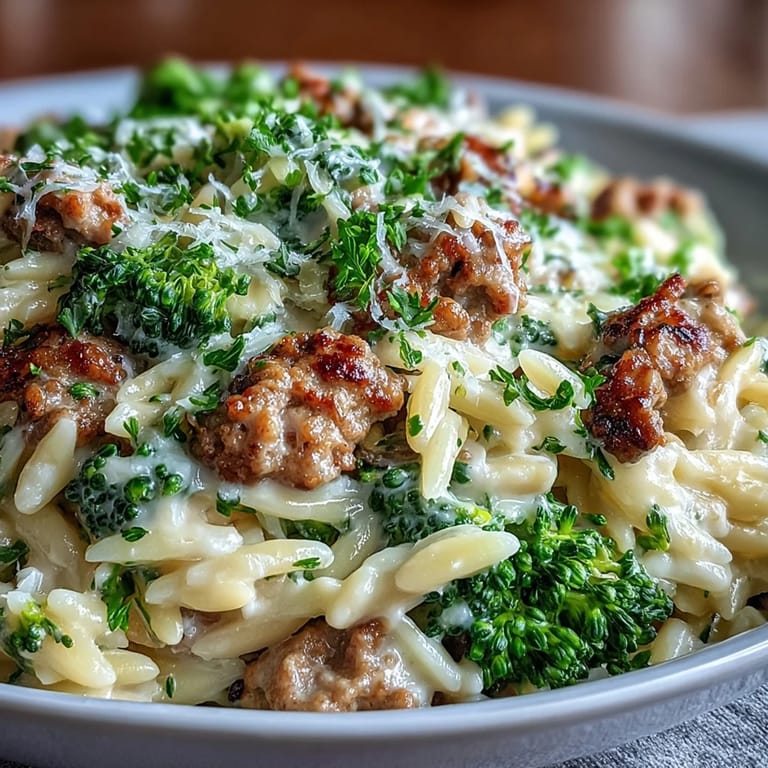
 Tuesday nights at my place used to feel rushed until I stumbled onto this creamy garlic turkey and broccoli orzo. A friend mentioned she'd been craving something warm but didn't want to spend an hour cooking, and that's when I realized I'd been overcomplicating weeknight dinners. This dish came together almost by accident—leftover ground turkey, broccoli that needed using, and a cream sauce that turned everything silky and golden. It's become the kind of meal I make when I want the kitchen to smell amazing but still have time to breathe before dinner hits the table.
I made this for my sister's family last month when they dropped by unannounced on a Thursday evening. I'd already started prepping dinner, and instead of pivoting to something safe like pasta with jarred sauce, I went for this. Watching their faces when that first forkful hit—that moment when everyone went quiet for a second—that's when I knew this recipe belonged in regular rotation. My nephew even asked for seconds, which if you know teenagers, is basically a Michelin star.
Ingredients
- Ground turkey (500 g): The lean protein keeps this creamy without feeling heavy; it browns beautifully and absorbs all those garlic and herb flavors.
- Broccoli florets (250 g): Cut them small so they soften into the sauce rather than stay stubbornly al dente; they add color and substance that makes this feel like a complete meal.
- Yellow onion (1 small, diced): This is your flavor foundation—never skip it, and make sure it's truly translucent before moving forward.
- Garlic (3 cloves, minced): Mince it yourself; pre-minced garlic tastes tinny and you'll regret it the moment you smell fresh garlic hit the butter.
- Orzo pasta (250 g): It's like rice-shaped pasta, which means it soaks up the cream sauce instead of competing with it.
- Heavy cream (180 ml): This is what makes the sauce silky; don't skip it or substitute it unless you're okay with a thinner result.
- Parmesan cheese (60 g, freshly grated): Fresh-grated melts into the sauce and tastes alive; the pre-shredded stuff has anti-caking agents that prevent it from becoming creamy.
- Unsalted butter (2 tbsp): Butter and olive oil together create the perfect base for sautéing; salted butter throws off your seasoning control.
- Chicken or vegetable broth (480 ml): Use low-sodium so you can taste the dish, not the salt; high-sodium broth ruins everything.
- Milk (120 ml): This tempers the cream so the sauce stays silky without breaking; think of it as your safety net.
- Dried thyme and oregano (1 tsp and ½ tsp): These dried herbs steep into the liquid and season the whole dish; they're your secret to depth.
- Red pepper flakes (½ tsp, optional): A tiny amount adds a whisper of heat that balances all the creaminess.
- Olive oil (1 tbsp): Use decent olive oil; it matters when it's hitting hot pan.
- Lemon zest (optional): Grate it fresh at the end; it brightens everything and cuts through the richness like a small miracle.
Tired of Takeout? 🥡
Get 10 meals you can make faster than delivery arrives. Seriously.
One email. No spam. Unsubscribe anytime.
Instructions
- Build your flavor base:
- Heat the olive oil and butter together over medium heat until they're foaming slightly, then add the diced onion. Let it soften for 2–3 minutes, stirring occasionally, until it turns translucent and smells sweet. You're not rushing this—you're building the foundation that makes everything taste intentional.
- Wake up the garlic:
- Add your minced garlic and let it cook for about 1 minute, just until the aroma hits you. Don't brown it or it'll taste bitter; you want fragrant and alive.
- Cook the turkey until it's golden:
- Break up the ground turkey as it hits the pan, sprinkle it with salt, pepper, thyme, and oregano, and cook for 5–6 minutes until it's browned and cooked through. The meat should look slightly caramelized on the edges—that's when you know you've got flavor locked in.
- Toast the orzo in the pan:
- Add the dry orzo and stir it around for about 1 minute so it coats in all that turkey fat and aromatic goodness. This step is small but it makes a difference.
- Simmer the pasta:
- Pour in your broth and milk, bring it to a simmer, then drop the heat to low, cover, and let it cook for 7 minutes, stirring occasionally. You'll notice the liquid starts to get absorbed—this is exactly what you want.
- Add the broccoli and finish cooking:
- Stir in your broccoli florets, cover again, and cook for another 5–6 minutes until the orzo is tender but still has a slight bite and the broccoli is soft but not falling apart. The whole pot should smell like garlic and cream and cozy dinners.
- Make it creamy:
- Pour in the heavy cream and fresh Parmesan cheese, stirring until everything is coated in a silky sauce. Taste it, adjust your salt and pepper, and add red pepper flakes if you want a hint of warmth.
- Let it rest:
- Remove from heat and let the whole thing sit for 2 minutes so the sauce thickens just slightly and clings to every piece of pasta. This resting moment is where the magic settles.
- Serve it warm:
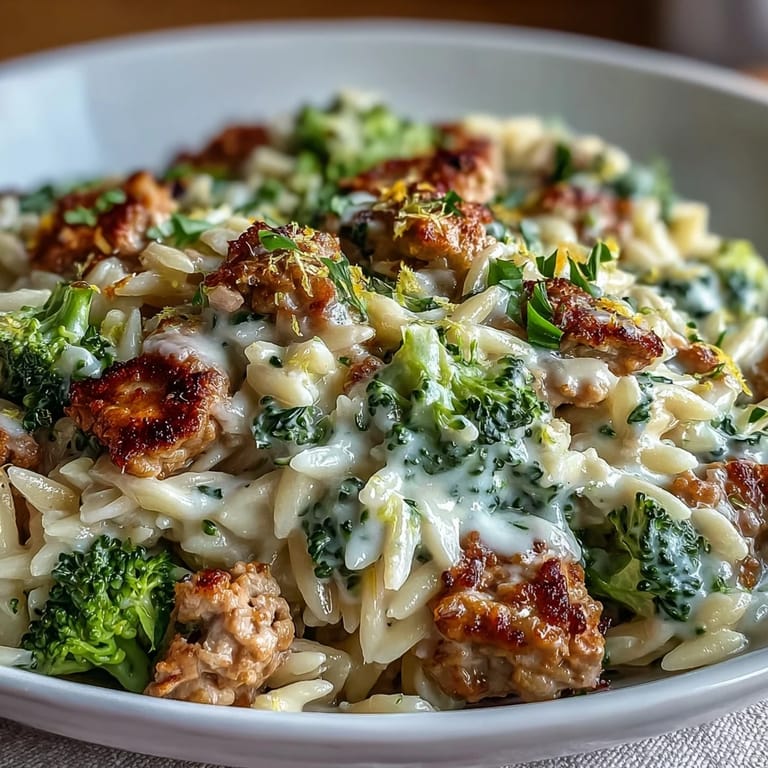
- Divide it among bowls, grate fresh lemon zest over the top if you have it, and pass extra Parmesan at the table. Everyone will want more.
 Pin It
 There's a moment in cooking this when the whole skillet becomes something other than separate ingredients—when the broccoli softens into the creamy sauce and the turkey has seasoned everything around it. That's when you know you've made something worth making, something that's genuinely better than the sum of what went into it. It's in those moments that a weeknight dinner feels less like an obligation and more like an act of care.
The Secret to Silky Sauce
The combination of cream and milk is what keeps this sauce from being heavy or breaking. I learned this the hard way after making a similar dish with only heavy cream and ending up with something that felt more like butter soup by the second reheating. The milk tempers it, stretches it, and makes it coat the pasta evenly without being overwhelming. It's a small ratio thing that makes an enormous difference in how the dish feels when you eat it.
Why Orzo and Not Regular Pasta
Orzo is shaped like grains of rice, which means it naturally tucks into a creamy sauce instead of competing with it. If you used penne or rigatoni, you'd have all these hollow tubes that fill with sauce and then suddenly your bite is either dry pasta or pure cream. With orzo, every single forkful is balanced—a little pasta, a little turkey, a little broccoli, all held together by sauce that clings instead of sliding off. It's also quicker to cook than larger pasta shapes, which helps when you're working with a 25-minute cooking window.
How to Make This Your Own
This recipe is forgiving enough to bend without breaking. I've made it with ground chicken when turkey wasn't available, and it tasted just as good. A friend swears by adding a handful of spinach in the last minute, which adds color and a subtle earthy note. You could use half-and-half instead of heavy cream if you want something lighter, though you'll notice the sauce is a bit thinner. The beauty of this dish is that it's a framework you can trust, not a strict rule.
- Swap the broccoli for green beans, mushrooms, or even sun-dried tomatoes if that's what you have.
- A pinch of nutmeg stirred into the cream at the end adds warmth and sophistication without being obvious.
- If you want it spicier, don't hold back on the red pepper flakes or add a pinch of cayenne.
 Pin It
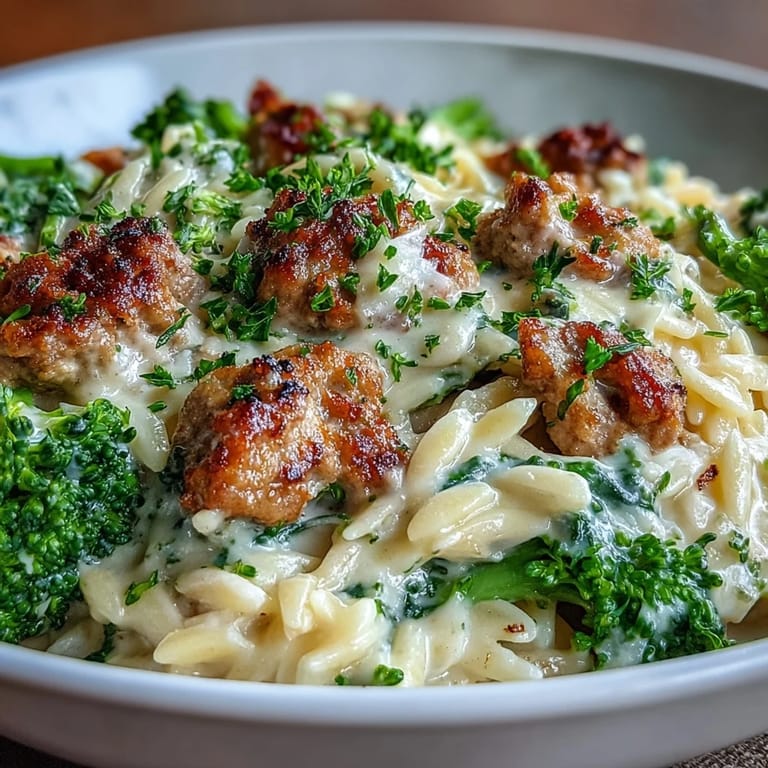
 This is the kind of meal that makes people feel cared for without you having to spend your whole evening in the kitchen. It's warm, it's complete, and it tastes like you know what you're doing in the kitchen, even if you threw it together on a random Tuesday.
Recipe FAQs
- → Can I use regular pasta instead of orzo?
Yes, you can substitute orzo with small pasta shapes like macaroni, small shells, or broken spaghetti. Adjust cooking time as needed and ensure the pasta has enough liquid to cook through properly.
- → How do I store leftovers?
Store cooled leftovers in an airtight container in the refrigerator for up to 3 days. The sauce will thicken when chilled—reheat with a splash of milk or broth to restore creaminess.
- → Can I make this dish ahead of time?
You can prep ingredients in advance, but it's best cooked fresh for optimal texture. If reheating, add extra liquid as the orzo continues absorbing sauce. The cream sauce may separate slightly when reheated but will come back together with stirring.
- → Is there a lighter version?
Substitute heavy cream with half-and-half or whole milk for a lighter sauce. You can also reduce the Parmesan amount slightly. The dish will still be creamy and satisfying with fewer calories.
- → What vegetables work well as substitutes?
Try cauliflower florets, spinach, peas, or diced zucchini instead of broccoli. Add heartier vegetables like carrots or bell peppers earlier in the cooking process so they become tender.
- → Can I freeze this dish?
Freezing is not recommended as dairy-based cream sauces can separate and become grainy when thawed. The orzo texture may also become mushy. Best enjoyed fresh or refrigerated for up to 3 days.